Plastic Card Printers: Compare Top Brands and Models
Table of Contents []
- Why Plastic Card ID Is the Name Businesses Trust for Plastic Card Printers
- Choosing the Right Plastic Card Printer for Your Volume
- Plastic Card Printer Supplies: Keeping Your Program Running
- Use Cases: What Organizations Are Printing with These Machines
- Buyer's Guide: What to Evaluate Before You Purchase
- Why In-House Printing Outperforms Outsourced Card Production
- Plastic Card ID: Your Partner in Plastic Card Printing, from Day One
Why Plastic Card ID Is the Name Businesses Trust for Plastic Card Printers
 Walk into almost any mid-sized organization that prints its own ID cards, membership credentials, or access badges, and you'll find a story behind the hardware. Someone made a decision - often under pressure, often with limited guidance - and either got it right or spent the next two years regretting it. Plastic Card ID exists precisely to make sure that decision goes right the first time. With more than 25 years supplying professional-grade plastic card printers to businesses across the United States, and a customer base that has grown beyond 100,000 organizations, the depth of expertise here is genuinely difficult to match.
What separates CPE from a generic reseller is curation. Not every printer on the market belongs in a serious card program. The lineup here focuses on four elite brands - Evolis, Fargo, Zebra, and Matica - because these manufacturers have consistently delivered reliability, print quality, and serviceability that businesses depend on day after day. Whether you're printing 200 employee badges a year or running a high-volume operation that demands thousands of cards per month, there is a system here built for exactly that workload.
The business case for in-house plastic card printing is straightforward: control, speed, and personalization. No waiting on outside vendors. No minimum order quantities. No batch delays when someone loses their access card on a Friday afternoon. You print what you need, when you need it, with the exact encoding and personalization required. That's a capability worth investing in thoughtfully.
A Quarter Century of Card Printing Expertise
Twenty-five-plus years in any specialized industry creates something that product specifications alone can't convey: institutional knowledge. Plastic Card ID has watched the plastic card printing market evolve through multiple generations of printer technology, ribbon chemistry advancements, and encoding protocol shifts. That history translates directly into better guidance for buyers navigating an increasingly complex market.
Customers aren't handed a catalog and left to guess. The purchasing experience is built around matching the right hardware to the actual production requirements - volume, card type, encoding needs, print quality standards, and budget. That kind of consultative approach is rare, and it's what turns first-time buyers into long-term partners.
The Brands Behind the Machines
Evolis has earned its reputation as one of the most versatile plastic card printer manufacturers in the world, with a range that spans casual-use desktop units all the way to premium, edge-to-edge output machines. Fargo and Zebra bring security-first design philosophies to the table, making them natural choices for organizations running access control or government-adjacent ID programs. Matica rounds out the lineup with event-specific capability that's hard to find elsewhere.
Each brand is represented not just as a product listing but as a supported platform. Ribbons, cleaning kits, encoding upgrades, lamination modules, input hoppers - the consumables and accessories that keep these machines running are stocked and available. A printer without reliable supply support is a liability. CPE makes sure that's never the concern.
Reach the Team That Knows Card Printers
Questions about compatibility, ribbon yield, or upgrade paths don't have to go unanswered. The team at Plastic Card ID is reachable at 800.835.7919, and they're equipped to have real conversations about real use cases - not scripted upsells.
Whether you're replacing aging hardware, building a card program from scratch, or trying to understand why your current printer is producing inconsistent results, that conversation is worth having before you commit to new equipment. Experience changes outcomes, and there's plenty of it available here.
Choosing the Right Plastic Card Printer for Your Volume
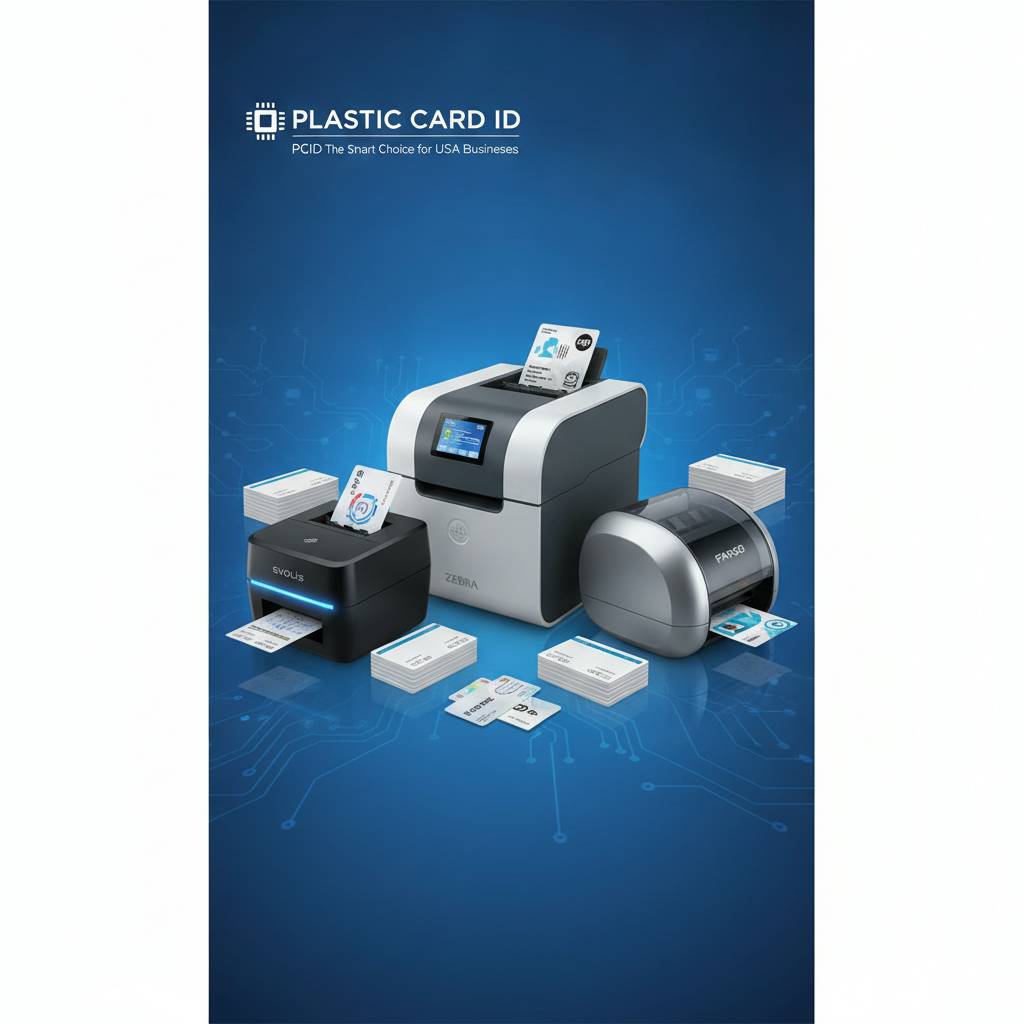 Volume is the single most important variable in any card printer selection - and it's the one most frequently underestimated. Organizations routinely purchase entry-level hardware for what turns out to be a mid-range workload, then find themselves dealing with overheated printheads, ribbon waste, and premature hardware failure. Matching printer capability to actual production demand isn't just smart purchasing - it's how you protect your investment.
The production spectrum runs from occasional printing (under 1,000 cards per year) to continuous, high-throughput operations requiring thousands of cards per month. Each tier has its own ideal hardware, and the differences between them go well beyond price. Duty cycles, ribbon capacity, encoding options, and input hopper size all vary significantly across the range.
| Volume Tier | Cards Per Year | Recommended Models | Key Features |
|---|---|---|---|
| Entry-Level | Under 1,000/year | Evolis Badgy200 | Compact, simple operation, full-color output |
| Mid-Range | 1,000-6,000/month | Evolis Zenius, Primacy2 | Dual-sided printing, magnetic stripe encoding |
| High-Volume | 6,000/month | Evolis Agilia, Matica Event Printer | Edge-to-edge printing, high-speed throughput |
| Security-Focused | Variable | Fargo, Zebra | Smart chip encoding, access control integration |
Entry-Level Printers: The Evolis Badgy200
The Badgy200 is an honest, capable desktop printer that delivers full-color PVC card output without overcomplicating the experience. For organizations printing employee IDs, membership cards, or event credentials fewer than 1,000 times per year, it hits the right balance of affordability and professionalism. Setup is fast, the interface is approachable, and the output quality is far above what most people expect at this price tier.
It's worth noting that "entry-level" refers to volume and price point - not quality. Cards produced on the Badgy200 look polished and professional. The limitation is duty cycle, not output. Push it beyond its intended workload and you'll see the difference; use it as intended and it will serve reliably for years.
Mid-Range Workhorses: Zenius and Primacy2
The Evolis Zenius and Primacy2 occupy a sweet spot that a surprising number of organizations land in: regular, sustained card printing that demands more than a basic desktop unit but doesn't require industrial-scale infrastructure. Both models support dual-sided printing and magnetic stripe encoding, making them highly versatile across use cases including hotel key cards, loyalty programs, and corporate access badges.
The Primacy2 in particular is a machine with staying power. Its modular design allows encoding upgrades to be added as needs evolve, meaning you're not forced into a full hardware replacement when requirements change. That kind of forward compatibility is worth factoring into total cost of ownership calculations.
Premium Output: The Evolis Agilia
When the requirement is edge-to-edge print quality with zero compromise, the Evolis Agilia is the answer. It's built for organizations where card appearance directly reflects brand or institutional prestige - think premium membership programs, executive credentials, or security ID cards where every millimeter of the card surface carries weight. The Agilia delivers the highest-quality output in the Evolis lineup, and it shows immediately in side-by-side comparisons.
This is not an impulse purchase. The Agilia is for buyers who know exactly what they need and why. If you're uncertain whether your program justifies this investment, the team at CPE can walk through the production parameters with you and give an honest recommendation - even if that recommendation is a less expensive model.
Plastic Card Printer Supplies: Keeping Your Program Running
Hardware without consumables is just a paperweight. The supply chain behind a card printing program is less glamorous than the printer itself, but it is equally critical. Ribbon availability, cleaning kit consistency, and lamination material quality all directly affect output quality and printhead longevity. Plastic Card ID stocks the full range of consumables needed to keep any of its supported printer platforms running at peak performance.
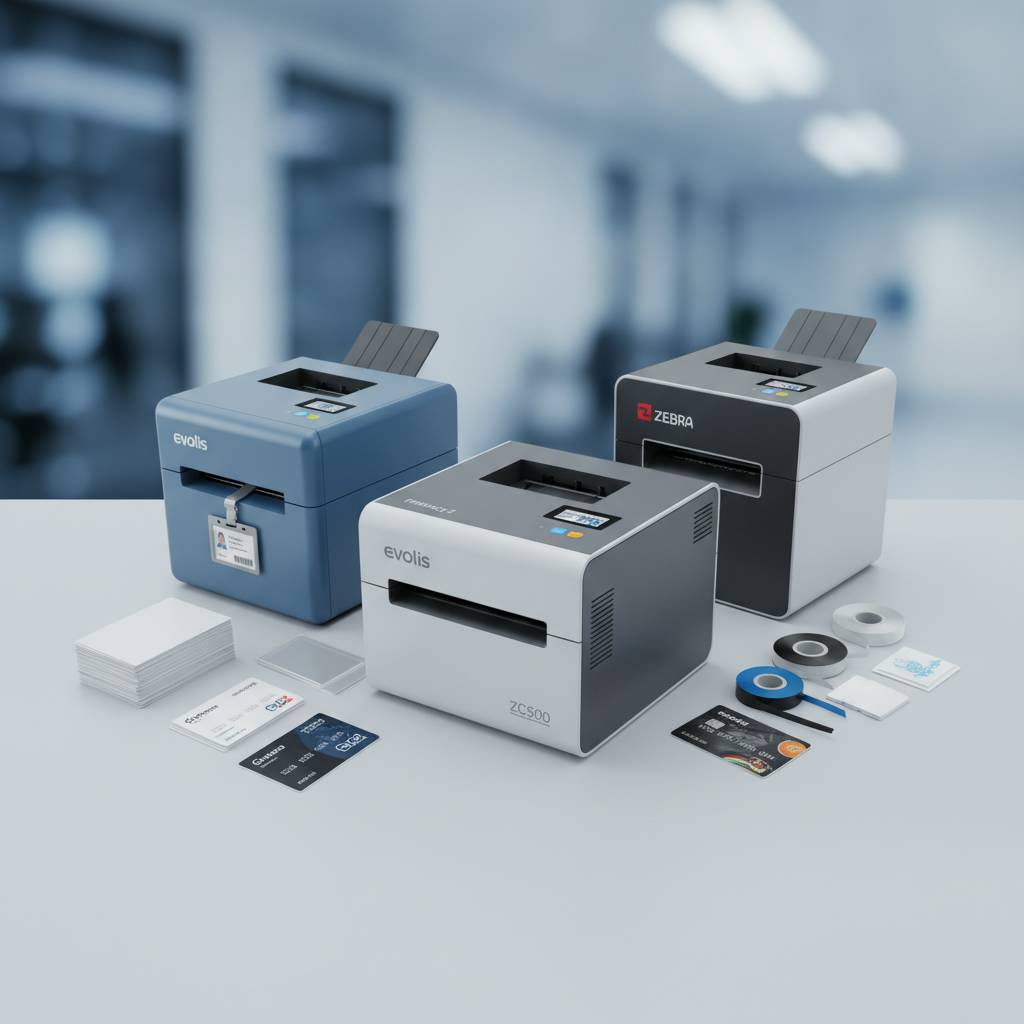
The most common supply mistake organizations make is treating ribbon purchasing as an afterthought - buying whatever is cheapest rather than what's compatible and appropriate for the workload. Using off-brand or incompatible ribbons can void manufacturer warranties and degrade printhead performance significantly faster than rated duty cycles would suggest. Quality supplies are not where a card program should cut corners.
Printer Ribbons: YMCKO, Monochrome, and Specialty
YMCKO ribbons - yellow, magenta, cyan, black, and overlay - are the standard for full-color card printing. Each panel contributes to the finished image, with the overlay panel providing a protective coating that extends card life and resists fading. Most employee ID, membership, and loyalty card applications use YMCKO ribbons, and yield varies by printer model, typically ranging from 100 to 500 prints per ribbon cartridge.
Monochrome ribbons serve a different purpose: high-speed, single-color printing for applications where full color isn't necessary. Visitor badges, temporary credentials, and back-of-card data printing often use monochrome black or blue ribbons, which also tend to yield significantly more prints per cartridge than YMCKO options. Specialty ribbons including scratch-off and fluorescent formulations are available for programs with specific security or design requirements.
Cleaning Kits and Maintenance Supplies
Printhead cleaning is not optional maintenance - it is the single most effective way to extend printhead life and maintain consistent output quality. Dust, debris, and residual ribbon material accumulate over time and cause streaking, color banding, and premature wear. Regular cleaning cycles using manufacturer-approved kits can dramatically extend the service life of an expensive printhead.
Most Evolis, Fargo, and Zebra printers include cleaning prompts built into their firmware, triggered after a set number of prints. Following those prompts with the correct cleaning supplies - typically cleaning cards and roller swabs - is straightforward and takes only a few minutes. Skipping them costs far more in the long run.
Encoding Upgrades and Lamination Modules
Magnetic stripe encoding allows a plastic card printer to write data directly onto the stripe during the print process, eliminating a separate encoding step and enabling fully personalized cards in a single pass. Smart chip encoding extends this capability to contact and contactless chip cards, opening up applications in access control, campus ID programs, and secure authentication environments.
Lamination modules add a protective overlay film to finished cards, increasing durability, scratch resistance, and in some cases adding holographic security features. For programs where cards are handled daily - employee badges, student IDs, gym membership cards - lamination meaningfully extends useful card life and keeps credentials looking professional longer.
Use Cases: What Organizations Are Printing with These Machines
 The range of applications for in-house plastic card printing is broader than most people initially realize. The same hardware that prints a hotel key card in the morning can produce a gym membership card and an employee access badge in the afternoon. What changes is the card design, the encoding configuration, and the ribbon type - not the fundamental machinery.
Understanding what's possible within a given printer platform often reveals applications that organizations hadn't previously considered. A company that purchases a printer for employee ID cards frequently discovers it can also handle visitor badges, contractor credentials, and parking permits with minimal additional investment.
Employee ID and Access Control Cards
Corporate employee ID programs represent one of the most consistent use cases for in-house plastic card printing. The combination of personalization - photo, name, department, title - with encoding for building access makes these cards both an identity document and a functional security tool. Printing on-demand means new employees have their credentials on day one, not after a two-week vendor turnaround.
Fargo and Zebra printers are particularly well-suited to security-focused ID programs because of their encoding flexibility and compatibility with access control infrastructure. For organizations running proximity card systems or smart card access platforms, these machines integrate smoothly into existing security workflows.
Membership and Loyalty Cards
Gyms, clubs, libraries, professional associations, and retail loyalty programs all rely on plastic cards that balance visual appeal with functional encoding. Membership cards carry magnetic stripes for point-of-sale scanning; loyalty cards need consistent color output to represent brand identity accurately. The Evolis Zenius and Primacy2 handle both requirements with straightforward configuration.
On-demand printing is particularly valuable in membership contexts because it eliminates minimum order requirements. An organization doesn't need to order 500 cards at a time - it can print exactly as many as it needs, when it needs them, with each card personalized to the individual member. That flexibility has real operational value.
Event Credentials and On-Site Badge Printing
The Matica Event Printer is designed specifically for one of the more demanding operational scenarios in card printing: high-volume, high-speed on-site badge production at conferences, festivals, and large-scale events. When hundreds or thousands of attendees need credentials produced within a tight window, throughput speed and reliability become the dominant variables. The Matica delivers on both.
Student IDs, hotel key cards, and visitor management badges round out the event-adjacent applications where in-house printing pays off immediately. Hotel properties in particular benefit from the ability to encode and reissue key cards on-site within seconds rather than managing external card inventory or waiting on outside production runs.
Buyer's Guide: What to Evaluate Before You Purchase
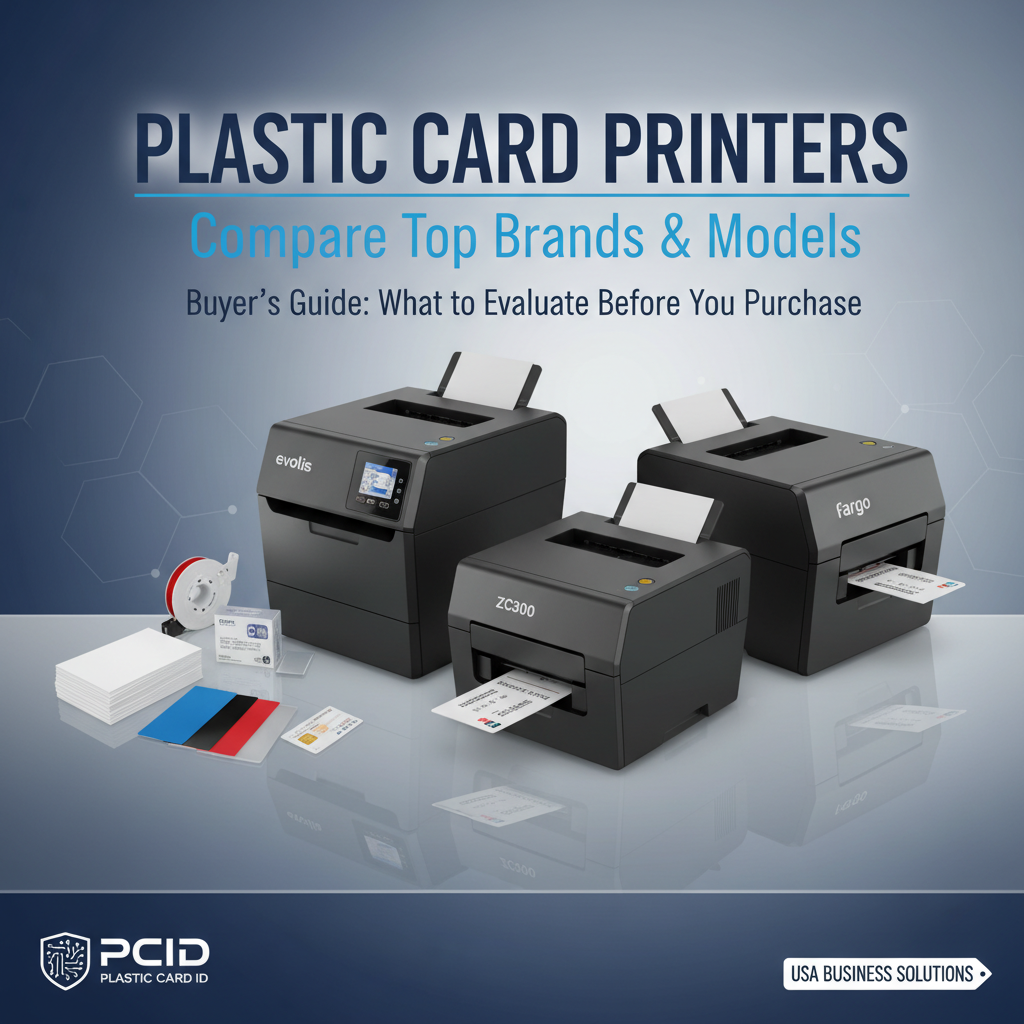 Making a confident plastic card printer purchase requires answering a few key questions honestly - about volume, about card type, about encoding requirements, and about the realistic total cost of running the program over time. Buyers who skip this evaluation step frequently end up with hardware that either underperforms or over-delivers relative to their actual needs, and neither outcome is ideal.
The good news is that these questions have clear answers once you sit down with them, and the team at Plastic Card ID is well-practiced at helping organizations work through them efficiently. The right printer is the one that matches your real-world requirements - not the most expensive option and not the cheapest one.
Key Questions Every Buyer Should Answer
- How many cards will you print per month, on average? Be realistic - over-estimating pushes you toward unnecessary hardware, under-estimating creates premature wear.
- Do your cards need to be single-sided or double-sided? Dual-sided printing requires specific hardware configurations not present on all models.
- Will your cards carry a magnetic stripe, smart chip, or both? Encoding upgrades are available but must be planned for at purchase or upgrade time.
- What resolution and color accuracy does your program require? Premium membership cards and branded credentials demand higher output standards than visitor badges.
- What is the total budget for hardware plus a year of consumables? Ribbon and cleaning kit costs add up and should factor into the purchasing decision from the start.
- Do you need lamination for extended card durability? Lamination modules add cost but meaningfully extend card life in high-use environments.
Common Mistakes to Avoid
Buying based on printer price alone is the most predictable path to dissatisfaction. A $200 desktop printer running a workload it was never designed for will cost far more in ribbon waste, premature printhead replacement, and downtime than a correctly matched mid-range unit that runs cleanly for years. Total cost of ownership matters more than initial purchase price in almost every card printing scenario.
Equally problematic is failing to account for consumable supply. If the ribbons for your chosen printer are difficult to source, back-ordered frequently, or only available from a single vendor, your entire operation becomes dependent on that supply chain. CPE stocks ribbons and supplies for every printer in its lineup specifically because supply chain reliability is as important as hardware reliability.
Contact the Experts Before You Commit
A five-minute conversation with someone who has spent years in the plastic card printing industry can prevent months of frustration. The team at Plastic Card ID is available at 800.835.7919 to discuss your specific use case, current setup, and goals before any purchase decision is made.
There's no obligation and no pressure. The goal is accurate hardware matching, because customers who get the right printer from the start come back for supplies, accessories, and future upgrades. That relationship matters more than any single transaction.
Why In-House Printing Outperforms Outsourced Card Production
Outsourcing card production made sense in an era when in-house hardware was cost-prohibitive for most organizations. That era is over. Today, professional-grade plastic card printers are accessible at price points that make in-house production economically sensible for a wide range of organizations - and the operational advantages compound over time in ways that outside vendors simply can't match.
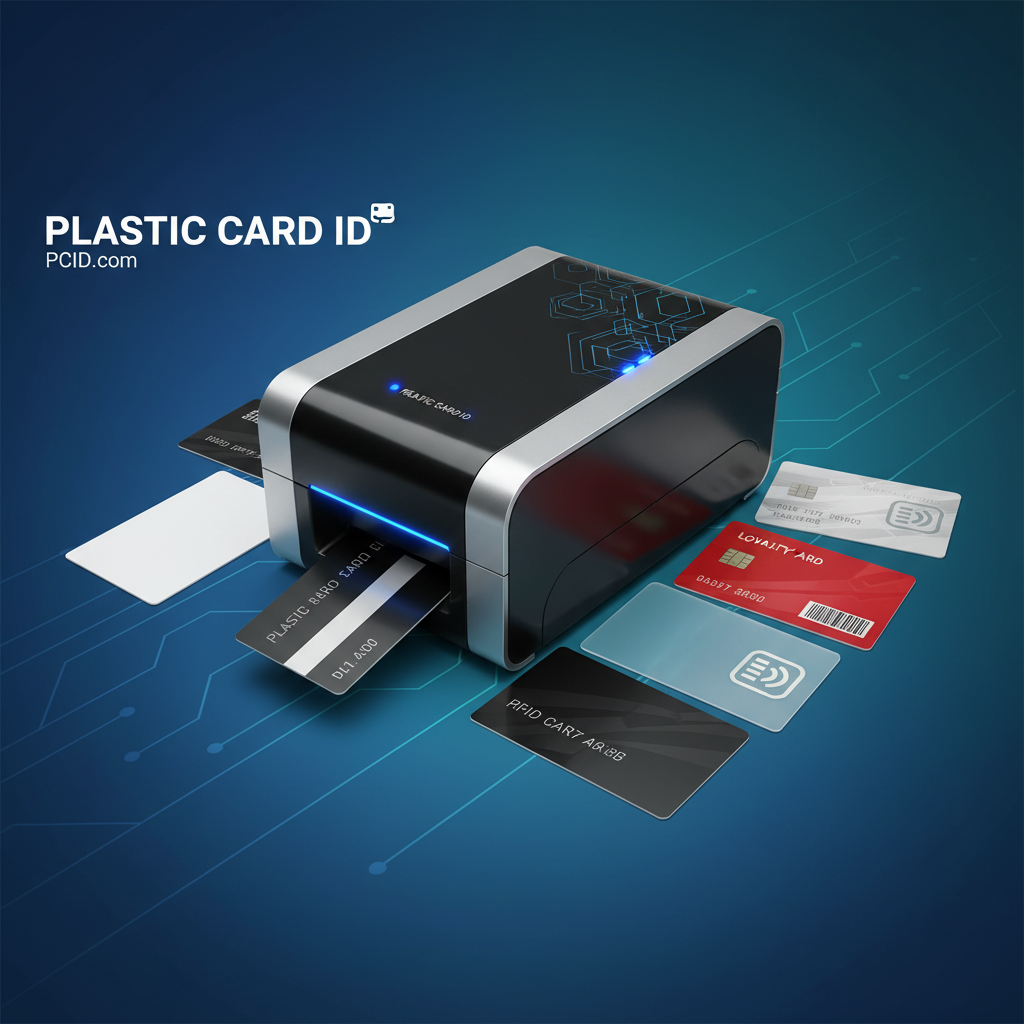
The most immediate advantage is speed. When an employee starts a new role, is promoted, or loses their badge, an in-house printer produces a replacement within minutes. When an event kicks off and attendee credentials need to be ready at check-in, an on-site printer delivers without shipping delays, customs complications, or vendor lead times.
Control Over Every Card Detail
Personalization is where in-house printing creates the most value. Each card can carry a photo, a name, a department, an encoded magnetic stripe, a smart chip - all produced in a single pass on a properly configured printer. Outsourced vendors require batch orders, limit personalization options, and add per-card costs for encoding. In-house production eliminates all of those constraints simultaneously.
Organizations that print employee credentials, student IDs, or access control cards on-site also eliminate the security concerns associated with sending sensitive personal data to an external vendor. The card never exists anywhere except within your own production workflow. For security-conscious organizations, that distinction alone can justify the hardware investment.
Cost Economics Over Time
The per-card cost of in-house printing decreases significantly as volume increases. Ribbon costs per print, amortized hardware costs, and cleaning supply expenses combine to create a total cost structure that typically undercuts outsourced production at any sustained volume above a few hundred cards per year. Most organizations see a full return on their printer investment within 12-18 months of consistent operation.
That math improves further when you factor in eliminated rush fees, shipping costs, and the labor associated with managing an external vendor relationship. In-house production is simply more efficient once the program is running, and the flexibility to print on demand adds an operational value that doesn't appear in any cost-per-card calculation.
Plastic Card ID: Your Partner in Plastic Card Printing, from Day One
 There are plenty of places to buy a printer. There are far fewer places where the purchase comes with genuine expertise, stocked supplies, and a team that understands how card programs actually operate in the real world. Plastic Card ID has been building that kind of relationship with businesses across the United States for more than 25 years, and the 100,000-plus customers served along the way represent every industry, every organization size, and every use case imaginable.
The commitment here isn't just to the hardware transaction - it's to the program behind it. Ribbons, cleaning kits, encoding upgrades, replacement parts, and honest guidance on when to repair versus replace: all of it is available from a single source that knows the product line inside out. That continuity has real value over the multi-year lifespan of a card printing program.
What You Get When You Choose Plastic Card ID
Beyond the printers themselves, CPE provides access to a curated, fully stocked supply catalog that covers every machine it sells. No hunting across multiple vendors for compatible ribbons. No second-guessing whether a cleaning kit is correct for your specific model. Everything needed to run a complete card program is available in one place, from initial printer purchase through years of ongoing consumable supply.
The hardware lineup is refreshed as new models are released by Evolis, Fargo, Zebra, and Matica, ensuring that buyers always have access to current-generation technology. Legacy support for older models is maintained as long as supplies and parts remain available, protecting investments made years ago alongside new purchases.
Getting Started Is Simpler Than You Think
A new card printing program can be up and running in days, not weeks. The hardware arrives configured for basic operation, ribbons and cleaning kits can be ordered simultaneously, and setup documentation is clear and thorough. For organizations replacing existing equipment, the transition is typically even faster since workflows and design templates carry over with minimal adjustment.
The barrier to in-house card printing has never been lower. What once required significant capital investment and specialized IT support now fits comfortably into the purchasing and operational budget of organizations of almost any size. The question isn't whether in-house printing makes sense - it's which system makes the most sense for your specific program.
Call Today and Talk to Someone Who Knows This Industry
Ready to move forward or still weighing your options? Either way, a conversation with the team at Plastic Card ID is the fastest path to clarity. Reach them directly at 800.835.7919 to discuss your program requirements, get a specific hardware recommendation, and learn what it takes to get your card printing operation running at its best.
Don't guess at what your card program needs - ask the people who've built hundreds of them. Call Plastic Card ID at 800.835.7919 today and get the right answer the first time.
Previous Page