Where to Buy Plastic Card Printers USA: Best Sources
Table of Contents []
- Why Plastic Card ID Is the Go-To Source for Plastic Card Printers in the USA
- Choosing the Right Plastic Card Printer for Your Volume and Application
- The Complete Card Program: Supplies, Consumables, and Accessories
- The Real Value of In-House Card Printing
- Frequently Asked Questions About Buying Plastic Card Printers
- How to Buy: Working with Plastic Card ID Is Straightforward
- Connect with Plastic Card ID Today and Get Your Card Program Running Right
Why Plastic Card ID Is the Go-To Source for Plastic Card Printers in the USA
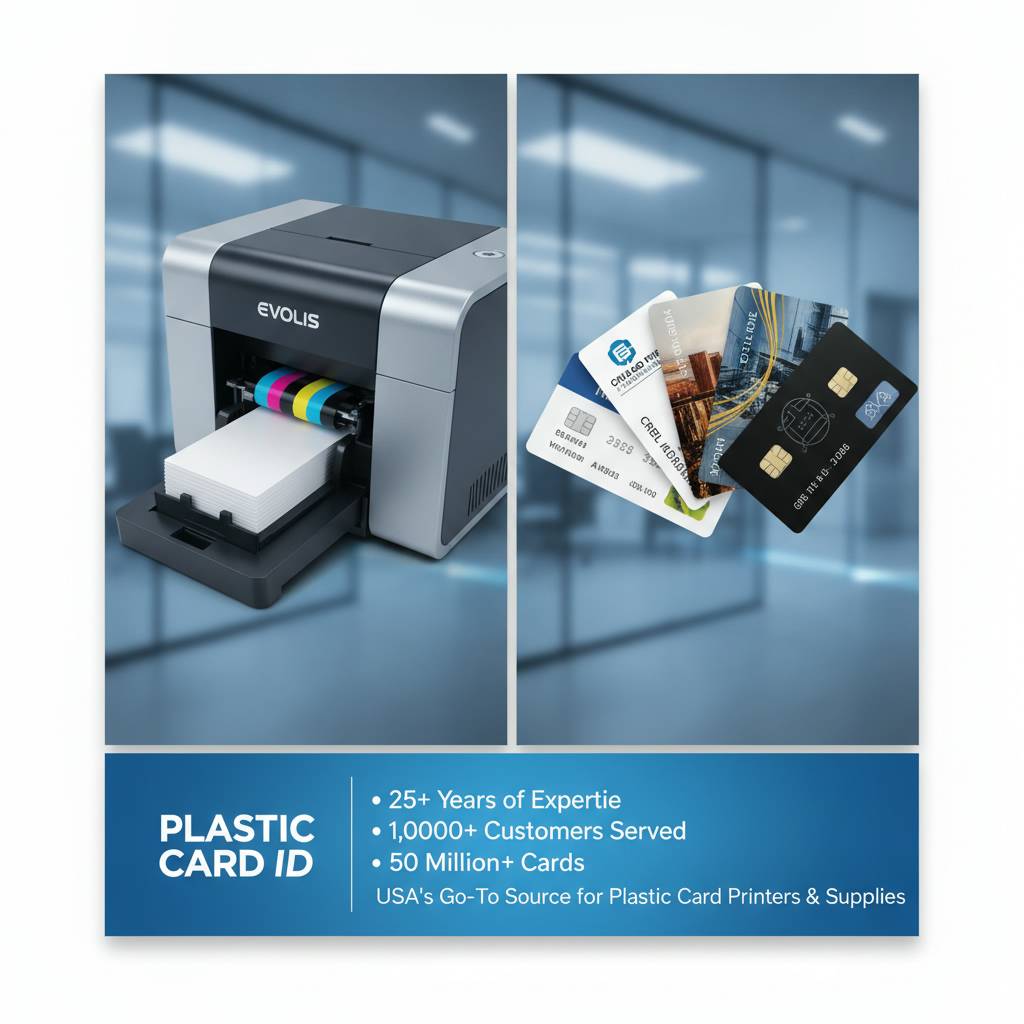 Finding the right plastic card printer shouldn't feel like searching for a needle in a haystack - yet for many businesses, that's exactly what it becomes. The market is cluttered with generic hardware, confusing specs, and vendors who disappear after the sale. Plastic Card ID cuts through all of that. With more than 25 years of focused experience and over 100,000 customers served across the United States, this is a company that has made plastic card printing its entire mission.
What sets CPE apart isn't just longevity - it's the depth of the lineup and the precision of the curation. Every printer they carry, every ribbon, every cleaning kit, every encoding upgrade has been selected because it delivers real, measurable value to real businesses. Whether you're printing 200 employee badges a year or tens of thousands of access control cards per month, there's a solution here built for exactly your scale.
This page is your complete guide to understanding where to buy plastic card printers in the USA, what to look for, which models match your needs, and why thousands of organizations consistently return to Plastic Card ID when it's time to expand or upgrade their card programs.
A Quarter Century of Card Printing Expertise
Experience in this industry compounds. Every customer interaction, every support call, every printer installation adds to a knowledge base that newer vendors simply cannot replicate. Plastic Card ID has been doing this since before many of today's competitors even existed, and that institutional knowledge is something customers tap into every single time they place an order.
Over 100,000 businesses have trusted Plastic Card ID with their card printing programs. That number includes healthcare providers, universities, hotels, retail chains, government agencies, corporate offices, and event organizers - organizations of every size, from single-location nonprofits to multi-site enterprise operations. The range of customers served is itself a testament to the versatility of the product lineup.
What "Curated Lineup" Actually Means for You
Not every plastic card printer brand deserves a spot on a professional vendor's shelf. Plastic Card ID carries Evolis, Fargo, Zebra, and Matica - the four most respected names in the industry - and nothing less. Each brand occupies a specific role in the ecosystem, and together they cover every conceivable use case without redundancy or confusion.
This deliberate curation means you're never wading through dozens of mediocre options trying to guess which one might work. Instead, you get clear, informed guidance pointing you toward the printer that's genuinely right for your application. That kind of focus is rare among online hardware vendors, and it's one of the primary reasons CPE has built the customer base it has.
Reach Out Before You Buy
Not sure which printer fits your workflow? That's exactly the kind of question Plastic Card ID exists to answer. Call 800.835.7919 and speak directly with someone who understands card printing at every level - from basic ID badge setup to complex smart card encoding configurations. Getting the right advice before you purchase saves time, money, and frustration.
The team at CPE doesn't push the most expensive option or the one with the highest margin. They help you find the right fit. It's a straightforward philosophy, and it's one that keeps customers coming back for ribbons, cleaning kits, and upgrades long after the initial printer purchase.
| Printer Model | Brand | Best For | Volume Range | Key Features |
|---|---|---|---|---|
| Badgy200 | Evolis | Small orgs, low volume | Up to 1,000 cards/year | Compact, easy setup, single-sided |
| Zenius | Evolis | Growing businesses | 1,000-6,000 cards/month | Encoding options, reliable output |
| Primacy2 | Evolis | Mid-to-high volume operations | 1,000-6,000 cards/month | Dual-sided, mag stripe, lamination |
| Agilia | Evolis | Premium output needs | High-volume, edge-to-edge | Edge-to-edge printing, top image quality |
| Fargo/Zebra Models | Fargo / Zebra | Security ID programs | Varies by model | Security features, robust build |
| Matica Event Printer | Matica | On-site event badging | High-speed batch printing | Fast throughput, on-demand credentials |
Choosing the Right Plastic Card Printer for Your Volume and Application
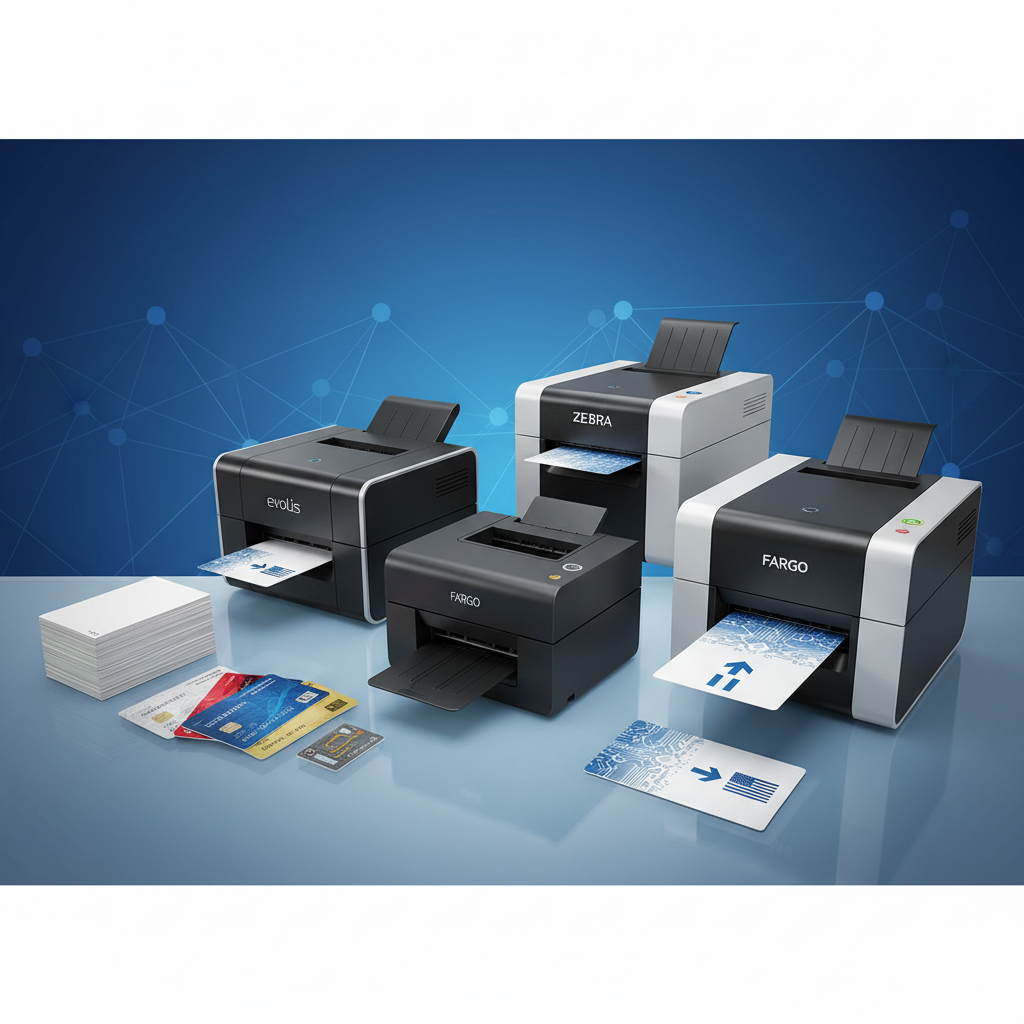 Volume is the first variable - and arguably the most important one - when selecting a card printer. Buy too little capacity and you'll bottleneck your operation. Buy more than you need and you've tied up capital in hardware that sits idle. Getting this decision right requires honest assessment of your current output and a realistic forecast of where your card program is headed.
The good news is that the printer landscape is genuinely well-structured at this point. Entry-level, mid-range, and industrial-grade options each occupy a clear price-performance tier, and matching your volume to the right tier isn't complicated once you understand the categories. Here's how to think about it.
Entry-Level Printers: The Evolis Badgy200
For organizations printing fewer than 1,000 cards per year - think small membership clubs, boutique hotels, modest-sized nonprofits, or startup businesses just launching an ID program - the Evolis Badgy200 is the clear entry point. It's compact, straightforward to set up, and delivers professional-quality output without demanding a significant upfront investment.
Don't underestimate entry-level hardware. The Badgy200 produces genuinely sharp, vibrant cards that look polished and professional. The misconception that entry-level means low quality doesn't hold here. What you're sacrificing is throughput speed and some advanced encoding options - not visual quality or durability of the printed card.
Mid-Range Workhorses: Zenius and Primacy2
The Evolis Zenius and Primacy2 represent the middle of the lineup, and for a huge percentage of businesses, one of these two printers is the right answer. Both are rated for 1,000 to 6,000 cards per month, which covers everything from a regional hospital system printing employee badges to a university managing student ID renewals each semester.
The Primacy2 steps up with dual-sided printing capability and native support for magnetic stripe encoding - features that matter enormously if you're producing access control cards, loyalty cards with track data, or any credential that needs information on both faces. The Primacy2 is one of the most versatile mid-range card printers on the market today, and its reputation among repeat customers reflects that.
Premium Output: The Evolis Agilia
When the quality of the printed card is non-negotiable - when you need edge-to-edge, full-bleed imagery that looks as refined as anything produced by an outside print vendor - the Evolis Agilia is the answer. This is a printer built for organizations where the card itself is a brand statement: luxury hotel key cards, premium membership credentials, high-end loyalty programs.
The Agilia doesn't just produce beautiful cards. It produces them consistently, at volume, with the reliability that high-throughput environments demand. For organizations that have historically outsourced their card printing because in-house quality couldn't meet the bar, the Agilia changes the calculation entirely. Bringing premium card production in-house is now genuinely achievable, and the cost savings over time can be substantial.
Security-Focused Programs: Fargo and Zebra
Fargo and Zebra bring something specific to the table: a heritage in security-grade ID production. Government agencies, law enforcement support services, healthcare systems with strict access control requirements, and corporate campuses with layered security protocols have long relied on Fargo and Zebra hardware for the robustness and feature depth these programs demand.
Both brands integrate cleanly with enterprise-level card design and issuance software, support a wide range of encoding options including smart chip and HID-compatible proximity formats, and are built to withstand the kind of continuous daily use that enterprise environments generate. CPE carries the key models from both brands and can help you identify which configuration matches your specific security architecture. Call 800.835.7919 to discuss your security ID requirements in detail.
The Complete Card Program: Supplies, Consumables, and Accessories
A plastic card printer is only as good as the consumables running through it. Ribbons degrade, cleaning rollers accumulate debris, lamination modules need refilling - and when any of these components falter, card quality drops immediately. Running a reliable in-house card program means keeping your supply chain as organized as your printer setup.

Plastic Card ID supplies every consumable and accessory category needed to maintain a professional card program. This single-source approach eliminates the frustration of sourcing ribbons from one vendor, cleaning kits from another, and encoding modules from a third. Everything ships from one place, reducing administrative friction and ensuring compatibility across your equipment.
Printer Ribbons: YMCKO, Monochrome, and Specialty
Color ribbons, typically YMCKO (yellow, magenta, cyan, black, and overlay), are the standard for full-color card printing. The overlay panel adds a protective coating that extends the life of the printed card and improves its resistance to wear. Monochrome ribbons - available in black, blue, red, gold, silver, and other colors - are used for single-color printing on preprinted card stock, dramatically reducing per-card cost in high-volume applications.
Specialty ribbons add holographic overlays, UV-reactive panels for security marking, and other advanced features for programs requiring enhanced credential security. Choosing the right ribbon type for your application isn't just about color - it's about balancing image quality, security requirements, and cost-per-card across the full production run.
Encoding Modules and Smart Card Options
Magnetic stripe encoding and smart chip encoding transform a printed card into a functional credential. Magnetic stripe encoding writes track data to the stripe embedded in the card, enabling swipe-based access control, loyalty program data storage, and hotel key card functionality. Smart chip encoding - available for both contact and contactless chip formats - supports higher-security applications where stored data needs to be more tamper-resistant.
These encoding capabilities are available as factory-configured options on many printer models and as upgrade modules on others. CPE can help you determine whether encoding should be built into your printer purchase from the start or added later as your program evolves. Getting the encoding architecture right from the beginning avoids costly retrofits down the road.
Cleaning Kits, Hoppers, and Card Carriers
Cleaning kits are not optional maintenance - they're mandatory. Dust, card debris, and ribbon residue accumulate inside the printer's feed path and print head area, and without regular cleaning, print quality deteriorates and hardware lifespan shortens. Most manufacturers specify cleaning intervals by card count, and following those intervals is the single most impactful thing you can do to protect your printer investment.
Input hoppers increase card loading capacity for high-volume print runs, reducing the frequency of manual intervention. Card carriers and sleeves protect finished credentials during distribution and storage, extending the effective life of each card and maintaining a professional appearance through the full credential lifecycle. These are small investments with outsized impact on overall program quality.
The Real Value of In-House Card Printing
 Outsourcing card printing seems simple on the surface: place an order, wait for delivery, distribute the cards. But that model carries hidden costs that accumulate quickly - lead times that stretch weeks, minimum order quantities that force over-purchasing, the inability to personalize individual cards without premium upcharges, and total dependence on a vendor's production schedule for what should be an internal operational capability.
In-house card printing gives organizations something outsourcing never can: complete control. Print exactly what you need, when you need it, with personalization baked in at no extra cost. Issue replacement cards the same day. Encode magnetic stripes or chips on demand. Update card designs without scrapping old inventory. The operational flexibility alone justifies the hardware investment for most organizations within the first year.
On-Demand Printing and Personalization
Every card printed in-house can be unique - different name, different photo, different access level, different encoded data - without any penalty in cost or turnaround time. This is a capability that outside vendors simply cannot match at comparable economics. For employee ID programs, student IDs, or membership cards, this means new members or employees receive their credentials the day they join, not two weeks later.
On-demand printing also eliminates the waste associated with pre-printed card inventory. Organizations that outsource frequently end up with boxes of outdated cards because a logo changed, a name was misspelled, or program requirements evolved. In-house printing means you only produce what you actually need, exactly when you need it.
Applications Across Industries
The range of card types that in-house printing supports is broader than many organizations initially realize. Employee ID cards and access control credentials are the obvious starting points, but the same printer that produces those can also produce membership cards, loyalty cards, student IDs, hotel key cards, event credentials, visitor badges, and library cards - often with minimal configuration changes between runs.
- Employee ID Cards - Photo IDs with names, titles, and department information for internal identification and access control.
- Membership Cards - Durable, professional credentials for gyms, clubs, associations, and subscription programs.
- Loyalty Cards - Encoded or printed reward program cards for retail and hospitality businesses.
- Student IDs - Photo identification cards for schools, colleges, and universities.
- Hotel Key Cards - Magnetic stripe or RFID-encoded access cards for guest room entry.
- Event Credentials - On-site printed badges and passes for conferences, trade shows, and live events.
- Access Control Cards - Proximity or smart chip cards for building security and restricted area management.
- Visitor Badges - Temporary credentials for guests, contractors, and short-term visitors.
Cost Comparison: In-House vs. Outsourced
The math on in-house printing is compelling. A professional mid-range card printer might carry a purchase price of $800-$2,500. Ribbons cost roughly $0.15-$0.40 per card depending on ribbon type and model. Blank PVC card stock runs $0.10-$0.25 per card in typical quantities. All in, most organizations are producing fully personalized, encoded plastic cards for $0.30-$0.70 each.
Compare that to outsourced card printing, where fully personalized, individually named cards frequently cost $2.00-$6.00 each when you factor in setup fees, per-card charges, and shipping. For an organization producing 2,000 cards per year, the difference between in-house and outsourced production can easily exceed $5,000 annually. The return on investment for in-house card printing hardware is often measured in months, not years.
Frequently Asked Questions About Buying Plastic Card Printers
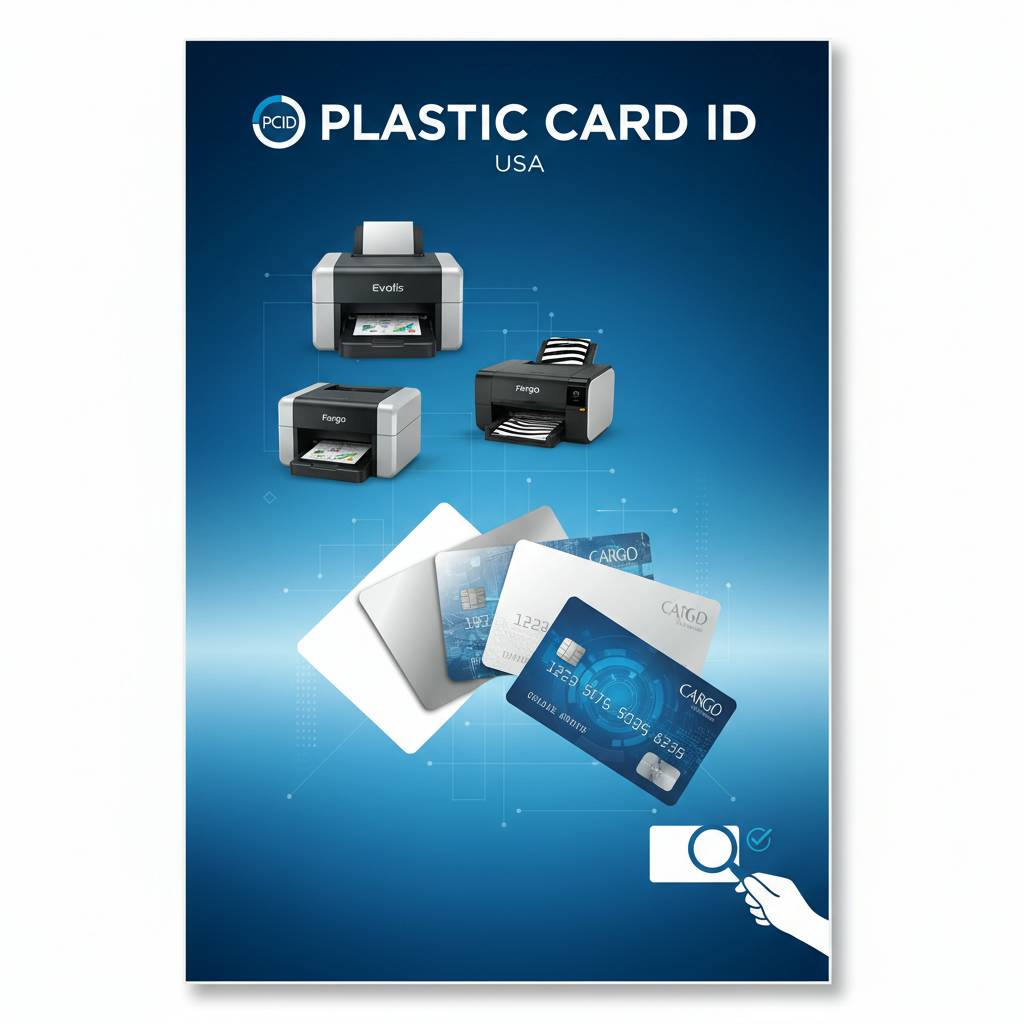 Buyers researching where to buy plastic card printers in the USA often arrive with similar questions. The answers below reflect the kind of guidance that CPE provides to customers every day - practical, honest, and focused on helping you make the right decision for your specific situation.
What's the Difference Between Single-Sided and Dual-Sided Printing?
Single-sided printers print on one face of the card. Dual-sided printers - sometimes called duplex printers - print on both faces in a single pass through the machine. If your card design uses the back of the card for encoding data, regulatory information, instructions, or additional branding, a dual-sided printer is necessary. Models like the Evolis Primacy2 support dual-sided output natively, while some printers require an optional flipper module to add this capability.
For simple applications like basic employee badges or single-face membership cards, single-sided printing is entirely sufficient and keeps both hardware cost and ribbon consumption lower. The decision hinges entirely on your card design requirements, not on any inherent quality difference between the two configurations.
How Do I Know Which Ribbon Type to Order?
Ribbon selection depends on three factors: the printer model you own, the type of card you're producing, and your cost-per-card targets. Full-color YMCKO ribbons work in most color-capable card printers and produce vibrant, photo-quality output. Monochrome ribbons are specified by color (black being most common) and are designed for single-color printing on pre-colored or white card stock.
Every printer model has a specific ribbon format - the ribbon cassette for an Evolis Zenius is different from the one for a Fargo HDP5000, for example. CPE cross-references ribbons to printer models to ensure compatibility. When in doubt, provide your printer model number and current card type when ordering, and the team will confirm the right match. Call 800.835.7919 for ribbon sourcing assistance.
Can I Add Encoding to a Printer I Already Own?
In many cases, yes. Several printer models - including certain Evolis and Fargo units - support field-installable encoding upgrades for magnetic stripe and smart chip options. Whether a specific upgrade is available depends on the printer model and its original factory configuration. Some models require the encoding module to be factory-installed at time of purchase, which is why it's worth discussing your full requirements upfront before finalizing a printer selection.
If your existing printer doesn't support encoding upgrades, the economics of adding encoding capability often favor purchasing a new printer with encoding built in rather than trying to retrofit hardware not designed for it. Plastic Card ID can walk you through both options and help you evaluate the right path forward for your program.
How to Buy: Working with Plastic Card ID Is Straightforward
Purchasing plastic card printers and supplies through Plastic Card ID is designed to be simple and transparent. There's no labyrinthine quoting process, no mandatory consultations before you can access pricing, and no pressure to purchase more hardware or features than your application requires. The process works the way a professional vendor relationship should work.
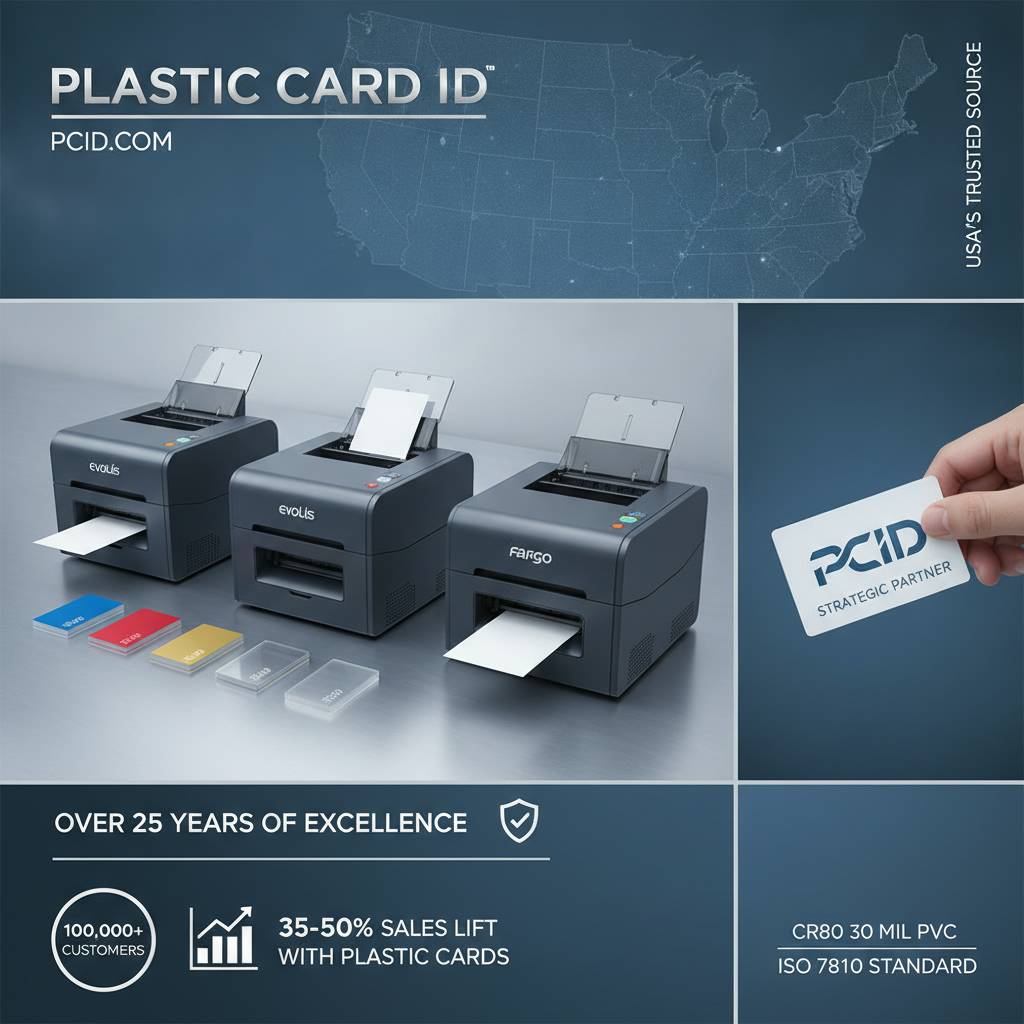
Customers who know exactly what they need can browse, configure, and order directly. Customers who aren't sure which printer fits their workflow - or who have more complex requirements involving encoding, lamination, or high-volume throughput - can engage the team directly for guidance. Both paths lead to the same place: the right hardware for your needs, shipped efficiently, backed by real support.
Shipping and Availability Across the USA
With over 25 years in the business, Plastic Card ID has supply chain logistics that reflect serious operational maturity. Printer inventory, ribbons, cleaning kits, and accessories are stocked and available for prompt shipping to customers across the United States. Whether you're in a major metro area or a more remote location, reliable fulfillment is part of what you're buying when you work with CPE.
Stocking critical consumables - ribbons, cleaning kits - is something Plastic Card ID recommends as standard practice for any organization running an active card program. Running out of ribbon mid-production isn't just inconvenient; it can disrupt credential issuance for employees, members, or students at exactly the wrong moment. Maintaining a small consumables inventory eliminates that risk entirely.
Support After the Purchase
The relationship with Plastic Card ID doesn't end when the printer ships. Ongoing support - for consumables sourcing, troubleshooting questions, upgrade planning, and printer replacement cycles - is part of the value that over 100,000 customers have come to rely on. This is not a vendor that moves on to the next sale and leaves you to figure out the rest independently.
Card programs evolve. Volumes grow, designs change, encoding requirements expand, and eventually hardware reaches end-of-life. Having a trusted supplier who understands your program history and can provide informed guidance at each of those transition points is genuinely valuable. It's one of the reasons customers who bought their first printer from CPE years ago continue to return for supplies, upgrades, and replacement hardware today.
Buyer Tips: Getting the Most From Your Investment
- Assess volume honestly before buying. Underestimating your card volume leads to a bottlenecked printer; overestimating leads to idle capacity and unnecessary cost.
- Spec encoding requirements upfront. Determine whether you need magnetic stripe, smart chip, or contactless encoding before selecting a model - not after.
- Stock consumables from day one. Order at least one spare ribbon and cleaning kit with your printer to avoid production gaps.
- Follow the manufacturer's cleaning schedule. Regular cleaning is the single most effective way to extend printer life and maintain print quality.
- Plan for dual-sided output if your card design uses the back face. Adding flipper capability after purchase is more expensive than specifying it at the time of order.
- Consider lamination for high-wear credentials. Cards subject to frequent handling - access control cards, student IDs, hotel keys - benefit substantially from laminate overlay protection.
Connect with Plastic Card ID Today and Get Your Card Program Running Right
 Whether you're launching a card program from scratch, replacing aging hardware, or scaling up to meet growing production demands, Plastic Card ID has the printers, supplies, and expertise to get it done. The combination of a carefully curated hardware lineup, comprehensive consumables catalog, and more than 25 years of hands-on industry knowledge is difficult to find anywhere else in the United States market.
Stop searching through generic hardware listings and vendor sites that don't understand the specifics of professional card printing. The right printer for your organization exists within the Plastic Card ID lineup - and finding it is far simpler when you're working with a team that has matched thousands of organizations to the right hardware over the course of a quarter century.
Call Plastic Card ID now at 800.835.7919 and speak with a card printing specialist who will help you identify exactly the right printer, supplies, and configuration for your program. Your credentials should look professional, print reliably, and cost less than outsourcing - and with Plastic Card ID, they will.