Best Plastic Card Printer: Top-Rated Models Reviewed
Table of Contents []
- Why Plastic Card ID Is Your Best Source for the Best Plastic Card Printer
- What Actually Makes a Plastic Card Printer the "Best" for Your Operation
- The Brand Lineup: Evolis, Fargo, Zebra, and Matica Explained
- Supplies and Accessories: Keeping Your Card Program Running
- Use Cases: Who Buys the Best Plastic Card Printer and Why
- Buyer's Tips: Choosing the Best Plastic Card Printer Without Regrets
- Frequently Asked Questions About the Best Plastic Card Printer
- Get the Best Plastic Card Printer from Plastic Card ID Today
Why Plastic Card ID Is Your Best Source for the Best Plastic Card Printer
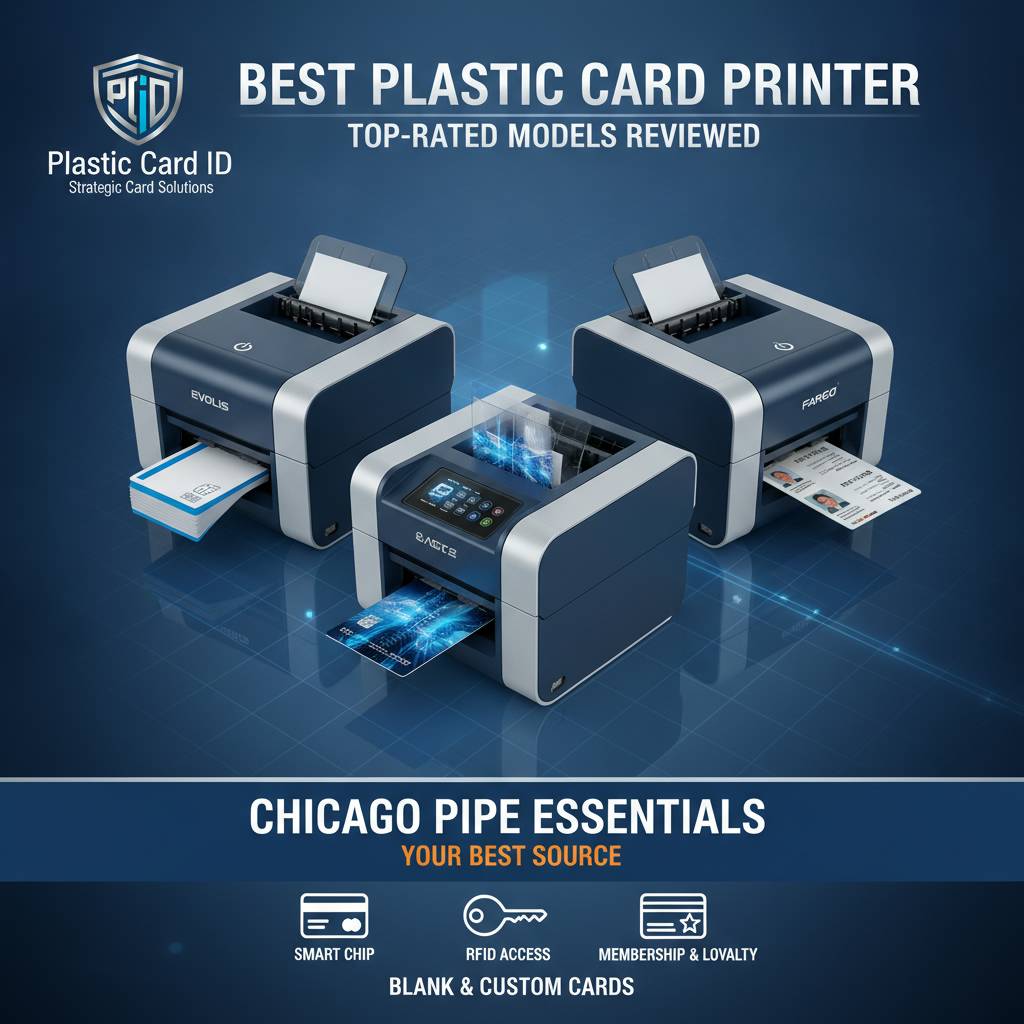 There's a moment every operations manager or IT director knows well: you're staring at a box of generic, outsourced ID cards that arrived two weeks late, printed with someone else's template, encoding errors baked in - and you think, there has to be a better way. There is. In-house card printing puts the entire process back in your hands, on your timeline, with your standards.
Plastic Card ID has been supplying plastic card printers and accessories to businesses across the United States for more than 25 years. With over 100,000 customers served and a curated selection of professional-grade hardware from Evolis, Fargo, Zebra, and Matica, CPE knows what serious card programs actually need - not what looks impressive in a brochure.
This guide walks you through everything: how to choose the best plastic card printer for your volume and use case, what accessories keep your program running smoothly, and why the right partner makes all the difference. Whether you're printing 200 employee badges a year or 6,000 loyalty cards a month, there's a precise solution here for you.
| Category | Volume Range | Ideal Use Case | Example Model |
|---|---|---|---|
| Entry-Level Desktop | Under 1,000 cards/year | Small offices, clubs, nonprofits | Evolis Badgy200 |
| Mid-Range Workhorse | 1,000-6,000 cards/month | Corporate ID, access control, loyalty | Evolis Primacy2, Zenius |
| Premium Quality | High-demand, edge-to-edge print | Government, financial, prestige cards | Evolis Agilia |
| Security-Focused | Variable | Government ID, secure access | Fargo, Zebra |
| Event / High-Speed | Burst printing, on-site | Conferences, trade shows, live events | Matica Event Printer |
What Actually Makes a Plastic Card Printer the "Best" for Your Operation
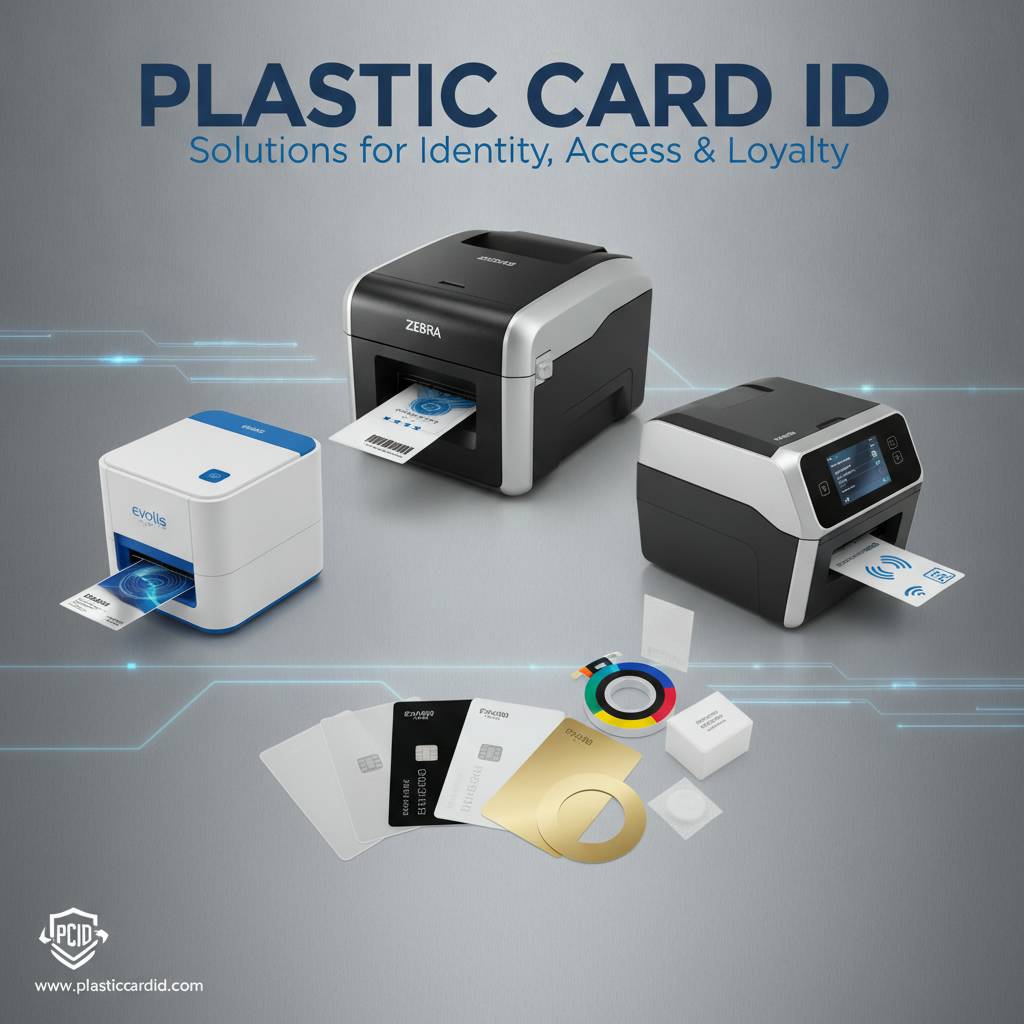 The phrase "best plastic card printer" gets thrown around a lot, but best is always relative to context. A boutique fitness studio printing 300 membership cards annually has radically different needs than a regional hospital system issuing access control badges to 4,000 employees. Volume, print quality, encoding requirements, and budget all play decisive roles.
The single most important variable most buyers overlook is duty cycle - the number of cards a printer is engineered to produce within a given period without strain. Pushing a light-duty desktop machine into a mid-range workload doesn't just slow you down; it degrades print heads prematurely and inflates your total cost of ownership considerably.
Volume: The Foundation of Every Smart Buying Decision
Start with an honest count. How many cards does your organization actually print per month - not per year in aggregate, but consistently, month over month? Factor in peak periods: back-to-school season for universities, open enrollment for HR departments, conference season for associations. Your printer needs to handle peaks, not just averages.
If you're genuinely below 1,000 cards per year, an entry-level unit like the Evolis Badgy200 delivers excellent value without unnecessary complexity. It's compact, intuitive, and gets the job done without a steep learning curve. Step up to the Evolis Zenius or Primacy2 if your numbers are climbing toward or past 1,000 cards per month.
Single-Sided vs. Dual-Sided Printing
Single-sided printing is faster per card and works perfectly when your design and data live on one face. Dual-sided printing - available on models like the Evolis Primacy2 - doubles the usable card real estate, allowing employee photos on the front and emergency contacts, barcodes, or policy details on the reverse. Many organizations don't realize they need dual-sided capability until they're already locked into a single-sided unit.
Think about your card's full functional life. A hotel key card might only need a front-facing logo and a magnetic stripe. A corporate ID badge, however, might carry a headshot, department info, an access chip, and a barcode on the back. Matching the print mode to the card's real-world job is a discipline that saves money in the long run.
Encoding Options: Magnetic Stripe, Smart Chip, and Beyond
Not every card needs encoding - but when it does, the integration has to be seamless. Magnetic stripe encoding writes cardholder data directly onto the card's stripe during printing, enabling access control systems, point-of-sale loyalty programs, and time-attendance tracking without a separate encoding step. Many Evolis, Fargo, and Zebra models support magnetic stripe encoding as a factory-installed or field-upgradeable option.
Smart chip encoding takes security and data capacity further still, embedding writable microchips into cards for applications like building access, healthcare credentials, and cashless campus systems. If your access control or identity program requires smart card integration, confirm encoding compatibility before purchasing - CPE can help you identify the right configuration.
The Brand Lineup: Evolis, Fargo, Zebra, and Matica Explained
Not every brand plays in every space, and understanding the positioning of each manufacturer saves you from buying the wrong tool. Plastic Card ID carries these four brands deliberately - each addresses a segment of the market where it genuinely leads, rather than merely competing.

What's worth noting is how much overlap there isn't. These brands don't cannibalize each other in the lineup; they complement each other. Together they cover everything from a 50-card-per-month membership operation to an enterprise-grade secure identity program issuing thousands of credentials weekly.
Evolis: Versatility Across Every Volume Tier
Evolis is arguably the most versatile brand in the professional card printer market, with models spanning the full volume spectrum. The Badgy200 anchors the entry level - simple setup, bundled software, and a price point that fits tight budgets without sacrificing output quality. Moving up, the Zenius and Primacy2 are the mid-range workhorses that handle the bulk of corporate ID, loyalty card, and access control programs across the country.
At the top of the Evolis range, the Agilia delivers edge-to-edge, highest-quality printing suited to organizations where card aesthetics and precision matter as much as throughput. Think government-issued credentials, financial-adjacent identity cards, or prestige membership programs where every card is a brand statement.
Fargo and Zebra: Purpose-Built for Security Programs
Fargo and Zebra have long-standing reputations in the secure identity space. If your card program involves government-issued IDs, law enforcement credentials, controlled facility access, or any application where card fraud or duplication is a genuine operational risk, Fargo and Zebra printers offer the security features - lamination overlays, UV printing, tamper-evident topcoats - that entry and mid-range units typically don't include.
Zebra printers, in particular, integrate smoothly into enterprise IT environments, with connectivity and management options that align well with large-scale deployments. For organizations already running Zebra infrastructure in their warehouses or logistics operations, extending the same brand into the card printing room is a logical step that simplifies support and procurement.
Matica: When Speed at Live Events Is Non-Negotiable
The Matica Event Printer occupies a unique space in the lineup. Designed specifically for high-speed on-site badge printing at conferences, trade shows, sporting events, and large-scale gatherings, it produces credentials fast enough to keep registration lines moving. On-demand event badging eliminates the logistical nightmare of pre-printed badge packets, last-minute name changes, and badge reprinting scrambles.
Event planners and conference organizers who have experienced the Matica workflow rarely go back to static pre-printed credentials. The ability to print personalized, encoded badges on arrival - pulling from a live registration database - is a guest experience upgrade as much as an operational one.
Supplies and Accessories: Keeping Your Card Program Running
 A printer without a reliable supply chain is a paperweight with a warranty card. The ongoing consumables side of a card program is where many organizations stumble, either by buying incompatible ribbons, skipping cleaning cycles, or ignoring lamination options that could dramatically extend card life. CPE stocks everything your program needs to run without interruption.
Printer Ribbons: Matching Ribbon to Application
Ribbon selection is more nuanced than it appears. YMCKO ribbons - yellow, magenta, cyan, black, and overlay - are the standard for full-color card printing, delivering vibrant, photo-quality results on employee IDs, membership cards, and loyalty cards. Monochrome ribbons in black, blue, red, or gold print single-color designs at significantly lower cost per card, making them ideal for access cards, visitor passes, or any design that doesn't require color photography.
Specialty ribbons include options with integrated magnetic stripe patches, UV-fluorescent panels for covert security features, and half-panel configurations that reduce ribbon waste for back-of-card text-only printing. Selecting the right ribbon for each job isn't just a quality decision - it's a cost-per-card decision that adds up meaningfully over thousands of prints.
Cleaning Kits and Maintenance Supplies
Print head longevity is directly tied to cleaning discipline. Dust, card debris, and ribbon residue accumulate inside the printer's card path and degrade output quality in ways that aren't immediately obvious - a slight banding here, a color inconsistency there - until you're facing expensive print head replacement months ahead of schedule. Regular cleaning cycles with manufacturer-approved kits protect your hardware investment.
Most professional card printers have built-in cleaning prompts triggered by card count. When that prompt appears, run the cleaning card immediately rather than dismissing it. The few minutes spent on maintenance now can add years to a print head's effective life. CPE supplies cleaning kits compatible with every printer brand in the lineup.
Lamination Modules and Card Durability
Lamination overlaminates apply a thin protective film to printed cards, dramatically increasing resistance to scratches, UV fading, and everyday wear. For cards that live in wallets, badge holders, or are swiped through readers dozens of times daily, lamination is not a luxury - it's a durability requirement. Some Fargo and Zebra models include integrated lamination as a core feature; for others, it's an add-on module.
Beyond durability, lamination adds a layer of security. Holographic lamination overlays are virtually impossible to replicate without commercial equipment, making laminated cards significantly more resistant to counterfeiting than unlaminated alternatives. For employee ID and access control applications where card authenticity matters, this is a worthwhile upgrade to discuss when configuring your printer.
Use Cases: Who Buys the Best Plastic Card Printer and Why
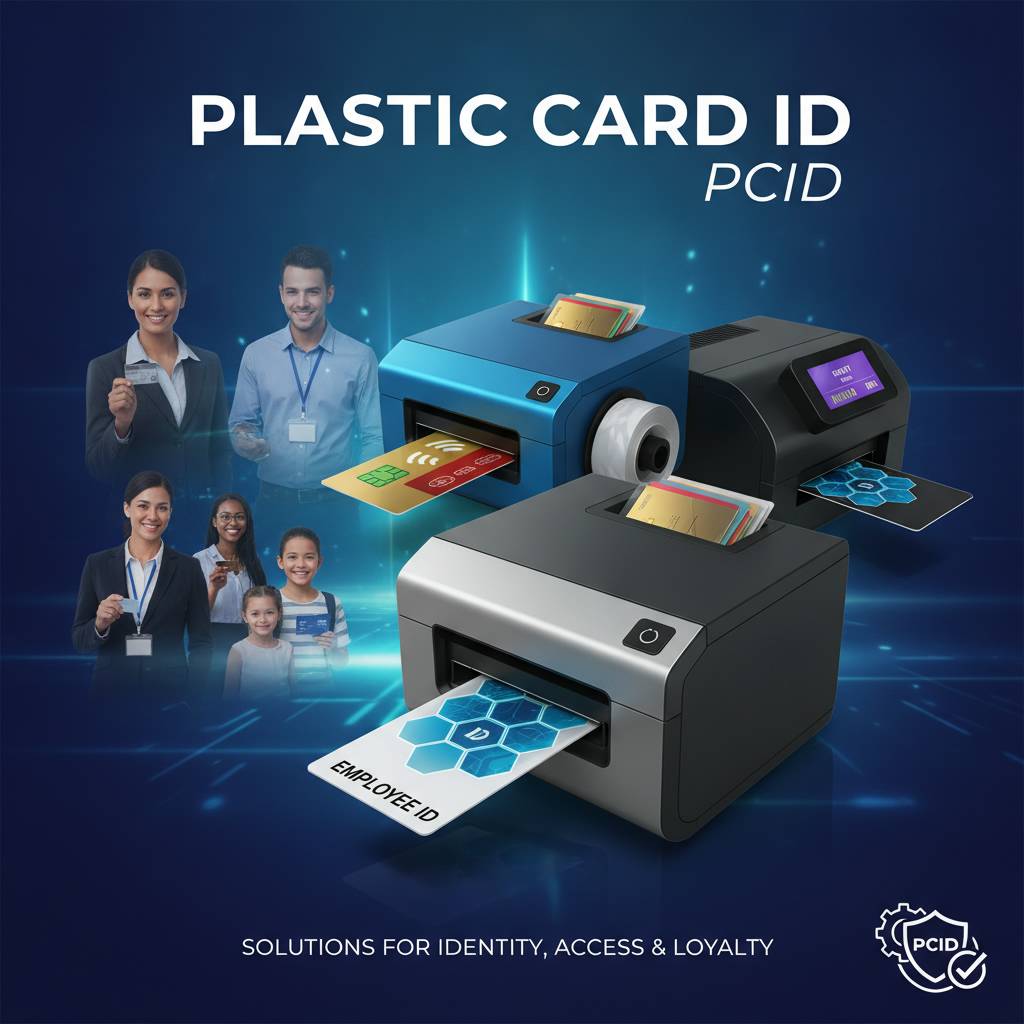 The breadth of industries that rely on in-house card printing is genuinely surprising until you start listing them. The common thread isn't industry - it's the need for on-demand, personalized, professional credentials that represent the organization with authority.
Corporate and Enterprise Identity Programs
Large employers issuing employee ID cards to hundreds or thousands of staff are among the highest-volume card printing customers. The operational advantages of in-house printing are substantial: new hire badges ready on day one, instant replacement for lost or damaged cards, immediate deactivation and reprint for role changes, and no dependency on an outside vendor's production schedule.
For enterprise deployments, mid-range and high-throughput printers from the Evolis, Fargo, and Zebra lineups with dual-sided printing, smart chip encoding, and lamination capabilities handle even large workforce populations without strain. Organizations that have moved card production in-house consistently report faster onboarding, tighter access control compliance, and lower per-card costs over time.
- New hire IDs printed same-day, eliminating temporary badge workarounds
- Immediate card updates when roles, departments, or access levels change
- Magnetic stripe or smart chip encoding for access control integration
- Dual-sided printing for photo, department info, barcodes, and policy text
- Complete audit trail of who issued which card and when
Education: Student IDs, Campus Access, and More
Schools, colleges, and universities have some of the most dynamic card printing needs in any sector. Student populations turn over annually, faculty rosters shift each semester, and the cards themselves serve multiple functions: photo ID, library card, meal plan credential, access control badge, and transit pass - sometimes all at once. In-house printing gives campus card offices the agility to handle enrollment spikes, transfers, and replacements without batching orders to outside vendors.
The Evolis Primacy2's dual-sided capability and encoding options make it a natural fit for campus card programs. Combined with a well-organized card management software workflow, a single mid-range printer can support a surprisingly large student population with consistent output quality throughout the academic year.
Hospitality, Events, and Membership Organizations
Hotels printing key cards on-site rather than ordering pre-encoded blanks from a supplier gain immediate flexibility: custom branding, guest name personalization, and instant reissue when a guest loses their key at 11 PM. Membership-based organizations - gyms, clubs, associations, loyalty programs - benefit similarly, handing new members a professional, photo-personalized card at the moment of signup rather than promising one in the mail.
For live events, the Matica Event Printer's speed advantage is decisive. Rather than managing an enormous pre-printed badge inventory that requires alphabetized sorting and constant reprinting for errors and last-minute registrations, on-demand event badging turns registration into a seamless, impressive experience that attendees notice and appreciate.
Buyer's Tips: Choosing the Best Plastic Card Printer Without Regrets
Buying the wrong printer isn't always obvious at first. The problems reveal themselves gradually - in print quality that doesn't hold up, in a duty cycle that can't keep pace with demand, in encoding options you needed but didn't spec for. These practical tips help you avoid the most common pitfalls.
Map Your Actual Workflow Before You Buy
Before you focus on any specific model, document the full journey of a card in your organization. Where does the data come from? Who approves the print job? Does encoding happen at the printer, or is it handled separately? Do cards need lamination before distribution? Understanding the workflow in detail reveals requirements that a simple "cards per month" estimate doesn't capture.
Organizations with complex workflows - multiple data sources, multiple card types, encoding plus lamination, supervised issuance - often benefit from a brief conversation with an experienced supplier before ordering. Call Plastic Card ID at 800.835.7919 to walk through your specific program requirements and get a recommendation grounded in real operational experience rather than generic product specs.
Total Cost of Ownership vs. Purchase Price
A $400 entry-level printer and a $1,200 mid-range printer aren't $800 apart over three years - not once you factor in ribbon cost per card, cleaning supply consumption, print head replacement frequency, and downtime costs when an underpowered machine struggles with your volume. The cheapest printer by purchase price is rarely the most economical choice for organizations printing more than a few hundred cards per month.
Calculate cost per card across a realistic 36-month window. Include ribbons, cleaning kits, replacement parts, and an honest estimate of staff time spent managing printer issues. That calculation almost always closes the apparent price gap between entry-level and mid-range hardware - and often makes a strong case for investing in the higher-tier machine from day one.
Don't Underestimate Connectivity and Software Compatibility
Modern card printers connect via USB, Ethernet, or Wi-Fi depending on model and configuration. Enterprise environments with centralized print management need Ethernet-connected printers that integrate with their existing network infrastructure. Smaller operations may prefer a USB-direct desktop setup for simplicity. Confirming connectivity compatibility with your existing card design and issuance software prevents frustrating surprises after delivery.
Most professional printers include bundled card design software adequate for standard ID programs, but if your organization uses a specific HR or access control platform, verify that the printer's drivers are supported. CPE can advise on compatibility before you commit to a configuration, saving you the headache of post-purchase troubleshooting.
Frequently Asked Questions About the Best Plastic Card Printer
 These are the questions Plastic Card ID hears most often from buyers evaluating their first printer purchase or upgrading an existing program. Straightforward answers, no filler.
How long do plastic card printers typically last?
With proper maintenance - regular cleaning cycles, appropriate ribbon selection, and operating within the printer's rated duty cycle - professional card printers routinely deliver five to ten years of reliable service. Print heads are the most wear-sensitive component and can be replaced when needed, often extending a printer's productive life well beyond the hardware's initial cost amortization period.
The brands in CPE's lineup are commercial-grade tools built for sustained use, not consumer electronics with two-year lifespans. Invest in a cleaning kit regimen from day one and the machine will reward you with consistent output for years.
What types of cards can these printers produce?
Standard CR80 PVC cards - the size of a credit card - are the default format for virtually every printer in the lineup. Within that format, the range of card types these printers support is broad: employee ID cards, membership cards, loyalty and rewards cards, access control cards, student IDs, hotel key cards, event credentials, visitor passes, and more.
- Employee and contractor ID badges
- Loyalty and rewards program cards
- Student and faculty university IDs
- Hotel and resort key cards
- Event credentials and conference badges
- Access control and security cards
- Club and association membership cards
Can I add encoding capability to a printer I already own?
In many cases, yes. Several Evolis, Fargo, and Zebra models support field-upgradeable encoding modules - magnetic stripe, smart chip contact, or contactless RFID - that can be installed after the initial purchase. This means organizations that start with a basic print-only configuration can expand functionality as their program evolves without replacing the entire printer.
Field upgradability is a significant total cost of ownership advantage that buyers often discover only after the fact. When in doubt, spec for the encoding capability you might need in the next two to three years rather than optimizing purely for today's requirements. Contact CPE for guidance on which models offer the most flexible upgrade paths.
Get the Best Plastic Card Printer from Plastic Card ID Today
 Twenty-five years of supplier relationships, 100,000-plus customers across every industry vertical, and a lineup built on Evolis, Fargo, Zebra, and Matica hardware - Plastic Card ID brings genuine expertise to every conversation about card printing. This isn't a catalogue operation that ships boxes and disappears; it's a knowledgeable partner invested in your program's success from initial spec to ongoing supply replenishment.
Whether you're launching a new card program from scratch, replacing aging hardware, or scaling an existing operation to meet growing demand, the right printer, the right accessories, and the right guidance make all the difference between a card program that hums and one that constantly creates operational friction. The investment in professional-grade in-house printing pays for itself - in speed, in control, in card quality, and in the elimination of vendor lead times that slow your organization down.
Call Plastic Card ID at 800.835.7919 today. Talk to a real expert, describe your card program, and walk away with a clear, confident recommendation for the best plastic card printer for your specific needs. No guesswork, no regrets.
Previous Page