Smart Chip Encoding Card Printer Options: Complete Overview
Table of Contents []
- Smart Chip Encoding Card Printer Options from Plastic Card ID
- What Smart Chip Encoding Actually Means for Your Card Program
- Printer Models Built for Smart Chip Encoding
- Accessories and Supplies That Keep Your Smart Card Program Running
- Who Uses Smart Chip Encoding Card Printers?
- Buyer's Guide: Choosing the Right Smart Chip Encoding Printer
- Why Plastic Card ID Is the Right Partner for Your Smart Card Program
Smart Chip Encoding Card Printer Options from Plastic Card ID
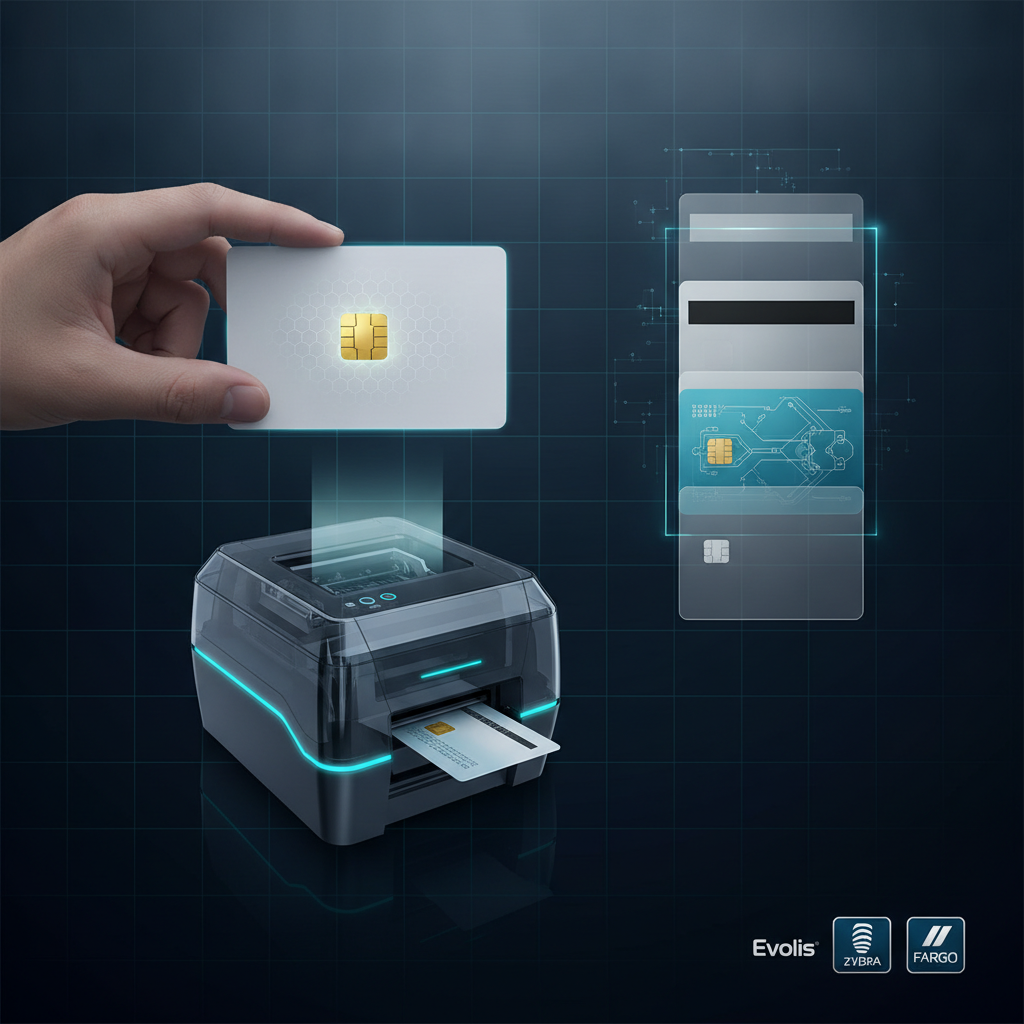 Most businesses don't realize how much they're leaving on the table until they discover what a smart chip encoding card printer can actually do. We're talking about contact and contactless chip technology built directly into the cards your staff, students, or members carry every single day - cards that open doors, verify identities, store credentials, and interact with readers in ways that a plain printed card simply cannot. Plastic Card ID has spent over 25 years placing exactly this kind of technology into the hands of organizations across every industry in the United States.
The question isn't whether your organization needs smarter cards. The question is which printer, which encoding module, and which workflow fits what you're actually doing. That answer looks very different for a 50-person company printing 200 cards a year than it does for a university managing 15,000 active student IDs. This page breaks it all down - brands, models, encoding options, accessories, and honest buyer guidance - so you can make a confident, well-informed decision.
| Printer Model | Brand | Smart Chip Encoding | Volume Range |
|---|---|---|---|
| Badgy200 | Evolis | Optional Add-On | Up to 1,000 cards/year |
| Zenius | Evolis | Contact / Contactless | 1,000-6,000 cards/month |
| Primacy2 | Evolis | Contact / Contactless / Dual | 1,000-6,000 cards/month |
| Agilia | Evolis | Full Encoding Suite | High-Volume / Premium |
| Fargo Series | Fargo / HID | Contact / Contactless | Mid to High Volume |
| Zebra Series | Zebra | Smart Card Ready | Mid to High Volume |
What Smart Chip Encoding Actually Means for Your Card Program
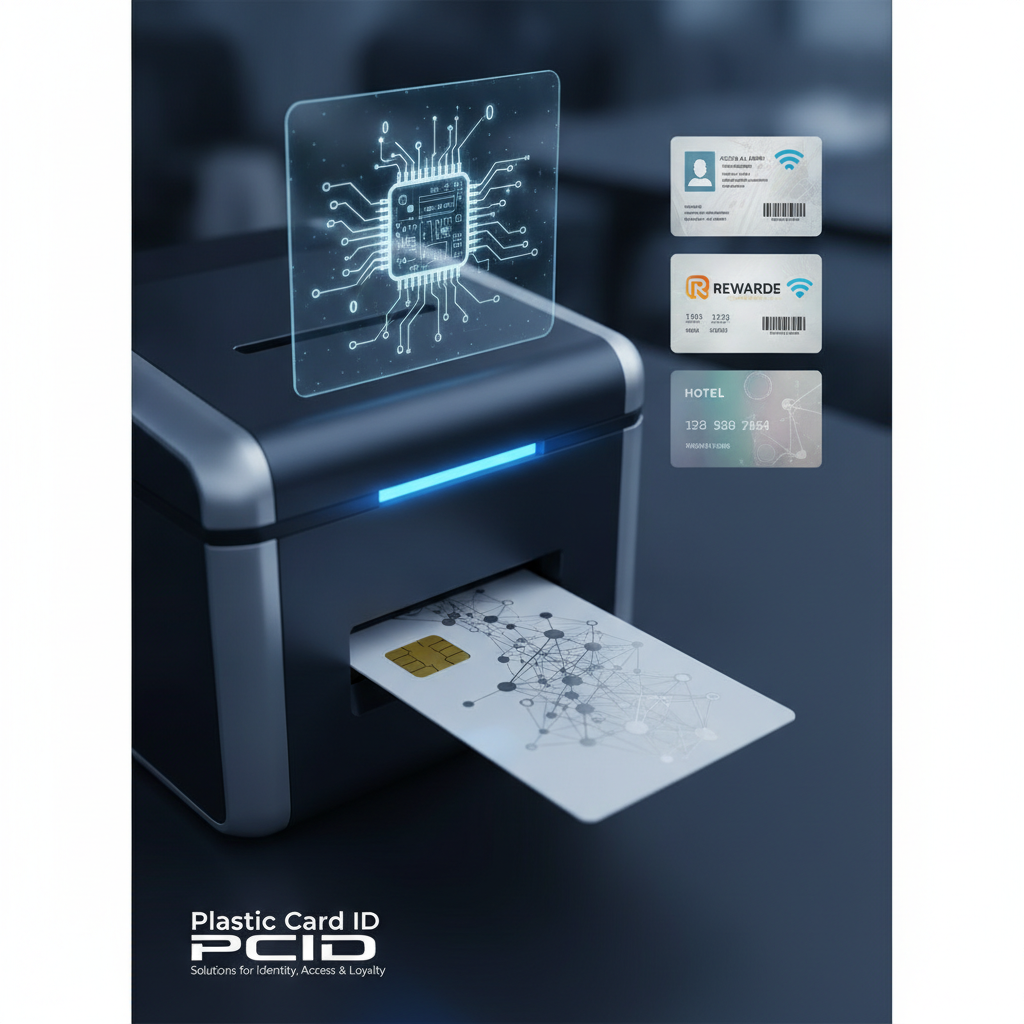 There's a meaningful difference between a card that looks professional and a card that actually does something. Smart chip encoding transforms a printed PVC card into a functional credential - one that carries encrypted data, communicates with readers, and performs authentication tasks that no amount of beautiful full-color printing can replicate on its own. The technology is already proven, widely deployed, and more accessible than most buyers assume.
Card printers capable of encoding smart chips are, at their core, still card printers. They print your design, apply your branding, capture a photo - and then, in the same automated pass, they write data to the chip embedded in the card. That all-in-one capability is what makes in-house card printing so compelling. No outsourcing, no waiting, no batch minimums from third-party vendors.
Contact Chip Encoding Explained
Contact smart cards have a small gold-plated module on the card surface - the same type you see on modern bank cards. When the card is inserted into a compatible reader, electrical contacts touch the chip and transfer data. Inside the printer, an encoding station performs a similar contact process, writing the appropriate data during the card's print cycle.
These cards are ideal for logical access applications, network login, PKI-based authentication, and any scenario where a physical insertion into a reader is acceptable. Contact chip encoding is one of the most reliable, tamper-resistant credential formats available at the organizational level, and it integrates cleanly with most enterprise access control platforms.
Contactless Chip Encoding and RFID Technology
Contactless smart cards use embedded antennas to communicate wirelessly with readers - no insertion required. Just tap or wave the card near a compatible reader and the transaction completes in milliseconds. This format dominates physical access control environments: office buildings, parking structures, server rooms, labs, and anywhere that throughput and convenience matter.
Printers with contactless encoding modules write to these cards using an RF interface built into the encoding station. The card never needs to leave the print path. A single automated workflow produces a fully personalized, fully encoded credential ready for immediate issuance. Common contactless standards supported include ISO 14443, ISO 15693, MIFARE, and DESFire - ask CPE which standard aligns with your existing reader infrastructure.
Dual Interface Cards: The Best of Both Worlds
Some applications demand both. Dual interface cards carry a contact chip and a contactless antenna in the same card body, giving cardholders the flexibility to use either method depending on the reader they encounter. These are particularly common in enterprise environments where different access points use different reader types, or where a card must serve both physical and logical access roles simultaneously.
Printers like the Evolis Primacy2 can be configured to handle dual interface encoding in a single pass. That means your organization doesn't need separate production workflows for contact-only and contactless-only cards. One printer, one ribbon load, one automated sequence - and the card that comes out works everywhere it needs to work.
Printer Models Built for Smart Chip Encoding
Choosing the right printer isn't just about volume or budget - it's about matching the hardware's encoding capabilities to the specific chip technology your access control or credential management system requires. CPE stocks printers from Evolis, Fargo, Zebra, and Matica, each bringing distinct strengths to smart chip encoding programs. Here's how the lineup breaks down.
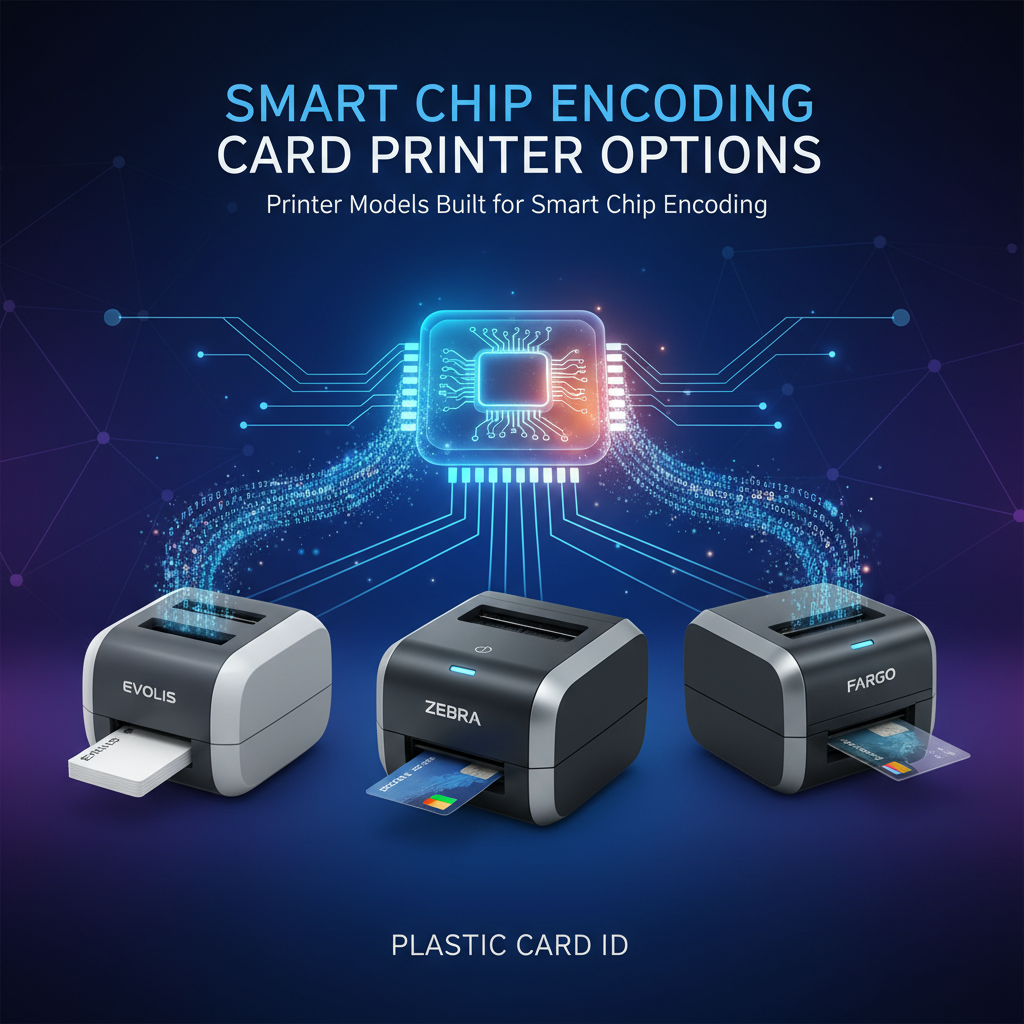
Not every printer in the lineup ships with encoding pre-installed. Many are available as base models with encoding modules added during configuration. That flexibility matters - it lets organizations pay for exactly the capabilities they need without over-specifying hardware for a use case that doesn't require it.
Evolis Zenius and Primacy2 for Mid-Range Encoding
The Evolis Zenius is a single-sided desktop printer that handles 1,000 to 6,000 cards per month with quiet reliability. When configured with a smart card encoding module, it becomes a capable in-house credential production station for organizations that need functional cards without industrial-scale output. It's a workhorse that earns its place in HR departments, membership offices, and access control programs that run at a steady but manageable pace.
The Primacy2 steps up the capability profile considerably. Dual-sided printing, optional lamination, and comprehensive encoding options - including contact, contactless, and dual interface - make it one of the most versatile mid-range card printers on the market. If your program has even the slightest chance of growing in scope or complexity, the Primacy2 is worth the incremental investment over an entry-level unit.
The Evolis Agilia for Premium Smart Card Production
The Agilia occupies a different tier entirely. Designed for organizations demanding edge-to-edge print quality at high output, it also supports the full spectrum of encoding options. When a credential needs to look exceptional and function flawlessly - think executive access badges, premium membership cards, or high-security identification programs - the Agilia delivers both without compromise.
Premium results at high volumes are rarely achievable from a single desktop unit, but the Agilia closes that gap with engineering that prioritizes both throughput and output quality. Organizations that have outgrown their mid-range setup often find the Agilia to be the natural next step rather than a leap into industrial complexity.
Fargo and Zebra Smart Card Printers for Security-Focused Programs
Fargo printers - manufactured under the HID Global umbrella - have a long track record in government, law enforcement, healthcare, and enterprise environments where security and credential integrity are non-negotiable. Their encoding modules are built with those environments in mind, and they integrate naturally with HID's broader access control ecosystem.
Zebra card printers bring similar pedigree, with a focus on durability and network-connected deployment. For organizations running distributed card issuance - multiple locations sharing centralized management - Zebra's smart card capable models fit cleanly into enterprise IT infrastructure. Both brands represent serious hardware for serious programs, and CPE can help you determine which platform aligns with your security architecture. Call 800.835.7919 to discuss your specific encoding requirements in detail.
Accessories and Supplies That Keep Your Smart Card Program Running
 The printer is only part of the equation. A smart chip encoding program needs ribbons, cleaning kits, encoding upgrades, and - depending on your output requirements - lamination modules and expanded input capacity. Skimping on consumables or accessories is one of the most common ways organizations undermine an otherwise solid card printing setup.
Every card that runs through a smart chip encoding printer needs to be produced cleanly and consistently. Dirty print heads, worn rollers, and low-quality ribbons all degrade output - and when chip encoding is involved, a failed write during production means a card that looks great but doesn't function. Maintaining your equipment properly isn't optional; it's fundamental to the program's reliability.
Ribbons for Smart Card Printers
YMCKO ribbons are the standard for full-color card printing with a protective overlay panel. They produce vibrant, professional results with a layer of protection over the printed surface. Monochrome ribbons - black, blue, white, gold, silver - serve applications where color isn't required, like encoding-only runs or single-color text and barcodes. Specialty ribbons extend the capability set further.
It's worth noting that ribbon selection affects cost per card meaningfully. A monochrome ribbon can produce cards at a fraction of the cost of a full YMCKO run, which matters when an organization is printing thousands of cards monthly. Matching the right ribbon type to the right job keeps per-card costs rational without sacrificing output quality where it matters.
Cleaning Kits and Maintenance Supplies
Card printers are precision devices with tight tolerances. Dust, card debris, and ribbon residue accumulate inside the print path and, if left unaddressed, cause print defects, card jams, and encoding errors. Evolis, Fargo, and Zebra all publish recommended cleaning intervals, and CPE stocks the corresponding cleaning kits for each platform.
A regular cleaning schedule is one of the simplest ways to extend printer life and reduce support calls. Cleaning cards, swabs, and IPA-based cleaning solutions are inexpensive relative to the cost of a service call or a failed encoding run. Treat your printer like the precision instrument it is, and it will repay you with consistent, reliable output for years.
Encoding Upgrades, Input Hoppers, and Card Carriers
Many Evolis and Fargo printers are available in base configurations that can be upgraded with encoding modules post-purchase. That means an organization can start with a print-only unit and add smart chip encoding capability when the need arises - without replacing the entire printer. CPE can advise on which models support field-upgradeable encoding and what the upgrade path looks like.
High-capacity input hoppers extend unattended operation, reducing the need for manual card loading during large batch runs. Card carriers and sleeves protect finished credentials during distribution and daily use. These aren't glamorous line items, but they're the difference between a program that runs smoothly and one that generates constant friction. Every piece of the supply chain matters when cards are a core operational asset.
Who Uses Smart Chip Encoding Card Printers?
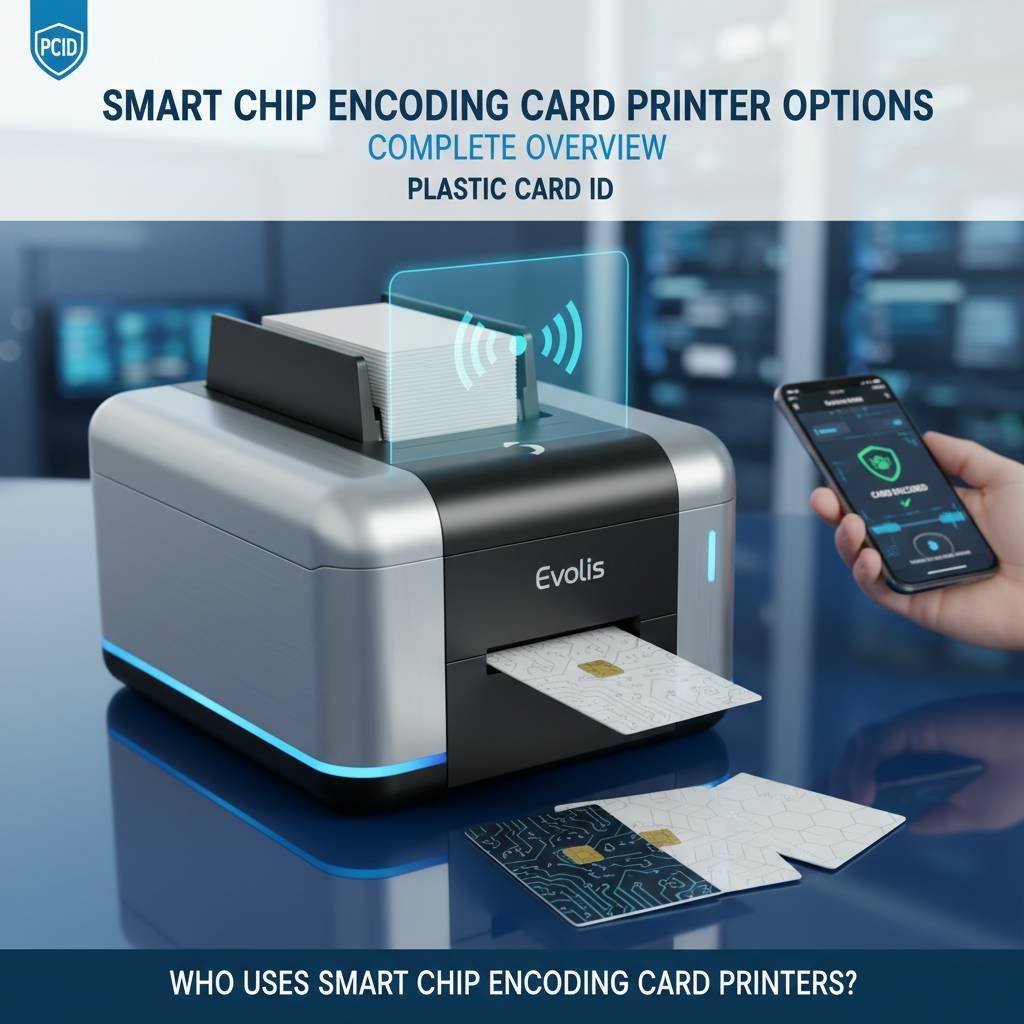 The short answer: a remarkably wide range of organizations. The common thread isn't industry - it's the need to issue functional, secure credentials to a defined population of cardholders. Once that need exists, the question becomes whether to outsource production or bring it in-house. Organizations that choose in-house printing consistently report greater control, faster issuance, and lower per-card costs over time.
Plastic Card ID has placed smart chip capable printers with customers across virtually every sector. The use cases are diverse, but the core value proposition is consistent: print when you need to, encode exactly what you need, and keep the entire process under your roof.
Access Control and Physical Security Programs
Contactless smart cards are the dominant credential format in modern physical access control. Whether a facility is managing entry to a single office or coordinating access across a multi-building campus, contactless chip encoding enables the granular permissioning that swipe-based mag stripe cards simply cannot support. The printer writes the credential; the reader validates it; the door opens or stays locked.
In-house printing means new hires get their access cards on day one rather than waiting for a vendor batch. Terminated employees can be immediately deprovisioned, and replacement cards for lost credentials take minutes, not days. That operational responsiveness has real security value that organizations often don't fully appreciate until they've experienced the alternative.
Student ID and Campus Credential Programs
Universities, colleges, and K-12 institutions use smart card encoding for student IDs that do double duty as library cards, meal plan cards, printing credits, dormitory access credentials, and transit passes. A single dual interface card can serve all of those roles simultaneously, which is why campus card programs have been early and enthusiastic adopters of smart chip encoding technology.
With student populations turning over annually, in-house production is nearly a practical necessity. Waiting weeks for outsourced cards at the start of each semester creates real operational problems. A mid-range encoder like the Evolis Primacy2 can process hundreds of cards per day, keeping pace with enrollment cycles and allowing on-demand reprints as needed throughout the year.
Membership, Loyalty, and Professional Association Cards
Not every smart card application is security-driven. Membership organizations, fitness clubs, professional associations, and loyalty programs use smart chip encoding to store member data directly on the card - enabling offline validation, balance tracking, and enhanced personalization that magnetic stripe alone can't support. The card itself becomes a data-carrying asset rather than just a visual identifier.
For these applications, contact chip encoding is often sufficient and cost-effective. A well-configured mid-range printer handles personalization and encoding in a single automated pass, allowing organizations to produce fully functional membership credentials in-house at a per-card cost that makes the economics undeniably attractive compared to outsourcing.
Buyer's Guide: Choosing the Right Smart Chip Encoding Printer
Walking into a printer selection without a clear picture of your requirements is a reliable way to overpay for features you don't need or - worse - underbuy and hit capacity ceilings within six months. CPE has helped over 100,000 customers navigate this decision, and the following framework captures the most important considerations.
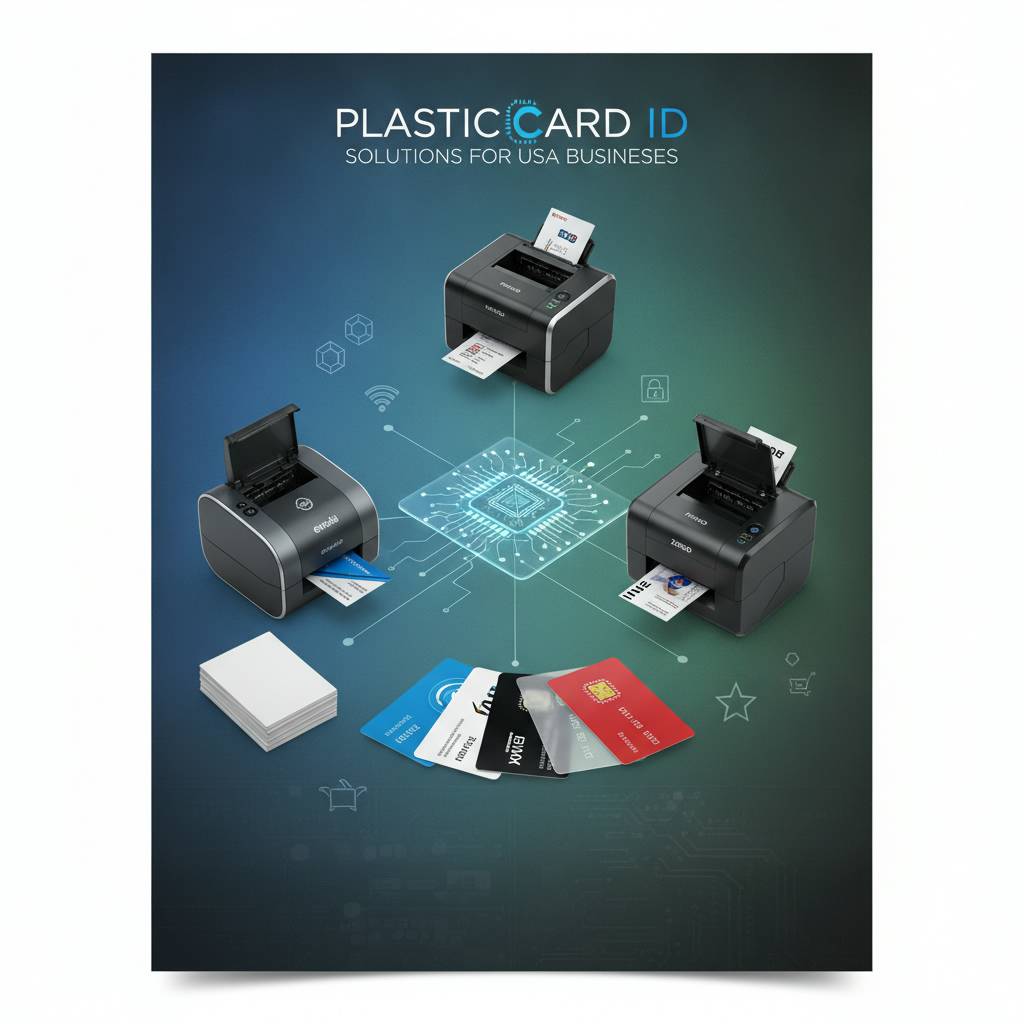
The goal isn't to match a model number to a budget. The goal is to configure a system that serves your actual production needs - today and with reasonable growth headroom - without forcing unnecessary complexity into a straightforward workflow.
Key Questions Before You Buy
- How many cards do you print per month? Entry-level units handle fewer than 1,000 per year. Mid-range models cover 1,000-6,000 per month. High-volume needs require premium or industrial configurations.
- What chip technology does your access control or credential system require? Contact, contactless, dual interface, or a specific standard like MIFARE or DESFire?
- Do you need single-sided or dual-sided printing? Dual-sided adds cost but is often necessary for cards that carry both visual data and encoding elements on the card back.
- Will you need lamination? Lamination significantly extends card life and adds tamper resistance, which matters for long-term credentials like employee IDs or student cards.
- What is your existing reader infrastructure? Encoding to an incompatible standard is a costly mistake. Confirm compatibility before specifying a printer configuration.
- Do you need magnetic stripe encoding in addition to smart chip? Some programs require both, particularly where legacy readers coexist with newer smart card infrastructure.
Entry-Level vs. Mid-Range vs. Premium: A Clear Breakdown
Entry-level printers like the Evolis Badgy200 are genuinely capable for low-volume use cases, but smart chip encoding on entry-level hardware is typically limited. Organizations that need frequent encoding should look at mid-range models from the outset rather than trying to stretch entry-level capability beyond its design intent. The cost difference is usually justified within the first year of operation.
Mid-range printers - the Zenius, Primacy2, and comparable Fargo and Zebra models - hit the sweet spot for most organizational card programs. They support the full range of encoding options, handle dual-sided printing, accept lamination modules, and can sustain daily production volumes without excessive wear. For the majority of buyers reading this page, a mid-range smart card encoder is the correct answer.
When to Consider Premium and High-Volume Hardware
If your organization is printing upward of 6,000 cards per month, operating under strict quality requirements, or deploying credentials where edge-to-edge print quality is non-negotiable, the Evolis Agilia or comparable premium hardware deserves serious consideration. The Matica Event Printer fills a different niche - rapid on-site badge production at large-scale events where speed and volume converge in a compressed time window.
Premium hardware investments pay off fastest in environments where card production is a mission-critical function rather than an occasional administrative task. When the printer is working hard every day, the cost per card economics of a premium unit often outperform mid-range alternatives when total cost of ownership - including consumables, maintenance, and downtime - is factored in.
Why Plastic Card ID Is the Right Partner for Your Smart Card Program
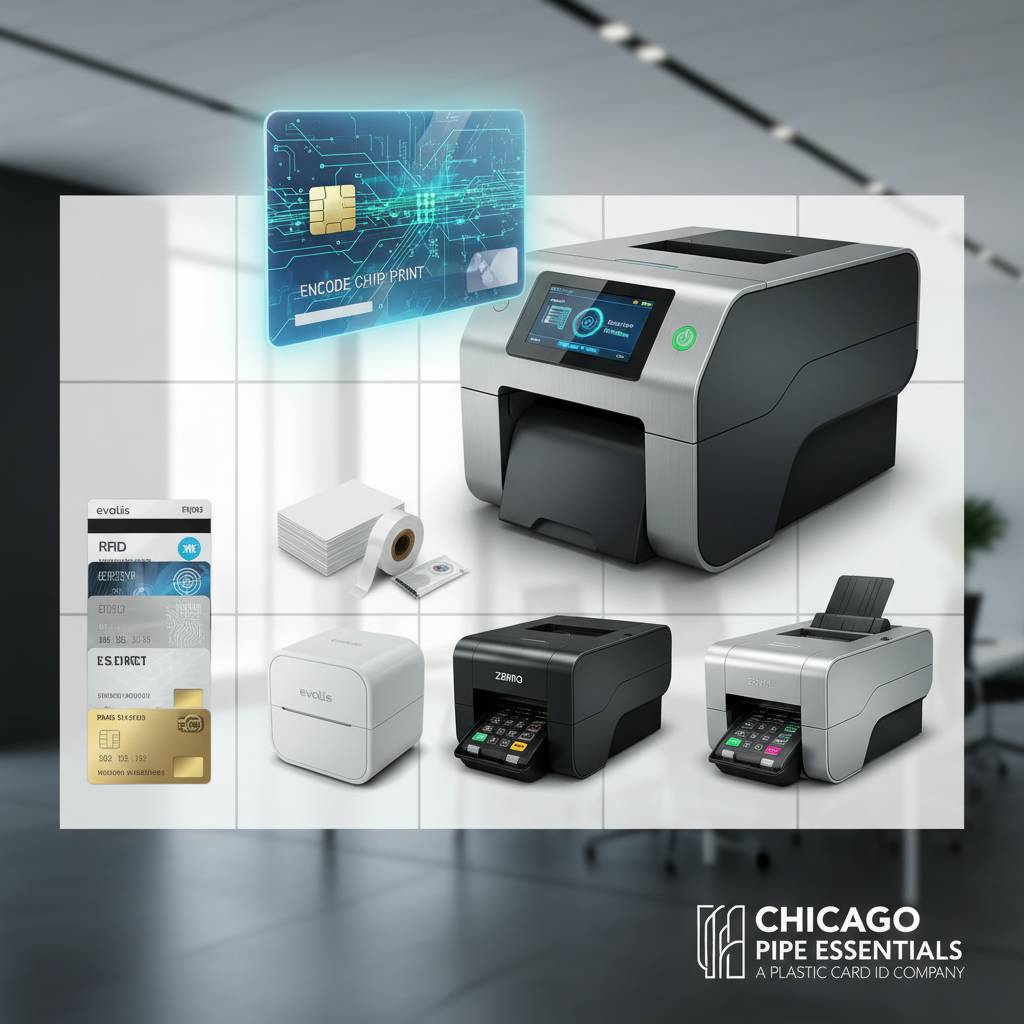 Buying a printer is a transaction. Building a card program is a longer relationship - one that involves ongoing consumable supply, occasional equipment service, configuration support as your needs evolve, and a knowledgeable resource when something unexpected comes up. Plastic Card ID has been that resource for businesses across the United States for over 25 years, and over 100,000 customers have put that experience to work.
The brands in the CPE lineup - Evolis, Fargo, Zebra, Matica - aren't there by accident. They represent the industry's most reliable, best-supported hardware for professional card production. The encoding options, accessories, and supply chain behind those printers are equally deliberate. This is a curated offering from a company that understands what serious card programs actually need.
Depth of Product Knowledge You Can Rely On
Smart chip encoding is not a plug-and-play category for the uninitiated. Matching encoding standards to reader infrastructure, configuring dual interface cards correctly, selecting the right ribbon for encoded card runs - these details matter, and getting them wrong costs time and money. The team at CPE has the product depth to guide buyers through those decisions with confidence.
Whether you're setting up your first card program or expanding an existing one into smart chip territory, the conversation you have before you buy is often the most valuable part of the process. Experienced guidance prevents expensive missteps and positions your organization for a smooth deployment from day one.
Complete Supply Chain for Long-Term Program Success
A printer without a reliable supply chain is a liability. If your ribbon supplier goes out of stock, your cleaning kit takes weeks to arrive, or your encoding upgrade requires sourcing from a different vendor entirely, your production workflow breaks down at the worst possible moment. Plastic Card ID keeps the full supply chain under one roof - ribbons, cleaning kits, lamination modules, encoding upgrades, input hoppers, and card carriers.
That single-source simplicity matters more than most buyers anticipate when evaluating vendors. The real cost of a card program isn't just the printer purchase - it's the ongoing operational reliability of every component that keeps production running. Call 800.835.7919 to discuss your full supply requirements and get a complete picture of what your program needs to thrive.
Supporting Every Card Application Across Every Industry
Employee ID cards, student credentials, access control badges, membership cards, loyalty cards, hotel key cards, event credentials - CPE supports them all. The common thread is in-house card production: the control, the speed, the personalization capability, and the cost efficiency that comes from printing on demand rather than waiting on outside vendors.
Smart chip encoding elevates every one of those applications. A membership card that stores data. An employee badge that opens the right doors. A student ID that works at the library, the cafeteria, and the campus transit system. The technology is proven, the hardware is available, and the expertise to deploy it correctly is a phone call away.
Ready to configure the right smart chip encoding card printer for your organization? Speak with the experts at Plastic Card ID today.
Call 800.835.7919 and let CPE help you build a card program that works exactly the way you need it to - from the first printed card to the thousandth encoded credential and well beyond.
Plastic Card ID has the printers, the supplies, the brands, and the expertise. Call 800.835.7919 now and take the first step toward smarter credentials for your organization.
Previous Page