Plastic Card Printer for Hotel Key Cards Explained
Table of Contents []
- Your Search for the Right Plastic Card Printer for Hotel Key Cards Ends Here - Plastic Card ID
- Printer Models That Fit the Demands of Hotel Card Programs
- Ribbons, Supplies, and Everything That Keeps Your Printer Running
- The Operational Case for Printing Hotel Key Cards In-House
- Frequently Asked Questions About Hotel Key Card Printers
- Who Plastic Card ID Serves in the Hospitality Sector
- Buyer Tips: Getting the Most from Your Hotel Card Printer Investment
- Start Your Hotel Key Card Printer Program with Plastic Card ID
Your Search for the Right Plastic Card Printer for Hotel Key Cards Ends Here - Plastic Card ID
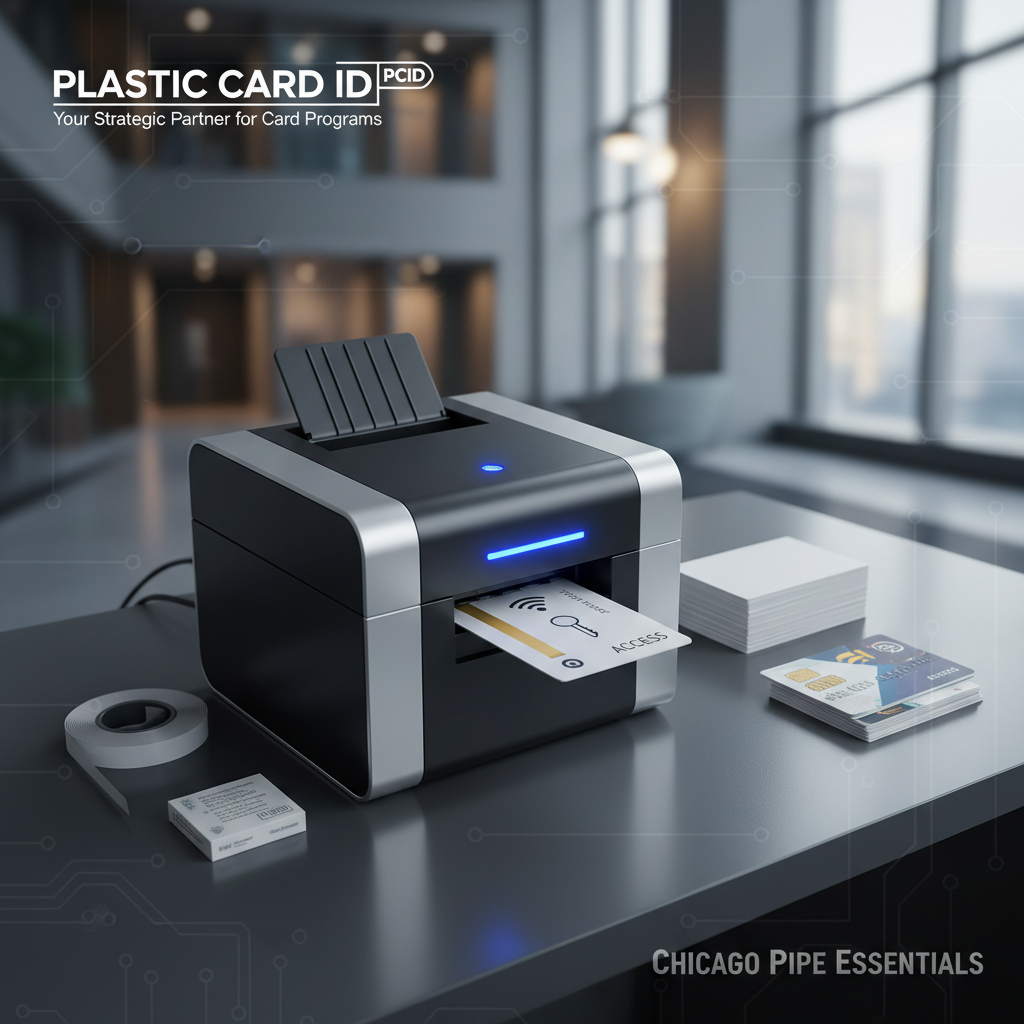 Walk into any hotel lobby and something happens almost invisibly: a guest receives a small plastic card, and with it, access to their room, the fitness center, maybe a loyalty discount at checkout. That card is doing real work. And the printer producing it? That printer is the backbone of your entire guest experience infrastructure. Choosing the wrong one costs you time, money, and guest confidence. Choosing the right one - from the right supplier - changes everything.
At Plastic Card ID, we have spent over 25 years supplying professional-grade plastic card printers and related hardware to businesses across the United States. More than 100,000 customers have trusted us with their card programs, and the hospitality industry represents one of our most active and demanding client bases. Hotels print hotel key cards constantly - at check-in, after a demagnetization incident, for extended stays, for replacements. Volume and reliability are not optional. They are the entire point.
This page covers everything a hotel operator, facilities director, or IT procurement specialist needs to understand about selecting, configuring, and running an in-house plastic card printer for hotel key cards. We'll walk through printer models, encoding options, supplies, and the real operational advantages that come from printing your own cards on-site.
Why Hotels Can't Afford Printer Downtime
Imagine a guest standing at your front desk at 11:45 PM. Their key card stopped working. Your front desk agent reaches for the printer to issue a replacement - and the printer is jammed, out of ribbon, or simply offline. That moment defines your brand in ways no marketing budget can fix. Hospitality card printing is not a back-office function; it is a guest-facing operation measured in seconds.
This is precisely why CPE stocks only professional-grade, commercially rated card printers - not consumer-grade devices, not shared-purpose office equipment. Every printer in our lineup is built for consistent, on-demand output in environments where failure is simply not an option. Reliability is engineered in, not hoped for.
Understanding Hotel Key Card Encoding Requirements
Hotel key cards typically use magnetic stripe encoding, smart chip encoding, or increasingly, RFID/proximity technology. Most mid-tier and full-service hotels still rely heavily on magnetic stripe - specifically HiCo (high-coercivity) magnetic stripes - because the encoding is durable and the infrastructure is already in place. Your printer must support the encoding standard your door lock system requires.
At Plastic Card ID, our printers can be configured with magnetic stripe encoders that write to one, two, or three tracks. Smart chip contact and contactless encoding upgrades are also available for properties using more advanced access control or loyalty card systems. Before selecting a printer, confirm your lock system's encoding specification with your hardware vendor - we can help you match the right printer configuration from there.
Volume: The Number That Drives Your Decision
How many key cards does your property issue per month? A 40-room boutique hotel operates very differently from a 600-room convention resort. A small property may issue 300-500 cards monthly, while a large resort could easily surpass 5,000 or more during peak season. Matching your printer's rated throughput to your actual volume is the single most important selection criterion.
Underpowering your card production creates bottlenecks at the front desk during busy check-in windows. Overbuying for a low-volume property wastes capital you could allocate elsewhere. CPE makes it easy to match printer to workload - our lineup spans entry-level desktop units all the way to high-throughput industrial systems designed for continuous production runs.
| Monthly Card Volume | Recommended Printer Tier | Example Models | Key Features |
|---|---|---|---|
| Under 1,000/year | Entry-Level Desktop | Evolis Badgy200 | Compact, affordable, color printing |
| 1,000 - 3,000/month | Mid-Range Professional | Evolis Zenius, Primacy2 | Dual-sided, magnetic stripe encoding |
| 3,000 - 6,000/month | High-Performance Professional | Evolis Primacy2, Fargo, Zebra | Speed, durability, encoding options |
| 6,000/month | Industrial / High-Throughput | Matica, Evolis Agilia | Edge-to-edge, bulk hopper, continuous operation |
Printer Models That Fit the Demands of Hotel Card Programs
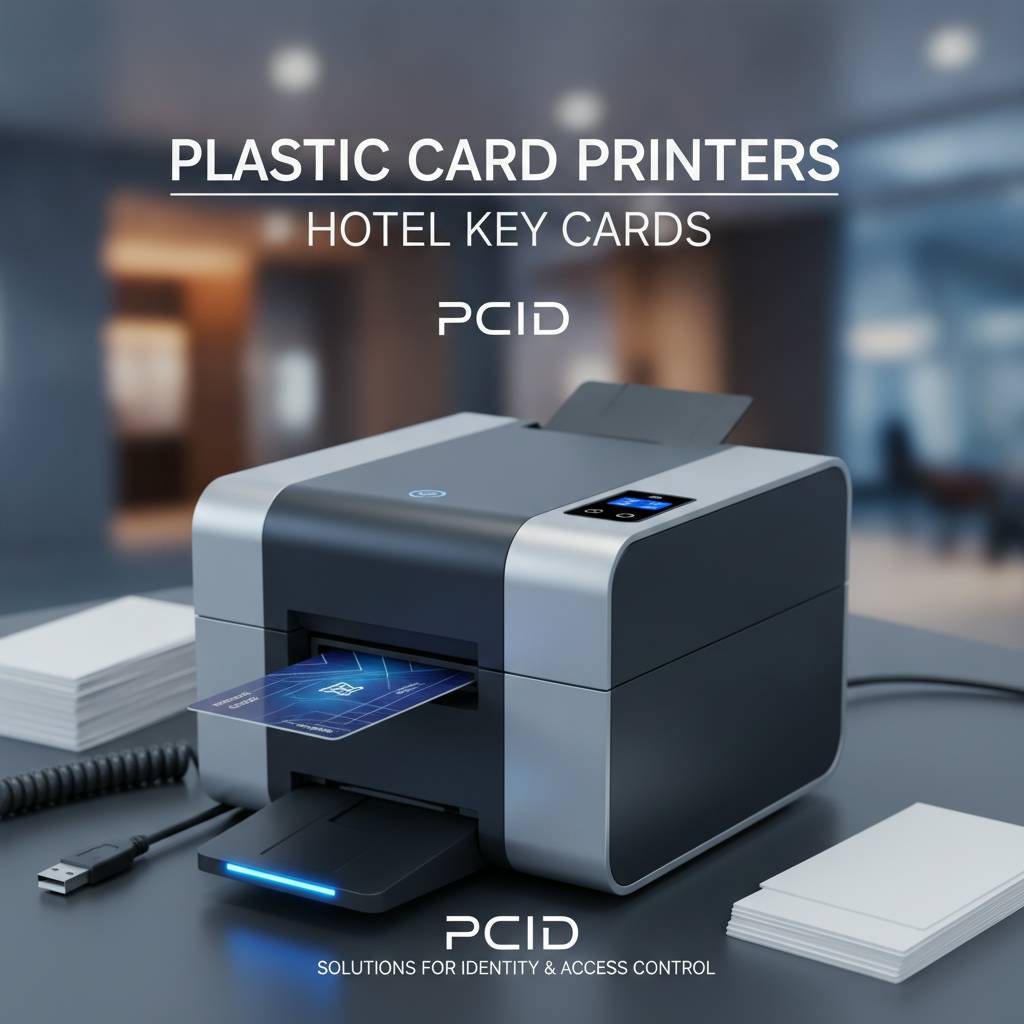 Not every card printer belongs in a hotel environment. Some are built for low-frequency badge printing in HR departments. Others are engineered for continuous-run production in card issuance centers. The models Plastic Card ID carries are specifically selected because they perform across the full hospitality demand spectrum - from the independent inn needing a dependable desktop unit to the resort group managing centralized card production across multiple properties.
Each manufacturer in our lineup - Evolis, Fargo, Zebra, and Matica - brings distinct strengths to the table. Understanding what differentiates them helps you invest intelligently rather than simply buying the most recognizable name. Let's break it down.
Evolis Printers: Versatility Across Every Scale
Evolis has built a reputation for producing clean, reliable card printers that balance print quality with ease of use. For hotels, the most relevant models span a meaningful range. The Evolis Zenius is a solid entry point for properties printing a few hundred cards monthly - compact, straightforward, and capable of magnetic stripe encoding when configured accordingly. It is the kind of printer a front desk manager can learn to operate and maintain without extensive IT involvement.
Step up in demand, and the Evolis Primacy2 earns its place as one of the most widely deployed professional card printers in the hospitality industry. It supports dual-sided printing, magnetic stripe encoding on up to three tracks, and lamination module compatibility - all critical for hotel key card programs that want branded card fronts and encoded backs. Print speeds are fast enough to keep pace with check-in surges at busy properties.
At the premium end, the Evolis Agilia delivers edge-to-edge printing with exceptional image fidelity. For hotel chains that consider card design part of their brand identity - and some definitely do - the Agilia's output quality is simply in a different category. When your key card is also a brand ambassador, print quality is a hospitality metric, not just a technical spec.
Fargo and Zebra: Security-Grade Performance
Fargo printers, long trusted in security-sensitive environments, bring robust encoding capabilities and strong integration with access control systems. Hotels with advanced physical security programs - think executive floors, restricted service areas, or conference facilities with controlled access - will find Fargo's ecosystem particularly well-suited. Fargo printers are built for environments where the card does more than open a room door.
Zebra card printers complement the lineup with their own engineering philosophy: consistent throughput, straightforward driver integration, and hardware durability that shows up in long service cycles. Large hotel management companies that operate many properties benefit from Zebra's standardized platform - one training protocol, one supply chain, predictable maintenance across the fleet.
Matica Event Printer: When Speed Is the Only Metric That Matters
Conference hotels, convention centers, and resort properties hosting large events face a specific printing challenge: hundreds or thousands of credentials needed on-site, on demand, right now. The Matica Event Printer is purpose-built for exactly this scenario - high-speed badge and card production at volumes that would overwhelm a standard desktop unit in short order.
Whether you are credentialing conference attendees, issuing temporary access cards for a convention block, or producing event-specific loyalty badges for a resort weekend, the Matica handles the pace without compromise. CPE can walk you through Matica configurations and help you assess whether a dedicated event printing setup makes sense for your property's calendar.
Reach Our Team Before You Buy
Choosing a card printer involves more variables than most buyers anticipate the first time through. Encoding compatibility, ribbon type, lamination requirements, software integration - these details compound quickly. Call us at 800.835.7919 and speak with a specialist who understands the hospitality environment and can ask the right questions before recommending a configuration.
Ribbons, Supplies, and Everything That Keeps Your Printer Running
A plastic card printer is only as good as the supplies feeding it. Inconsistent or incorrect ribbon choices produce inconsistent cards - faded stripes, smeared graphics, poorly adhered overlaminates. For hotel key cards, where a failed encode or a smeared logo reflects directly on your brand, supply quality is not a secondary concern. It is foundational.
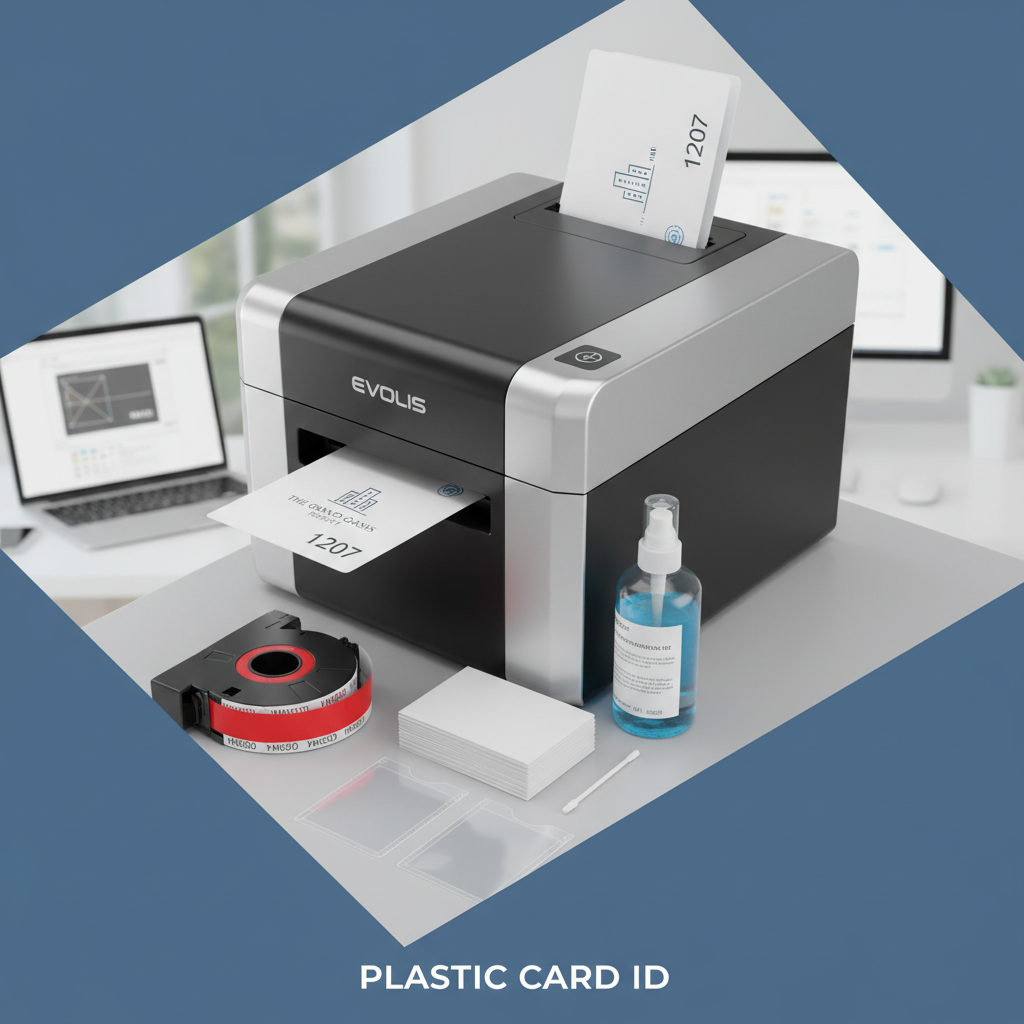
Plastic Card ID supplies the full range of printer consumables to keep hotel card programs running without interruption. We stock ribbons, cleaning kits, lamination rolls, and accessories for every printer model we carry - so you are never hunting across multiple vendors when you run low mid-week.
YMCKO and Specialty Ribbons for Hotel Card Printing
The standard ribbon type for full-color hotel key card printing is YMCKO - Yellow, Magenta, Cyan, Black, and Overlay. The overlay panel applies a clear protective coating that extends card life and resists wear from being slid in and out of wallets, door lock readers, and elevator panels. YMCKO ribbons are the right choice for virtually every hotel key card program printing branded, full-color cards.
Monochrome ribbons - black or single-color - are available for applications where color is not required, such as back-side text printing on a dual-sided card where the front carries all the branding. Specialty ribbons for scratch-resistant finishes, holographic overlaminates, or security overlays are also part of the CPE supply catalog for properties with elevated security or anti-counterfeiting requirements.
Cleaning Kits: The Maintenance Step Most Hotels Skip
Here is an uncomfortable truth: the leading cause of card printer failure is inadequate cleaning. Dust, card debris, and ribbon residue accumulate inside the print mechanism and, over time, degrade print quality and damage sensitive rollers and print heads. A proper cleaning routine extends printer life by years and keeps output sharp and consistent throughout the device's operational life.
Plastic Card ID stocks cleaning kits specific to each printer model in our lineup - cleaning cards, swabs, and cleaning solutions formatted to manufacturer specifications. We recommend establishing a regular cleaning schedule based on print volume, and we can advise on frequency when you call in for a consultation.
Encoding Upgrades, Input Hoppers, and Card Carriers
Beyond ribbons and cleaning supplies, a complete hotel card program often requires additional hardware. High-capacity input hoppers reduce how frequently staff need to reload blank card stock - a meaningful convenience during a high-volume check-in period. Card carriers and sleeves protect finished key cards from demagnetization and physical damage before they reach the guest's hand, which directly reduces the number of replacement cards you have to print.
Encoding upgrades - whether magnetic stripe modules or smart chip contact stations - can often be added to base printer models that shipped without them. If your property's access system is upgrading to a newer technology, your existing printer may be upgradeable rather than replaceable. Contact CPE to confirm compatibility before assuming you need a full hardware replacement.
| Supply Item | Purpose | Replacement Frequency |
|---|---|---|
| YMCKO Ribbon | Full-color card printing with overlay | Per ribbon panel count |
| Monochrome Ribbon | Single-color or back-side text printing | Per ribbon panel count |
| Cleaning Kit | Printer mechanism maintenance | Per manufacturer schedule |
| Lamination Module | Extended card durability and security | Per roll / usage cycle |
| Card Carriers and Sleeves | Protect finished cards from demagnetization | Ongoing stock replenishment |
The Operational Case for Printing Hotel Key Cards In-House
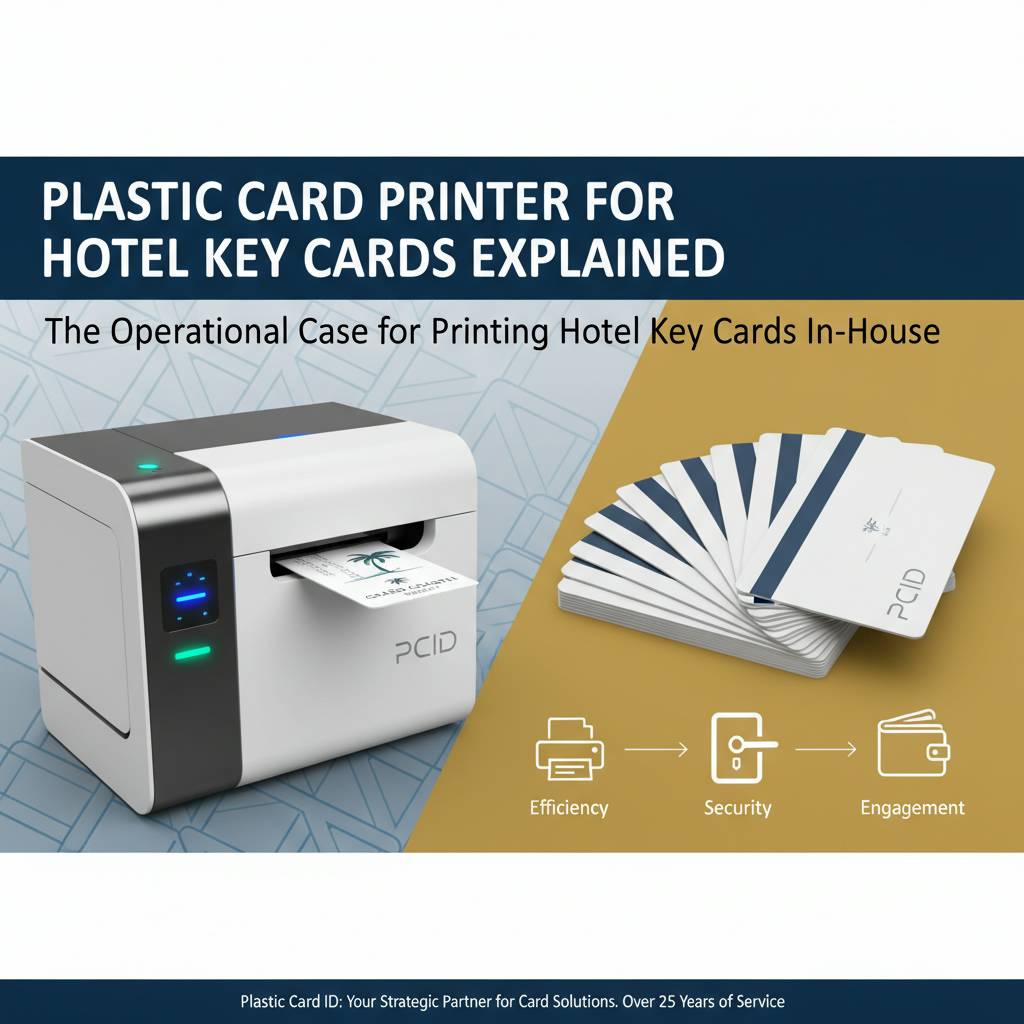 Some hotel operators still outsource their key card production - ordering pre-printed cards in bulk from external vendors and maintaining inventory. This approach has real, quantifiable disadvantages that in-house printing eliminates entirely. In-house card printing puts your property in control of its own timeline, design, and operational cost structure.
When you print your own cards, you print exactly what you need, when you need it. No minimum order quantities. No waiting on shipping. No overstock of cards with last season's branding or an outdated logo. Every card that comes off your printer is current, accurate, and ready to encode and issue immediately.
Eliminating Lead Times and Vendor Dependencies
Ordering cards from an outside vendor introduces lead time into every operational decision. Need to update your card design for a rebrand? You are waiting days or weeks for new stock. Running low unexpectedly during a peak weekend? You either pay rush fees or improvise. Neither scenario reflects the kind of operational discipline a well-run hotel demands.
With an in-house printer from CPE, lead time is essentially zero. Your front desk team prints a card in seconds. Design changes go live the moment you update your template file. You never run out of cards because of a supplier's backlog.
Personalization and On-Demand Encoding
Modern hotel key card programs often do more than simply unlock a door. Cards can encode loyalty tier data, meal plan information, spa access permissions, or parking privileges. Each guest's card is potentially unique - and producing that uniqueness requires an in-house printer capable of real-time encoding at the point of issuance.
Outsourced batch printing cannot do this. It produces identical pre-encoded cards that your system then has to program at check-in anyway - or worse, it leaves personalization as a gap entirely. In-house printing with encoding capability closes that gap completely, enabling a truly integrated guest credential from the moment of issue.
Cost Control Across the Card Program Lifecycle
The capital cost of a professional card printer - ranging from approximately $500-$3,000 depending on model and configuration - is typically recovered within the first year for any property printing more than a few hundred cards per month. Ribbon and supply costs per card are low, predictable, and far below the per-unit cost of outsourced card orders when lead times, minimums, and shipping are factored in. In-house printing is not just more convenient - it is measurably more economical over time.
Properties that switch to in-house production often discover additional savings they had not anticipated: fewer demagnetized card replacements because cards are issued fresh, reduced waste from outdated pre-printed stock, and the elimination of rush order premiums when inventory runs unexpectedly low.
Frequently Asked Questions About Hotel Key Card Printers
 Buyers come to Plastic Card ID with a consistent set of questions about hotel key card printing. We have addressed the most common ones below to help you move from consideration to decision with confidence. Knowledge is the best procurement tool you have.
What encoding standard do hotel key cards use?
Most hotel door lock systems use HiCo magnetic stripe encoding on one or more tracks. Track 2 is the most commonly used for room access data, though some systems use Track 1 or multi-track encoding for additional functions like loyalty program integration or elevator access. Before purchasing a printer, confirm with your lock system provider which track(s) they write to and what coercivity level your cards require. CPE can then match you to the correct encoding module.
RFID and smart chip encoding are growing in the hospitality space, particularly among full-service and luxury properties upgrading their infrastructure. If your property is planning a lock system upgrade in the near term, it may be worth selecting a printer platform that supports encoding upgrades so you are not starting from scratch when the time comes.
Can I print on both sides of a hotel key card?
Yes - dual-sided printing is a standard capability available on mid-range and above printers like the Evolis Primacy2 and comparable Fargo and Zebra models. Most hotel key cards are printed on the front side only, with the magnetic stripe on the back. However, some properties use the back side for printed information such as check-out date reminders, Wi-Fi access codes, or breakfast voucher details. Dual-sided printing gives you that flexibility without requiring a separate print pass.
What should I budget for a hotel key card printer setup?
Entry-level setups for low-volume properties start around $500-$800 for a basic single-sided printer. A fully configured mid-range system with dual-sided printing and magnetic stripe encoding typically runs $1,200-$2,500. High-throughput systems with lamination and advanced encoding capabilities range from $3,000 and up. The right budget is determined by your volume and feature requirements - not by the largest or smallest number on a spec sheet.
- Entry-level: $500-$800 - ideal for boutique hotels under 1,000 cards per year
- Mid-range professional: $1,200-$2,500 - suited for full-service hotels with regular volume and encoding needs
- High-throughput / industrial: $3,000 and above - for large resorts, multi-property operations, or event-heavy venues
- Annual supply costs: Ribbons, cleaning kits, and card stock vary by volume but are predictable and manageable
- Optional add-ons: Lamination modules, high-capacity hoppers, encoding upgrades are priced separately by configuration
How do I know when to clean my printer?
Most professional card printers include built-in cleaning alerts triggered by card count thresholds. Follow those alerts strictly and use only the cleaning materials specified by the manufacturer. Using improper cleaning materials can damage print heads and void warranties. Cleaning is the highest-value, lowest-cost maintenance action available to any card printer operator.
Who Plastic Card ID Serves in the Hospitality Sector
The hospitality world is broader than most people realize when they first start thinking about card printing. Our customer base within this sector spans a wide and sometimes surprising range of property types and use cases. If your operation issues plastic cards to guests, members, staff, or event attendees, you belong in this conversation.
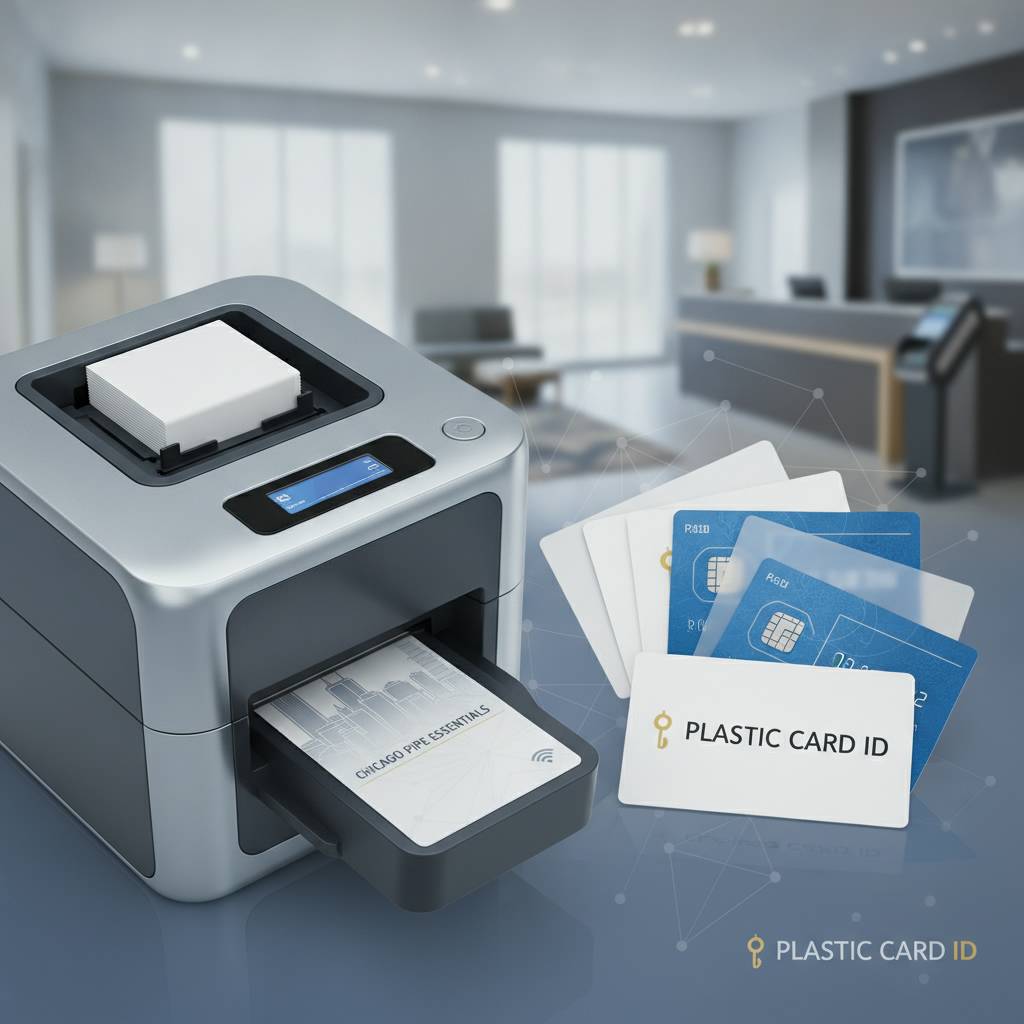
CPE serves properties that need hotel key cards, yes - but also those producing staff ID badges, membership cards for resort clubs, loyalty cards tied to on-property rewards programs, access cards for restricted service areas, and temporary event credentials for conferences and conventions held on-site.
Property Types and Card Programs We Support
Our hospitality customers include independent boutique hotels managing their own front-of-house card programs, large full-service hotel chains running centralized or distributed card production across multiple locations, conference centers and convention hotels producing high-volume event credentials on demand, resort properties issuing multi-function cards that serve as room keys, dining credits, and spa access passes simultaneously, and extended-stay properties where card durability over weeks rather than days becomes a meaningful consideration.
- Boutique and independent hotels - compact, reliable desktop printer setups
- Full-service hotel chains - standardized fleet configurations across properties
- Convention and conference centers - high-speed event credential production
- Resort complexes - multi-function card printing with advanced encoding
- Extended-stay properties - durable card output for longer guest tenure
- Hotel management companies - centralized procurement and supply chain support
Staff ID and Internal Access Cards
Beyond guest-facing key cards, hotels have significant internal card printing needs. Staff ID cards that carry encoded access permissions for employee-only areas, service corridors, and management offices are a parallel program that often runs on the same printer hardware as guest key card production. Consolidating these programs onto a single capable printer platform is a smart operational move that reduces hardware overhead.
Printers configured with magnetic stripe encoding can produce both guest key cards and staff access cards from the same device, with software-controlled templates distinguishing card type and access level. This kind of flexibility is standard for mid-range and above printers in the Plastic Card ID lineup.
Multi-Property and Chain Hotel Procurement
Hotel management companies and chains face a unique procurement challenge: standardizing card programs across multiple properties with varying volumes, different lock system generations, and staff of varying technical sophistication. Plastic Card ID has worked with multi-property operators to establish fleet-wide printer standards that simplify training, streamline supply procurement, and ensure consistent card output quality across every location. Standardization is not just a cost strategy - it is a brand consistency strategy.
Call us at 800.835.7919 to discuss multi-property procurement needs and how CPE can help structure a consistent, scalable card printing program across your portfolio.
Buyer Tips: Getting the Most from Your Hotel Card Printer Investment
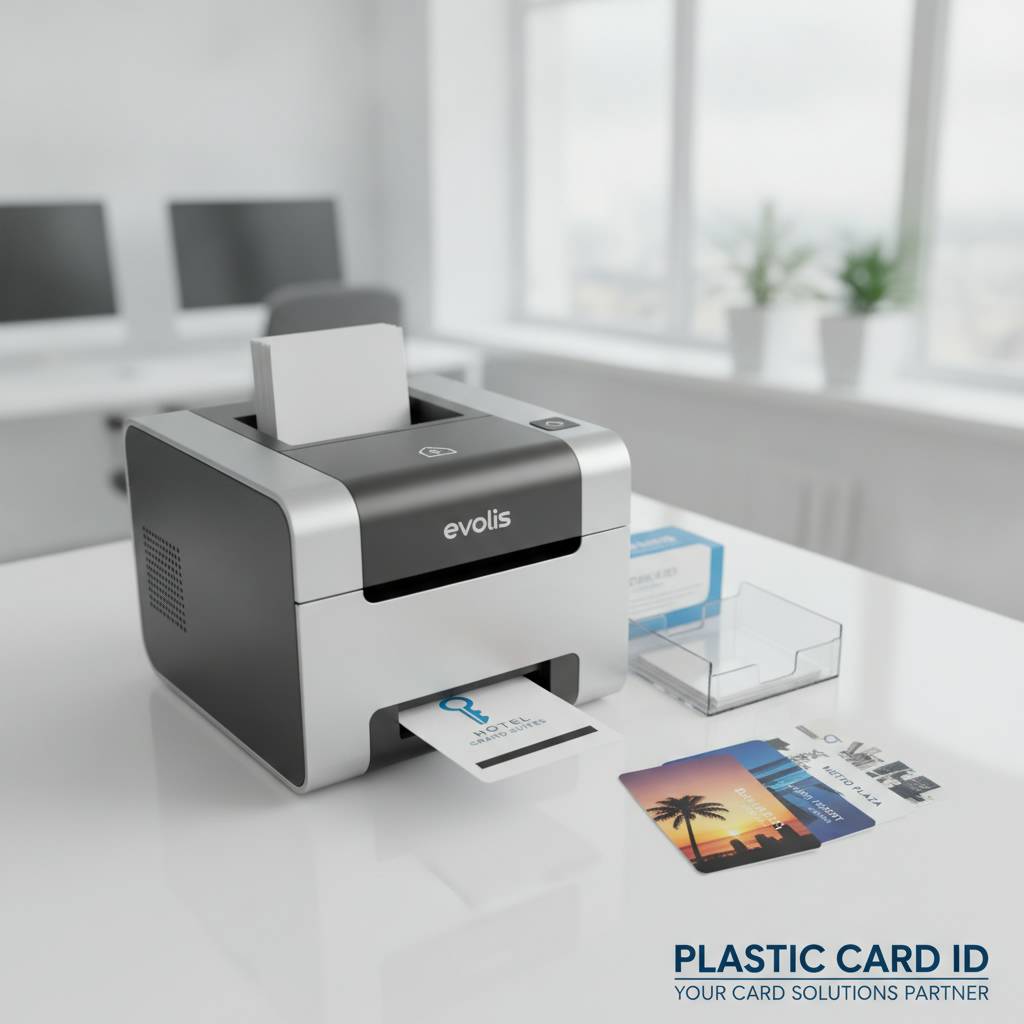 After more than two decades of working with hospitality card program buyers, we have noticed clear patterns in what separates successful programs from frustrating ones. The difference is almost never the printer itself - it is the decisions made before and around the printer. Here are the most actionable tips we share with first-time and experienced hotel card printer buyers alike.
Match Printer Capacity to Peak Volume, Not Average Volume
Hotels are seasonal businesses. Your card volume in July may be three times what you print in January. Configure your printer for your busiest period, not your average period. A printer that performs beautifully at average load but bottlenecks during peak check-in is a printer that will create guest service problems exactly when you can least afford them.
When estimating your card volume, account for replacements - demagnetized cards, guest losses, and multi-card households where two guests need separate keys. Actual issuance volume is typically 1.3-1.7 times the number of rooms occupied, depending on your guest profile and lock system's demagnetization rate. Factor this in when selecting your printer tier.
Stock a Ribbon and Cleaning Supply Inventory
Running out of ribbon mid-week is entirely avoidable and entirely too common. Establish a minimum stock threshold for ribbons and cleaning supplies and reorder before you hit it. A two-to-four week supply buffer is a reasonable standard for most hotel operations. CPE makes reordering straightforward - we stock supplies for every printer model we sell and can ship quickly to minimize your risk window.
Train More Than One Staff Member on Printer Operation
If only one person at your front desk knows how to change a ribbon, clear a card jam, or run a cleaning cycle, your printer's effective uptime is limited to that person's shifts. Cross-train at least two or three staff members on basic printer operation and maintenance. Operational resilience in card printing is a staffing decision as much as a hardware decision. The printer manual and manufacturer training materials are straightforward for models in our lineup - implementation does not require technical expertise.
Start Your Hotel Key Card Printer Program with Plastic Card ID
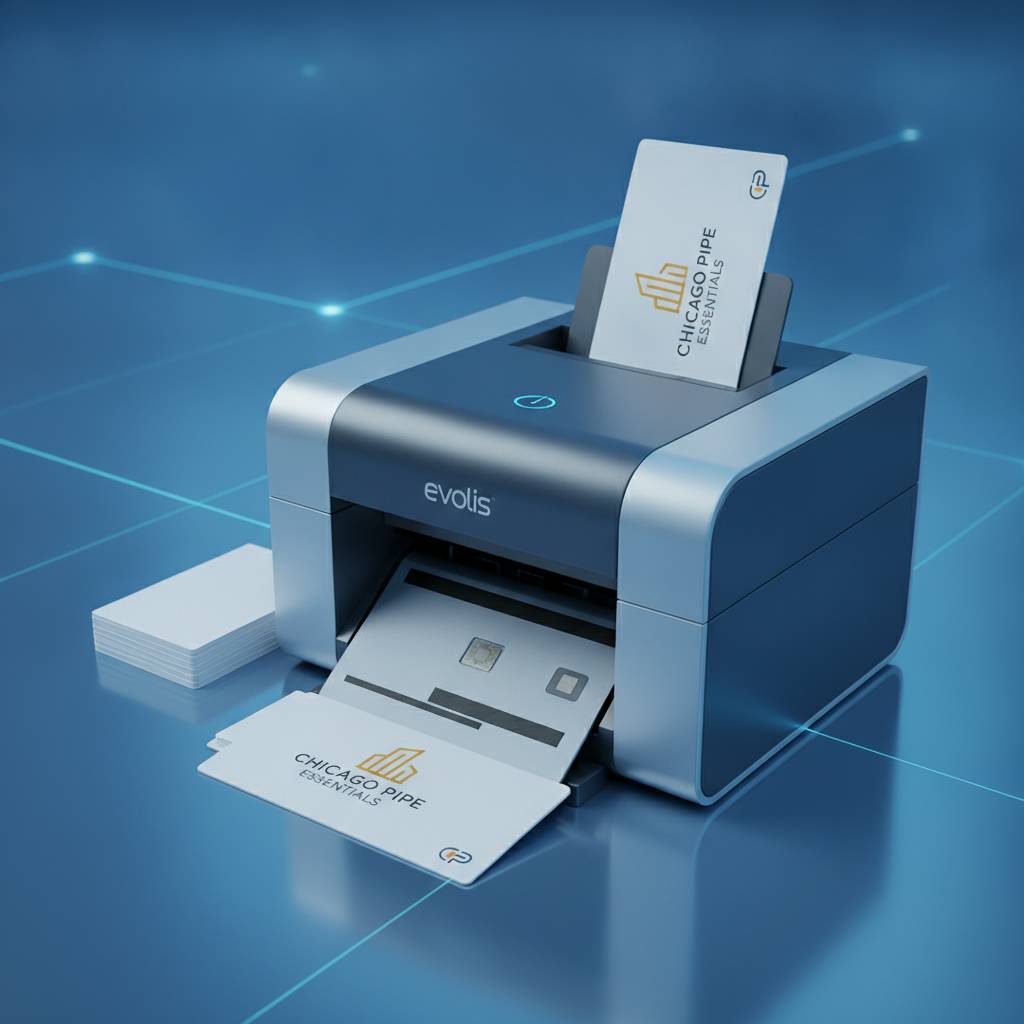 There is a reason more than 100,000 customers have turned to Plastic Card ID when building or upgrading their plastic card programs. We carry the right printers, the right supplies, and the institutional knowledge to match hospitality buyers with configurations that actually work in their operational environment. We do not guess - we ask the right questions and recommend accordingly.
Whether you are setting up your first in-house card printing system or replacing aging hardware at a multi-property operation, CPE is the resource you want in your corner. Our lineup of Evolis, Fargo, Zebra, and Matica printers covers every hotel scenario - from the 30-room inn to the 1,000-room convention resort - and our supply catalog keeps those printers producing from opening day forward.
Ready to configure the right plastic card printer for hotel key cards? Contact Plastic Card ID today at 800.835.7919 and speak with a specialist who understands hospitality card programs inside and out. We will help you select the right printer, the right supplies, and the right configuration - so your card program runs flawlessly from day one.
Previous Page