Evolis vs Fargo vs Zebra Card Printer Comparison Guide
Table of Contents []
- Evolis vs Fargo vs Zebra Card Printer Comparison - Find Your Match with Plastic Card ID
- Understanding What Separates These Three Brands
- Breaking Down the Product Tiers: Entry, Mid-Range, and Premium
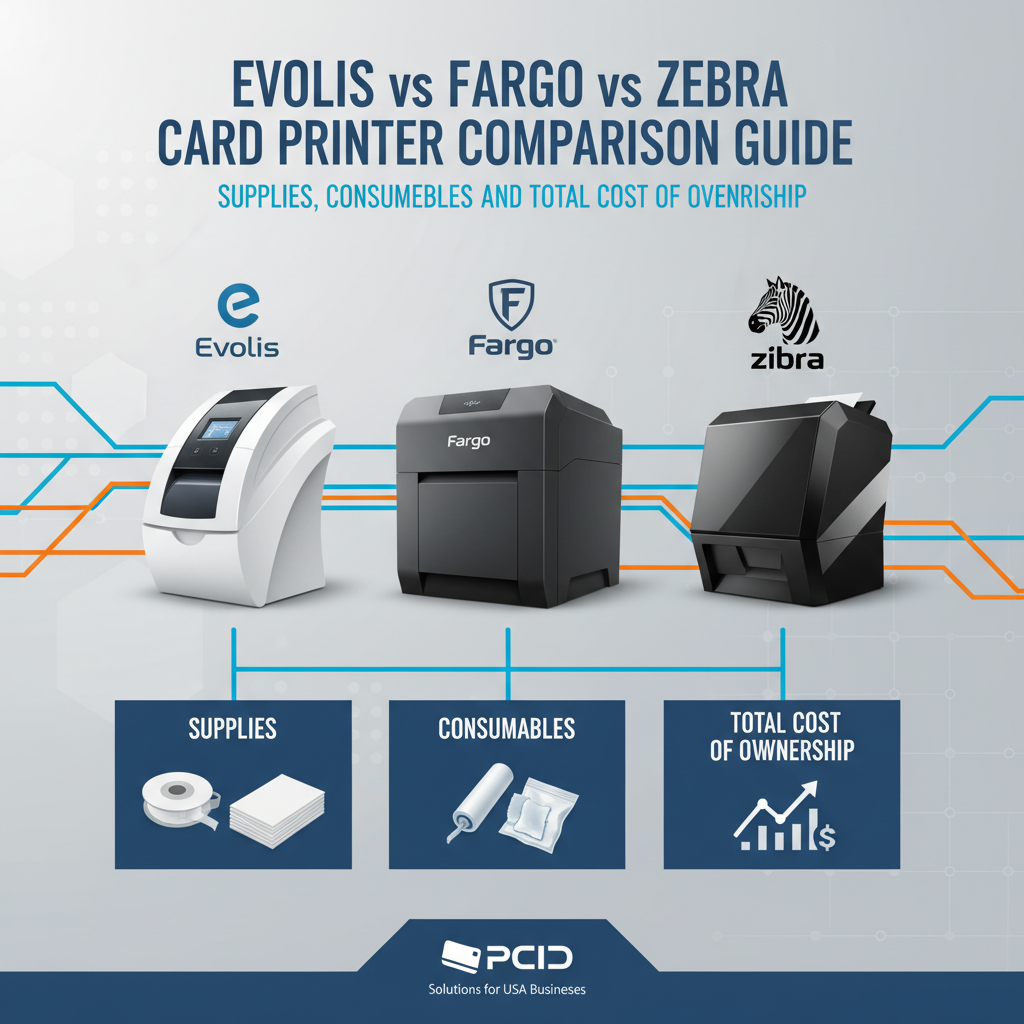
- Supplies, Consumables, and Total Cost of Ownership
- Ribbons, Cleaning Kits, and Everything That Keeps Cards Printing
- Buyer Tips: How to Choose Between Evolis, Fargo, and Zebra
- Frequently Asked Questions: Evolis vs Fargo vs Zebra
- Ready to Find Your Match? Plastic Card ID Is Here to Help
Evolis vs Fargo vs Zebra Card Printer Comparison - Find Your Match with Plastic Card ID
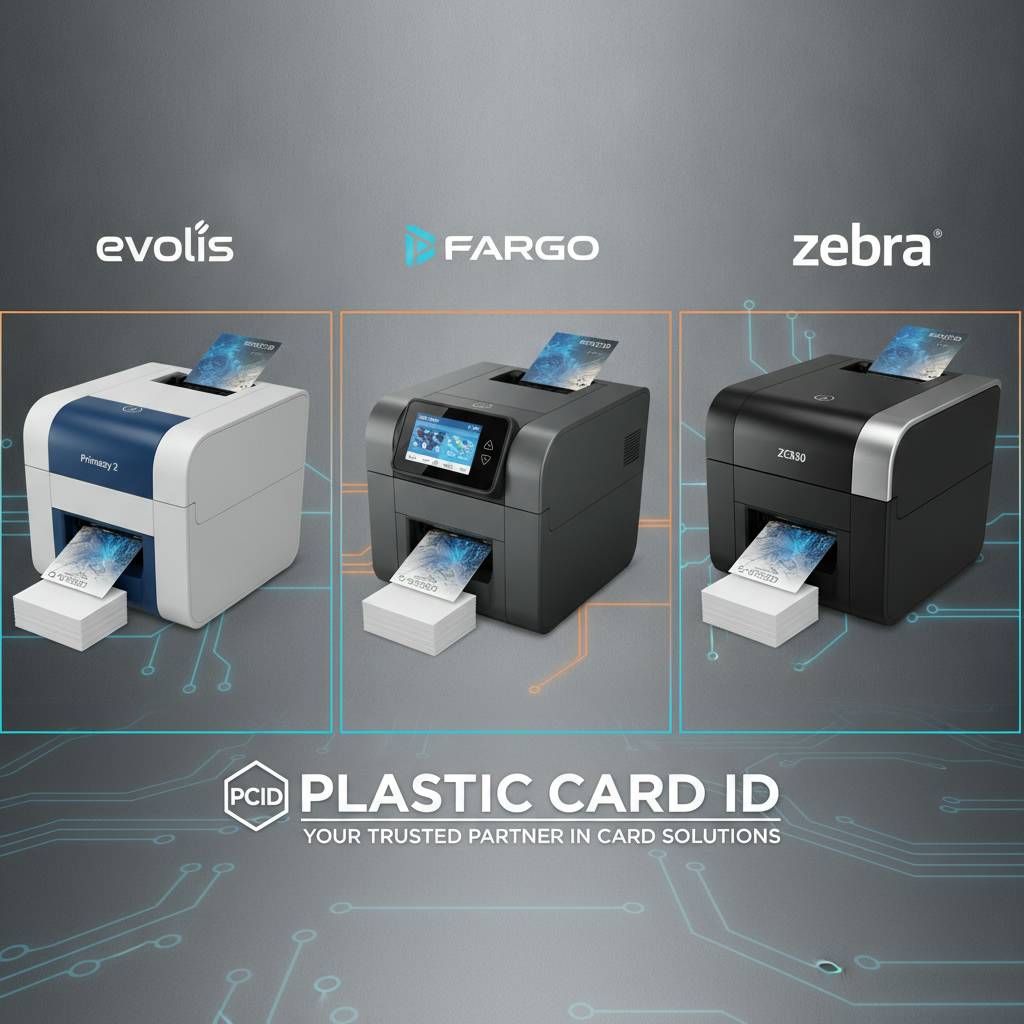 Picking the wrong card printer is an expensive mistake. Whether you are issuing employee badges, student IDs, loyalty cards, or access control credentials, the printer you choose will define your card quality, your workflow speed, and your total cost of ownership for years to come. Three brand names dominate the professional card printing market - Evolis, Fargo, and Zebra - and each has earned its reputation through very different engineering philosophies.
Plastic Card ID has spent over 25 years placing the right printers in the right hands across the United States. With more than 100,000 customers served and a curated lineup that spans every major brand and production scale, CPE is uniquely positioned to help you cut through the marketing noise and understand what actually matters when comparing these powerful machines side by side.
| Feature | Evolis | Fargo | Zebra |
|---|---|---|---|
| Best For | All-around quality, versatility | Security-focused ID programs | Durability, enterprise reliability |
| Entry-Level Model | Badgy200 | HID Fargo DTC1250e | ZC100 |
| Mid-Range Model | Zenius / Primacy2 | HID Fargo DTC4500e | ZC300 / ZC350 |
| Dual-Sided Printing | Yes (select models) | Yes (select models) | Yes (select models) |
| Magnetic Stripe Encoding | Yes (upgrade) | Yes (upgrade) | Yes (upgrade) |
| Print Resolution | 300-600 dpi | 300 dpi standard | 300 dpi standard |
| Typical Price Range | $300-$3,500 | $500-$4,000 | $400-$3,800 |
Understanding What Separates These Three Brands
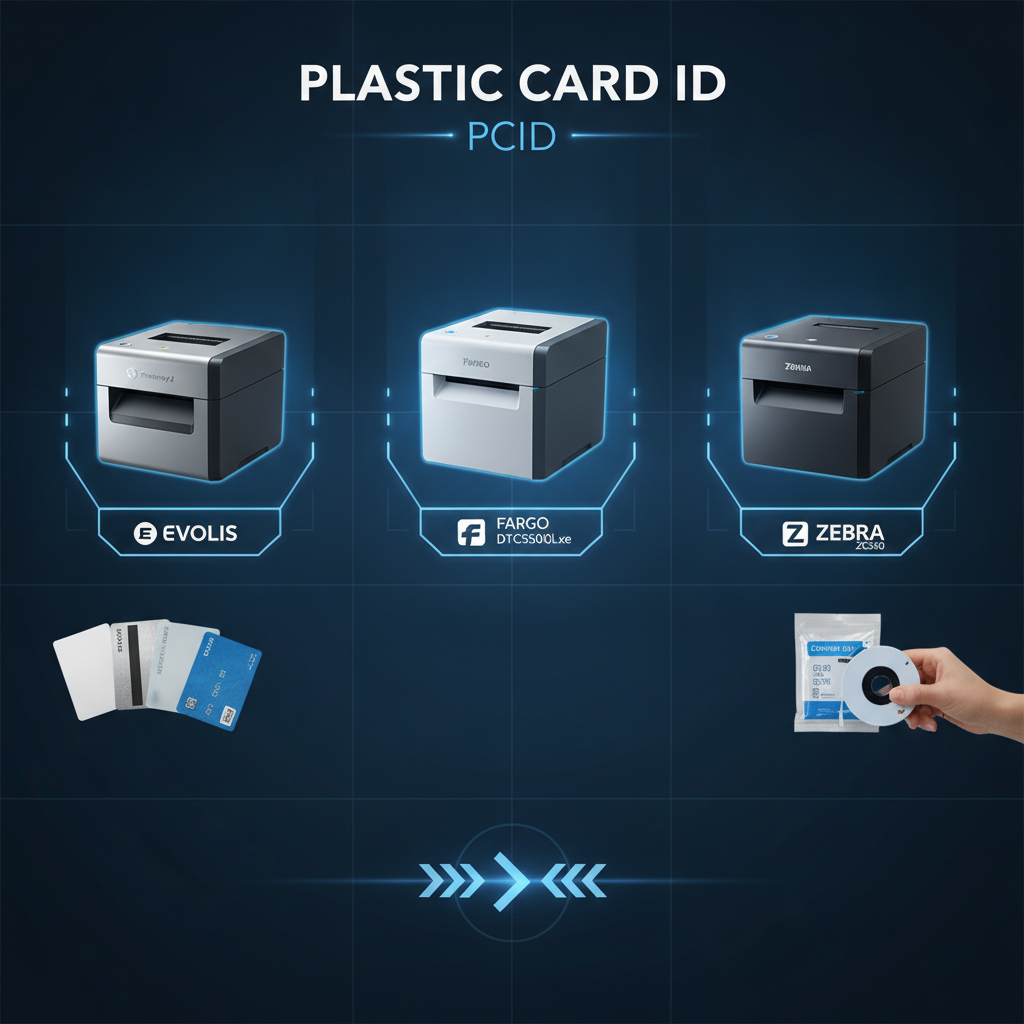 Evolis, Fargo, and Zebra are not interchangeable. They each approach card printing from a distinct angle, and understanding those distinctions is the foundation of a smart purchase decision. Evolis is a French manufacturer known for elegant engineering, print quality that consistently impresses, and a product range that genuinely scales from hobbyist-friendly entry models all the way to the premium Agilia for edge-to-edge perfection.
Fargo - now operating under the HID Global umbrella - has long been the go-to for organizations where security credentials demand uncompromising precision. Zebra, a name synonymous with industrial label printing, brings that same commitment to ruggedness into the card printing space. These are printers built for demanding environments where reliability is non-negotiable, day after day.
Evolis: Print Quality and Versatility First
What sets Evolis apart is an almost obsessive focus on print output. The Primacy2, for example, delivers 300 dpi color printing with retransfer options that produce visibly sharper, more vibrant cards than many competitors at similar price points. The Agilia takes that further still, achieving results that make plastic cards look like premium marketing materials rather than simple IDs.
Evolis printers are also notably user-friendly. Ribbon replacement, card jam clearing, and maintenance are all engineered to be intuitive - a real advantage for businesses that do not have dedicated IT staff managing their card printing operation. The accompanying software, Evolis Card Designer and Evolis Premium Suite, handles everything from basic badge design to batch printing with magnetic stripe encoding.
Fargo: Security Credentials Done Right
When your card program involves access control, government-adjacent ID issuance, or high-security employee badges, Fargo earns its place at the top of the conversation. HID Fargo printers are built with security-conscious organizations in mind, offering features like holographic laminate overlays, secure printing modes, and encoding for both magnetic stripe and smart chip technologies.
The DTC series from Fargo has served corporate security departments, universities, and healthcare organizations for decades. These printers handle dual-sided printing reliably, process encoding upgrades cleanly, and integrate with a wide range of access control software platforms - making them a natural fit for organizations that need their card printer to be part of a larger, coordinated security infrastructure.
Zebra: Industrial Durability for Enterprise Scale
Zebra card printers - particularly the ZC300 and ZC350 series - are engineered for environments that chew through lighter machines. If uptime is your primary concern, Zebra is the brand that delivers it. These printers are built to handle continuous production runs without performance degradation, making them popular in manufacturing facilities, large corporate campuses, and institutions that process hundreds or thousands of cards per month.
Zebra also benefits from deep integration with enterprise software ecosystems. If your organization already relies on Zebra label printers or barcode scanners, adding a Zebra card printer creates a consistent hardware and support environment. The ZC350 with laminator module is a particularly capable machine for organizations that need both speed and card durability in a single unit.
Breaking Down the Product Tiers: Entry, Mid-Range, and Premium
One of the most common buyer mistakes is purchasing a printer calibrated for the wrong production volume. Matching printer capacity to actual card volume is critical for both cost efficiency and machine longevity. Across Evolis, Fargo, and Zebra, you will find clear product tiers that correspond to specific use cases, and understanding where your organization falls in that spectrum is the first step.
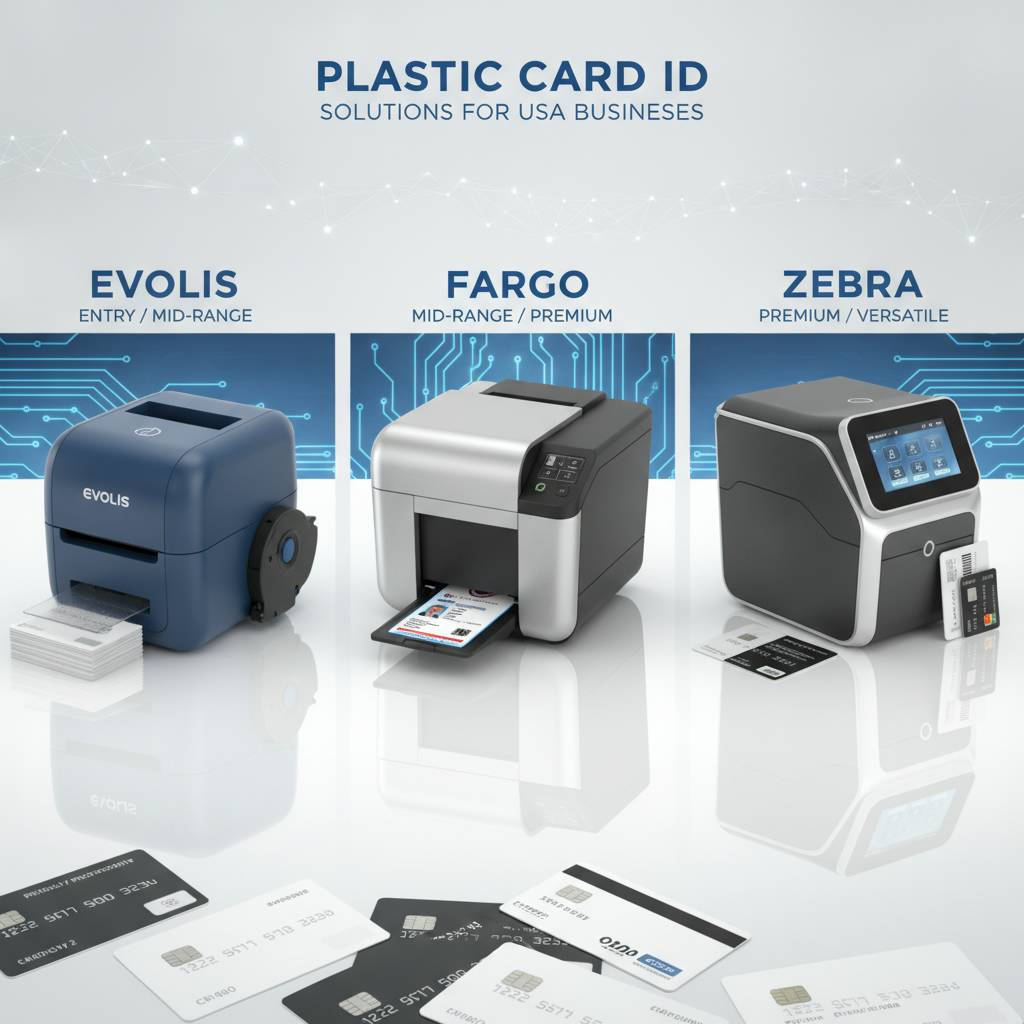
CPE regularly helps customers reassess their assumptions about volume. A school district that thinks it prints "just a few hundred student IDs a year" often discovers, once they factor in staff cards, event credentials, and replacement cards, that they are actually in the mid-range category. Getting that calculation right before purchasing avoids the costly mistake of outgrowing a printer within twelve months.
Entry-Level: Under 1,000 Cards Per Year
The Evolis Badgy200 is the standout entry-level recommendation from Plastic Card ID. Compact, affordable, and genuinely capable, it produces 300 dpi full-color cards from a desktop footprint that fits comfortably in small offices. It uses YMCKO ribbons that are simple to source, and the included Badgy software makes card design accessible even for users without graphic design backgrounds.
At the Fargo and Zebra entry level, the DTC1250e and ZC100 are both solid performers, though they carry slightly higher price tags and are better suited to organizations that anticipate moderate growth in their card programs. For truly low-volume needs - the occasional batch of employee IDs or membership cards - the Badgy200 remains CPE's most recommended starting point due to its simplicity and value.
Mid-Range: 1,000 to 6,000 Cards Per Month
This is where the comparison gets genuinely interesting. The Evolis Zenius and Primacy2, the Fargo DTC4500e, and the Zebra ZC300 and ZC350 all compete in a range where price differences become meaningful and feature sets begin to diverge significantly. The Evolis Primacy2 is widely considered one of the best mid-range card printers available, offering dual-sided printing, magnetic stripe encoding, and an optional lamination module in a well-designed, reliable package.
The Fargo DTC4500e earns its place in security-sensitive mid-range applications by handling laminate overlays and smart card encoding with impressive precision. Zebra's ZC350 counters with exceptional print speed and durability. Organizations that process loyalty cards, hotel key cards, or access control badges at volume will find compelling options across all three brands at this tier - the differentiating factors tend to be software integration, encoding requirements, and expected card lifespan.
Premium and High-Throughput Options
At the top of the Evolis range, the Agilia printer delivers what can only be described as best-in-class card output quality for organizations that need edge-to-edge printing and color fidelity that makes every card look like it was professionally produced off-site. Agilia is the right answer for premium membership programs, corporate ID cards where appearance reflects brand values, and any application where card quality is a direct reflection of organizational reputation.
Matica also enters the picture at the high-throughput level with the Event Printer, designed specifically for on-site, high-speed badge issuance at conferences, sporting events, and large-scale gatherings where hundreds of cards per hour need to be produced accurately and quickly. For any organization planning large events with credentialing needs, the Matica Event Printer is a specialized tool that Fargo and Zebra's standard lineups do not directly match.
Supplies, Consumables, and Total Cost of Ownership
| Annual Card Volume | Ribbon Cost (est.) | Cleaning Kit Cost (est.) | Total Consumables (est.) |
|---|---|---|---|
| Under 500 cards | $50-$120 | $15-$30 | $65-$150 |
| 500-2,000 cards | $120-$350 | $30-$60 | $150-$410 |
| 2,000-6,000 cards | $350-$900 | $60-$120 | $410-$1,020 |
| Over 6,000 cards | $900-$2,500 | $120-$250 | $1,020-$2,750 |
Ribbons, Cleaning Kits, and Everything That Keeps Cards Printing
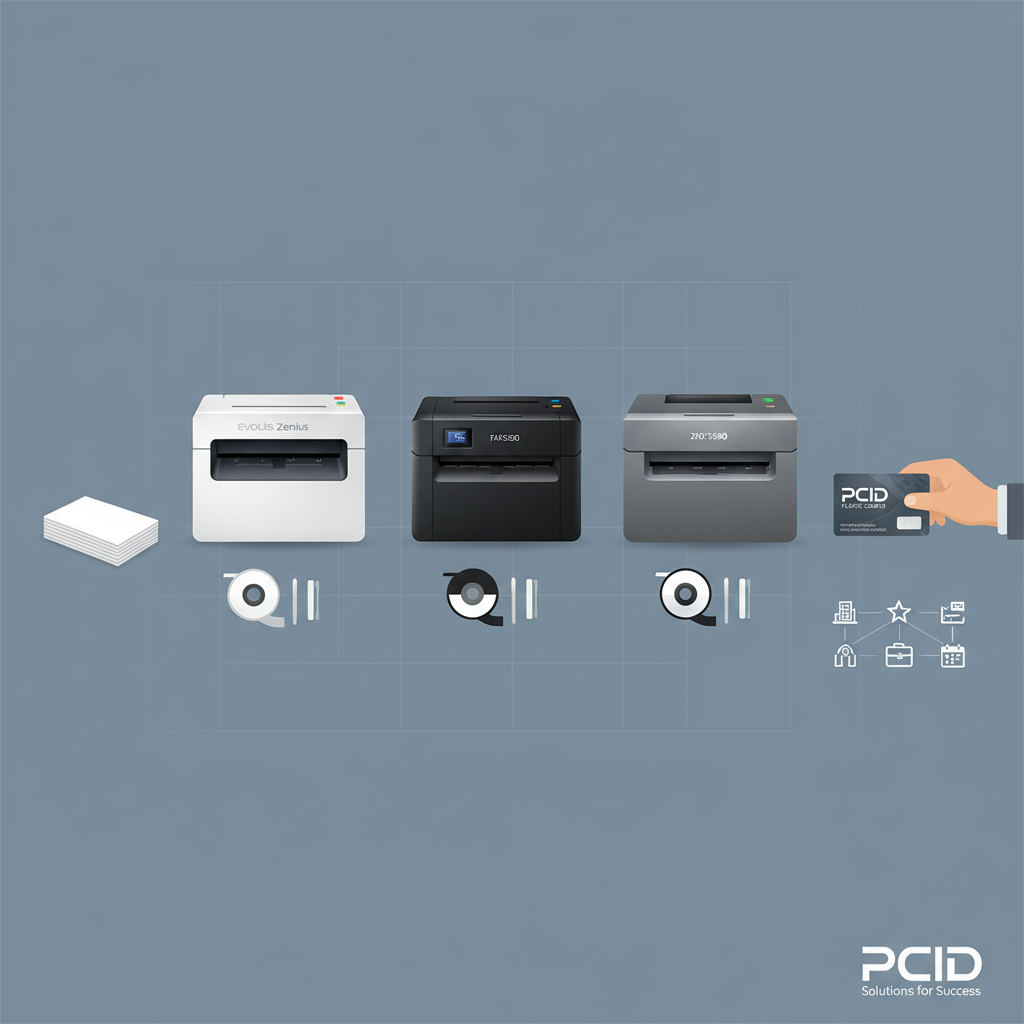 The purchase price of a card printer tells only part of the financial story. Consumables represent a recurring cost that every card program must account for, and the differences between ribbon types, cleaning kit frequencies, and optional lamination modules can meaningfully affect your annual operating budget. Plastic Card ID supplies a full range of ribbons, cleaning kits, and accessories compatible with Evolis, Fargo, and Zebra printers.
YMCKO ribbons - the standard color ribbon format that prints Yellow, Magenta, Cyan, Black, and Overlay panels - are the most commonly purchased consumable. Monochrome ribbons in black or other single colors are significantly more economical for applications where full color is not required, such as text-only access control badges or simple member number cards. Specialty ribbons including fluorescent and metallic options are available for organizations with distinctive branding needs.
Choosing the Right Ribbon Type
Not all ribbons are interchangeable between brands. Evolis ribbons are proprietary to Evolis printers, and the same applies to Fargo and Zebra. Using genuine manufacturer ribbons is not merely a formality - off-brand or incompatible ribbons can damage printheads, void warranties, and produce cards with inconsistent color or poor lamination adhesion. Plastic Card ID stocks authentic ribbons for all major models in its lineup.
For organizations printing dual-sided cards, understanding ribbon panel yield is important. A YMCKO ribbon rated for 200 cards produces 200 single-sided prints - but only 100 dual-sided cards. That distinction affects budget calculations significantly for mid-to-high-volume programs. CPE can help you model your actual ribbon consumption before you commit to a purchasing plan.
Cleaning Kits and Printhead Longevity
Printhead replacement is one of the most significant unexpected costs card printer owners face - and most of those replacements are entirely preventable. Regular cleaning is the single most important maintenance practice for extending printhead life and maintaining card quality. Each manufacturer recommends cleaning schedules based on ribbon roll changes, and following those schedules consistently protects your investment.
Cleaning kits typically include pre-saturated cleaning cards and swabs designed to remove dust, adhesive residue, and card debris from the card path and printhead. The cost is modest - usually $15-$60 per kit depending on the model - and the protection they provide against costly printhead failure is considerable. Call 800.835.7919 to ask Plastic Card ID about compatible cleaning kits for your specific printer model.
Encoding Upgrades: Magnetic Stripe and Smart Chip
One of the clearest advantages of in-house card printing is the ability to encode functional data directly onto each card at the time of issuance. Magnetic stripe encoding - the industry standard for hotel key cards, loyalty programs, and access control - can be added as an upgrade to most mid-range and premium models from Evolis, Fargo, and Zebra. Smart chip encoding, supporting both contact and contactless technologies, is available on select configurations.
The encoding decision often drives brand selection. Fargo's encoding integration is particularly well-developed for organizations working within established HID-based access control systems. Evolis encoding modules are clean and reliable, with strong software support through the Evolis SDK. Zebra's encoding options integrate naturally with enterprise-level card management platforms. The right encoding configuration depends entirely on your existing infrastructure, and Plastic Card ID can help you map that correctly before purchase.
Buyer Tips: How to Choose Between Evolis, Fargo, and Zebra
 The comparison between these three brands is not a matter of ranking them from best to worst - it is a matter of matching specific strengths to specific organizational needs. The best card printer for your organization is the one engineered for exactly what you are doing. Here is a practical framework that CPE recommends to anyone working through this decision.
Ask These Questions Before You Buy
- How many cards will you print per month on average? Be honest about growth projections over the next two to three years.
- Do your cards need to encode data? Magnetic stripe, smart chip, or proximity encoding requirements will narrow your options significantly.
- Is dual-sided printing necessary? If you need information on both card faces, confirm that the model you are evaluating supports a duplex module.
- What software or access control platform are you connecting to? Brand compatibility with your existing systems can be the deciding factor.
- How important is print quality relative to speed? Evolis leans toward quality; Zebra leans toward throughput; Fargo balances both with a security focus.
- What is your total budget including consumables? A lower-priced printer with expensive proprietary ribbons can cost more over three years than a premium model with efficient ribbon yields.
Matching the Brand to the Use Case
Employee ID cards that also serve as access control credentials tend to favor Fargo or Zebra configurations due to their deep integration with security hardware ecosystems. Membership and loyalty cards - where appearance directly impacts perceived value - tend to favor Evolis, particularly the Primacy2 or Agilia, where color accuracy and edge definition are visibly superior at standard retail card sizes.
Student ID programs at universities and K-12 institutions represent a fascinating middle ground. Volume is often moderate but encoding requirements can be complex - combining proximity access control, library system integration, and meal plan functionality on a single card. In these cases, the Fargo DTC4500e or Evolis Primacy2 with full encoding options are both strong contenders, and the final decision often comes down to which integrates more cleanly with the institution's existing access and database infrastructure.
When to Consider Matica for Event Printing
Neither Evolis, Fargo, nor Zebra has a product specifically designed for on-site, high-speed event credentialing at the scale that conferences, trade shows, and large-scale corporate events require. That is where the Matica Event Printer fills a genuine gap in the market. If your organization manages large events where attendee badges must be printed on demand at check-in, Matica offers throughput and reliability that standard desktop card printers simply cannot match.
Organizations that invest in event credentialing equipment typically recoup the cost quickly by eliminating the expense and logistics of pre-printed badge orders, reducing labor at check-in, and gaining the flexibility to update attendee information up to the moment of issuance. Plastic Card ID can advise on whether your event profile makes Matica the right addition to your card printing program.
Frequently Asked Questions: Evolis vs Fargo vs Zebra
These are the questions CPE hears most often from customers comparing card printer brands for the first time. The answers below reflect real-world guidance developed over decades of helping organizations build and scale their card programs.
Which brand has the best print quality?
Evolis consistently leads on raw print quality, particularly in color fidelity and edge sharpness at standard 300 dpi resolution. The Agilia raises that ceiling further with edge-to-edge printing capability that eliminates the unprinted border common on most card printers. For organizations where card appearance is a brand statement, Evolis is typically the recommendation. Fargo and Zebra produce excellent results but their engineering priorities weight security robustness and throughput durability slightly ahead of pure print aesthetics.
It is worth noting that "print quality" means different things to different organizations. An access control badge that will live inside a lanyard holder barely visible to others has different appearance requirements than a premium membership card that a customer will pull out of their wallet dozens of times per week. Calibrating your quality expectations to your actual use case prevents overspending and misaligned expectations.
Can I switch ribbon brands between manufacturers?
No - and this is a point worth emphasizing strongly. Evolis, Fargo, and Zebra all use proprietary ribbon cartridge formats that are not cross-compatible. Attempting to use a Zebra ribbon in an Evolis printer - or vice versa - will not work mechanically, and using third-party ribbons designed to mimic OEM formats carries real risks including printhead damage and voided manufacturer warranties.
Always source ribbons, cleaning kits, and consumables through an authorized supplier like Plastic Card ID to ensure compatibility, protect your printer warranty, and maintain consistent card output quality. The marginal savings from unauthorized consumables are rarely worth the risk to an expensive printhead or the cost of inconsistent card production.
How long do card printers typically last?
With proper maintenance - regular cleaning, genuine ribbons, and appropriate use within rated volume capacity - a quality card printer from Evolis, Fargo, or Zebra should serve reliably for five to eight years or more. Printhead lifespan is the most critical variable, and most manufacturers rate their printheads by the number of cards printed under normal conditions. Keeping the card path clean and following manufacturer maintenance schedules is the single most effective way to maximize printer lifespan.
Organizations that exceed their printer's rated monthly volume consistently will see reduced printhead life. This is another reason why accurate volume estimation before purchase is so important - and why CPE takes the time to understand your actual card program scale before making a recommendation rather than simply selling you the most popular model.
Ready to Find Your Match? Plastic Card ID Is Here to Help
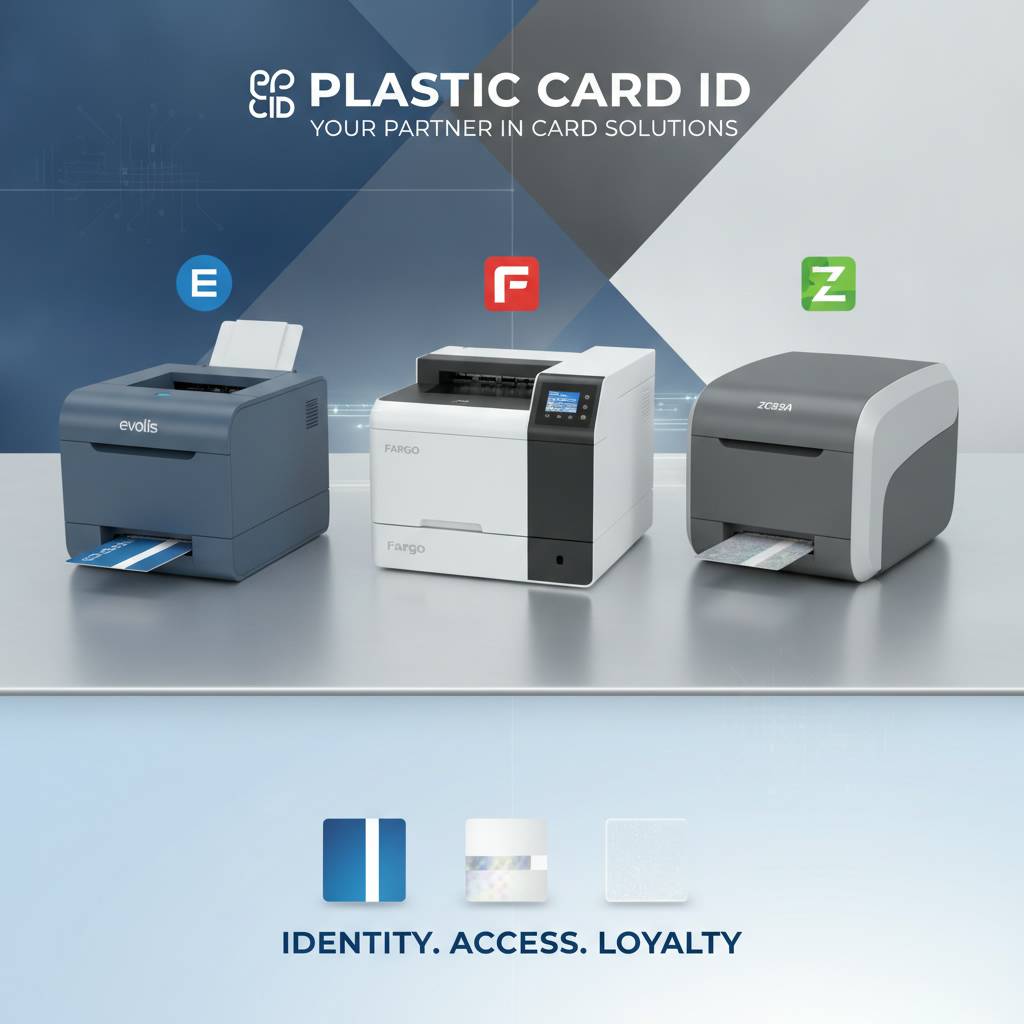 The Evolis vs Fargo vs Zebra comparison is not a competition with a single winner. Each brand has built its reputation by excelling in specific contexts, and the organization that benefits most from each printer is the one whose needs align with that printer's engineering strengths. The goal is not to find the "best" brand - it is to find the best match for your specific program, volume, and budget.
Plastic Card ID has spent over 25 years building the expertise to make that match accurately and confidently. With a curated lineup that includes Evolis, Fargo, Zebra, and Matica - along with every ribbon, cleaning kit, encoding module, laminator, and accessory needed to keep a card program running at peak performance - CPE offers something most suppliers cannot: genuine, experience-backed guidance from people who understand these products at a deep level.
What You Get When You Work with Plastic Card ID
Every customer that calls or connects with Plastic Card ID gets access to product specialists who know the difference between a Zenius and a Primacy2, who understand why a DTC4500e might be the right answer for a hospital ID program but the wrong answer for a gym membership operation, and who can map your card program requirements to the right printer, ribbon, and accessory configuration without upselling you into equipment you do not need.
Call 800.835.7919 today to speak directly with a card printing specialist at Plastic Card ID. Whether you are starting your first card program, upgrading aging equipment, or scaling an existing operation, the right conversation with the right expert makes all the difference. Plastic Card ID has served over 100,000 businesses across the United States - and your organization's card program deserves that same level of dedicated, knowledgeable support.
Explore the Full Lineup
Beyond the three-brand comparison on this page, Plastic Card ID carries a complete range of card printing solutions including the Matica Event Printer for high-speed on-site credentialing, the Evolis Agilia for premium edge-to-edge output, and a full inventory of supplies that keeps programs running without interruption. Input hoppers for high-volume batch printing, card carriers and sleeves for protecting finished cards, lamination modules for added card durability - it is all available through CPE.
Physical in-house card printing gives your organization total control. Print on demand. Personalize each card individually. Encode magnetic stripes or smart chips at the moment of issuance. Eliminate lead times, reduce dependency on outside vendors, and maintain the agility to update card designs and data without starting over from scratch. That control is the real value proposition of owning a professional card printer - and Plastic Card ID is the partner that helps you make it work from day one.
Contact Plastic Card ID now at 800.835.7919 - your expert card printer match is one conversation away.
Previous Page