In-House Plastic Card Printer: Print Cards On-Demand
Table of Contents []
- Why Plastic Card ID Is the Go-To Source for Your In-House Plastic Card Printer
- Matching the Right In-House Plastic Card Printer to Your Volume
- Fargo and Zebra: Security-Focused Card Printing for ID Programs
- Supplies That Keep Your Card Program Running
- Use Cases: Who Benefits from an In-House Plastic Card Printer
- Buyer's Guide: What to Ask Before Purchasing an In-House Plastic Card Printer
- Why Plastic Card ID Remains the Trusted Choice After 25 Years
Why Plastic Card ID Is the Go-To Source for Your In-House Plastic Card Printer
 There's a moment every organization eventually faces: you've just realized that outsourcing your ID cards, membership cards, or access credentials to a third-party print vendor is costing you more than money. It's costing you control, speed, and flexibility. That's exactly where an in-house plastic card printer changes everything - and why so many businesses turn to Plastic Card ID to make that shift.
With more than 25 years in the industry and a customer base exceeding 100,000 businesses across the United States, CPE has built a reputation around matching the right card printer to the right operation. Not too much machine, not too little. Whether you're running a regional gym, a mid-sized hospital, or a university with thousands of students, there's a solution here built precisely for your volume and your goals.
This page walks you through the complete landscape of in-house card printing - the hardware, the supplies, the use cases, and the real-world advantages that make owning your card production process one of the smartest operational decisions you can make.
The Case for Printing Cards In-House
Sending card jobs to outside vendors sounds convenient - until a rush order takes two weeks, a badge design needs updating overnight, or a new hire shows up on day one without credentials. In-house printing eliminates every one of those friction points. You print when you need to, exactly what you need, with no minimum order quantities and no waiting.
Beyond pure convenience, personalization becomes genuinely powerful. Every card can carry a unique photo, name, barcode, magnetic stripe encoding, or smart chip data - printed and encoded on the spot. That's not something a bulk vendor can replicate without significant cost and lead time. When your workflow demands real-time card issuance, in-house hardware isn't optional; it's essential.
What Sets Plastic Card ID Apart from Generic Resellers
There's no shortage of places online to buy a card printer. What's rare is a supplier that has spent decades refining a curated lineup, understands the operational needs behind each purchase, and stocks every consumable and accessory needed to keep programs running without interruption. CPE doesn't sell commodity hardware - it sells complete, supported card printing programs.
The brand lineup - Evolis, Fargo, Zebra, and Matica - represents the true upper tier of card printing technology. These aren't budget imports or rebranded generics. Each brand brings distinct engineering strengths, and Plastic Card ID carries models from each that suit different volume profiles, encoding requirements, and output quality expectations.
Contact the Team Before You Buy
Choosing the right printer involves more variables than most buyers expect - monthly card volume, single or dual-sided printing, magnetic stripe or chip encoding, lamination needs, and more. The experienced team at CPE is ready to walk through those variables with you before you commit to any hardware. Call 800.835.7919 to speak directly with someone who knows this product category inside and out.
Getting the right recommendation from the start saves time, money, and the frustration of discovering a printer can't handle your actual workload six months after installation. That kind of guidance is built into every interaction with Plastic Card ID.
Matching the Right In-House Plastic Card Printer to Your Volume
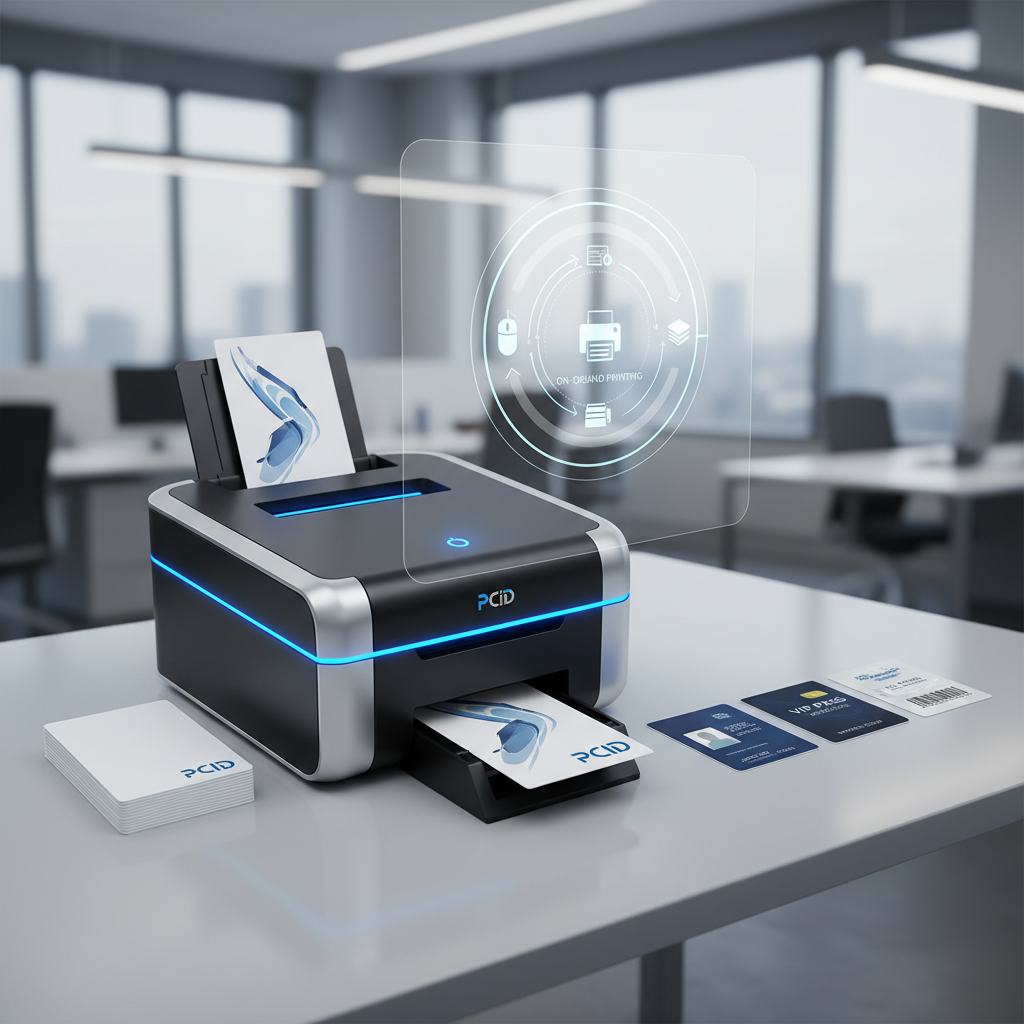 Card printer selection isn't one-size-fits-all. A school district printing 200 student IDs once a year has fundamentally different needs than a hotel chain encoding key cards daily across multiple properties. Volume is the single most important variable - and it shapes every downstream decision about hardware, ribbons, and maintenance cycles.
Plastic Card ID organizes its printer lineup by production scale, which makes it straightforward to identify the right starting point. From compact desktop units for low-frequency printing to high-throughput industrial systems built for continuous production, the full spectrum is covered.
| Printer Model | Brand | Best For | Volume Range |
|---|---|---|---|
| Badgy200 | Evolis | Small clubs, non-profits, boutique businesses | Under 1,000 cards/year |
| Zenius | Evolis | Growing businesses, mid-range ID programs | 1,000-6,000 cards/month |
| Primacy2 | Evolis | Corporate ID, dual-sided, magnetic stripe | 1,000-6,000 cards/month |
| Agilia | Evolis | Premium edge-to-edge, high-quality output | High-volume, top-tier quality |
| Event Printer | Matica | On-site event credentialing, fast badge issuance | High-speed burst printing |
Entry-Level Printing: The Evolis Badgy200
Don't let "entry-level" fool you - the Badgy200 is a genuinely capable printer for organizations that don't need to run cards every day. Small businesses, volunteer organizations, religious institutions, and seasonal programs that produce fewer than 1,000 cards annually find it fits their workflow without overwhelming their budget or counter space. Compact, reliable, and easy to operate, it's often the perfect first step into in-house card printing.
Setup is straightforward, software integration is clean, and the Badgy200 produces professional full-color cards that look nothing like the laminated paper badges many small organizations still rely on. It's a meaningful upgrade with a low barrier to entry - exactly what CPE recommends for light-volume programs just getting started.
Mid-Range Workhorses: Evolis Zenius and Primacy2
The Zenius and Primacy2 sit in a sweet spot that a large portion of card-printing businesses actually occupy - monthly volumes in the 1,000 to 6,000 card range, with real encoding requirements. Both support magnetic stripe options, and the Primacy2 handles dual-sided printing for cards that carry data or branding on the back. These are the printers that run quietly and reliably day after day in HR departments, fitness centers, university offices, and healthcare facilities.
What separates a mid-range Evolis printer from consumer-grade alternatives is build quality and print consistency. Over thousands of cards, ribbon performance stays predictable and color registration stays sharp. That consistency is what professional card programs depend on - and it's why Plastic Card ID recommends these models so frequently to growing operations.
High-Output and Premium Quality: Agilia and Matica
When edge-to-edge printing with zero compromise on image quality is a requirement - not a nice-to-have - the Evolis Agilia enters the conversation. Built for organizations that treat card design as part of their brand identity, the Agilia delivers output quality that rivals commercial print houses, but produced in-house, on demand, without minimums. For high-volume enterprise programs, this is the benchmark.
The Matica Event Printer occupies a distinct niche: high-speed badge production for events, conferences, and venues where hundreds or thousands of attendees need credentials in a compressed window. Speed and reliability under pressure are its defining traits. For organizations that host large-scale events regularly, it's not just useful - it's indispensable.
Fargo and Zebra: Security-Focused Card Printing for ID Programs
Some card programs exist purely for convenience. Others carry real security weight - access control, government-adjacent ID issuance, law enforcement credentials, secure campus systems. For those applications, Fargo and Zebra printers bring a different level of engineering to the conversation. Both brands have long histories in security ID printing, and both are represented in Plastic Card ID's lineup for precisely that reason.
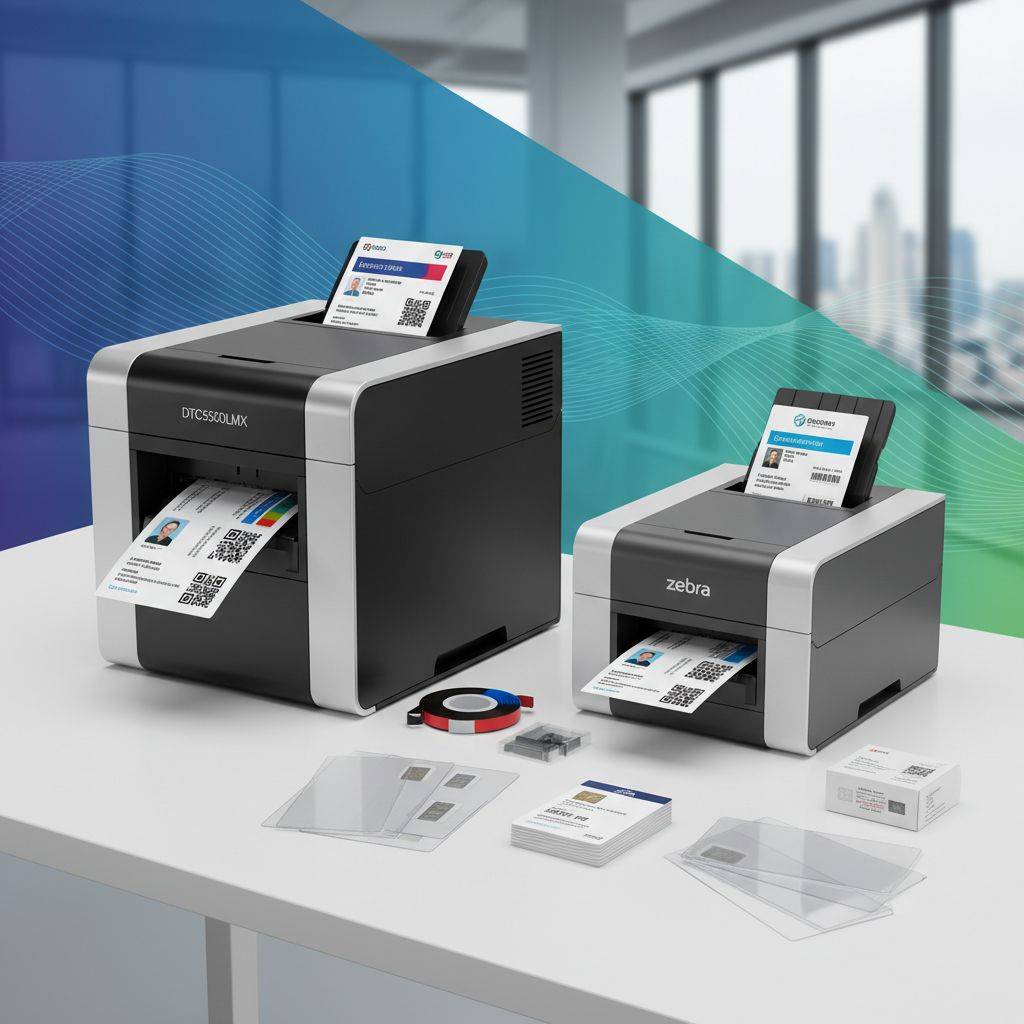
Fargo printers in particular are known among ID professionals for their encoding flexibility and integration with access control platforms. Zebra brings industrial-grade durability and high-volume throughput to the table. Together, they round out a lineup that can handle everything from a secure corporate campus badge program to a multi-site healthcare ID system with complex encoding requirements.
Fargo Printers: The ID Security Standard
Fargo has earned its reputation in credential programs where the card itself functions as a security instrument - not just a name badge. Integration with physical access control systems, visitor management platforms, and HR databases is where Fargo hardware consistently delivers. Organizations running sophisticated card programs with layered security features rely on Fargo because the platform supports it without compromise.
For IT and security administrators evaluating card printer options, Fargo's software ecosystem and encoding compatibility are often decisive factors. CPE can help assess whether Fargo's specific features align with your existing infrastructure before you invest. The conversation is always worth having.
Zebra Printers: Industrial Durability at Scale
Zebra's card printing lineup is built for environments where the printer runs constantly and downtime isn't acceptable. Warehouse operations, manufacturing facilities, large healthcare networks, and government agencies all find Zebra hardware matches their throughput demands and survives the operational environment. Zebra printers are not delicate office tools - they're production machines engineered for continuous use.
Beyond raw durability, Zebra brings strong monochrome printing capabilities for operations that need speed over color richness - high-volume access cards, visitor badges, and temporary credentials. When per-card cost and print speed matter more than full-color output, Zebra's monochrome configurations deliver compelling economics at scale.
Reach the Team for Security Program Guidance
Security-focused card programs often have compliance requirements, integration dependencies, and encoding specifications that require expert input before purchasing. The Plastic Card ID team has navigated these conversations across hundreds of deployments. Call 800.835.7919 to discuss your specific security ID requirements and get a focused recommendation - not a generic product link.
Purchasing the wrong printer for a security-critical ID program creates problems that are expensive to unwind. Getting it right the first time, with guidance from people who know the hardware, is the smarter path by every measure.
Supplies That Keep Your Card Program Running
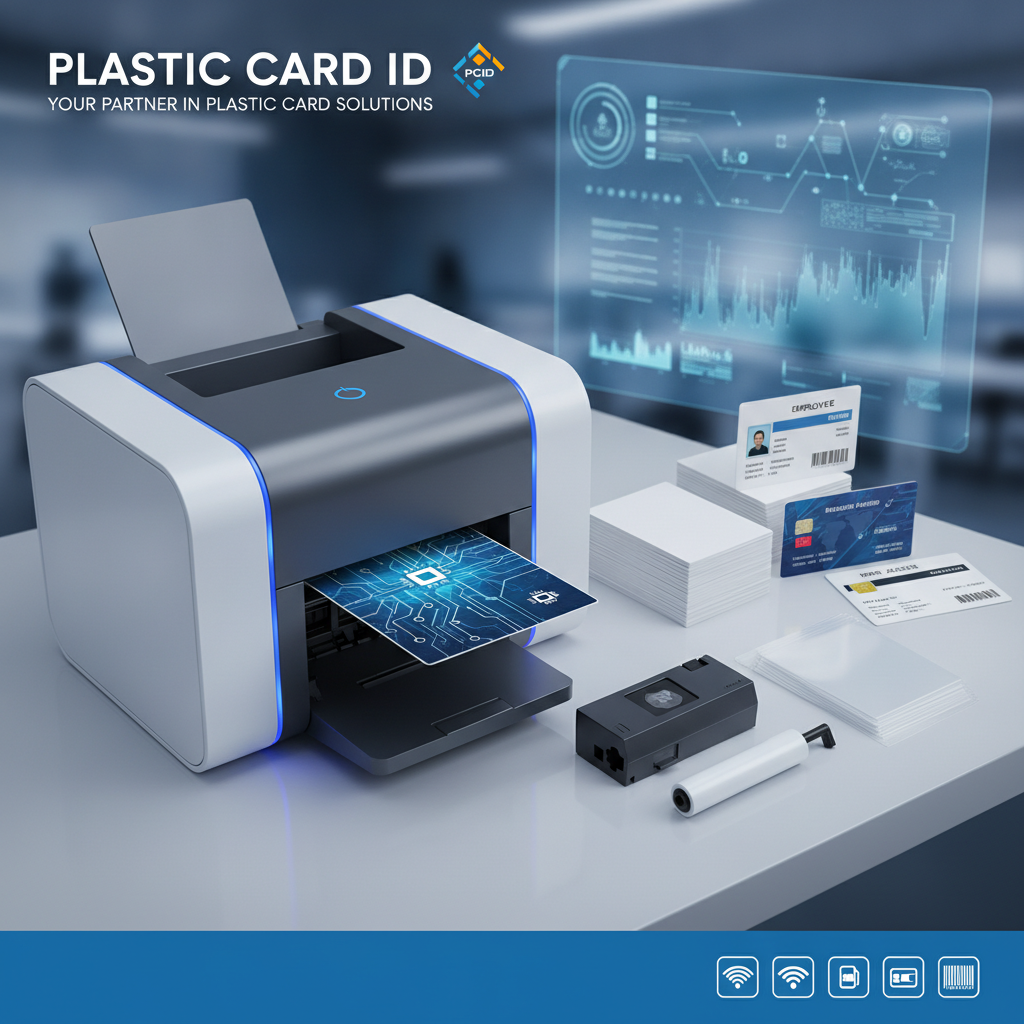 The printer is only part of the equation. An in-house card program runs on consumables - ribbons, cleaning kits, and specialty supplies - that need to be consistently available and correctly matched to your hardware. Running out of ribbon mid-batch or using an incompatible cleaning kit can interrupt production, damage print heads, or compromise card quality in ways that aren't immediately obvious.
Plastic Card ID stocks the full range of supplies needed for every printer in its lineup. This is not an afterthought - it's a core part of the value proposition. When you build a card program around hardware from CPE, you're also building it around a supply chain that supports that hardware reliably.
Ribbon Types: Matching Output to Application
YMCKO ribbons - cyan, magenta, yellow, black, and overlay - are the standard for full-color card printing with a protective topcoat. They're the right choice for photo ID cards, membership cards, and any application where color accuracy and card durability matter. Monochrome ribbons trade color for speed and economy, making them ideal for high-volume access badges or temporary credentials where throughput trumps aesthetics.
Specialty ribbons expand what's possible - scratch-off panels, UV-reactive inks for covert security features, and other application-specific formulations are available for programs with unique requirements. Selecting the right ribbon for your application directly impacts cost-per-card, print speed, and output quality. It's a decision worth getting right from the start.
Cleaning Kits and Printer Maintenance
Card printer print heads are precision instruments. Dust, card debris, and ribbon residue accumulate over time and degrade output quality before most operators notice. Regular cleaning is the single most effective way to extend printer lifespan and maintain consistent card quality over the long run. It's also one of the most commonly skipped steps in card program maintenance.
Plastic Card ID carries manufacturer-specified cleaning kits for every printer brand in its lineup. These aren't generic substitutes - they're the correct cleaning media for each specific mechanism. Using the right cleaning supplies on the right schedule keeps warranties intact and print quality at specification.
- Cleaning cards for roller and transport system maintenance
- Cleaning swabs for print head and sensor care
- Cleaning kits bundled for full-service maintenance cycles
- Manufacturer-specified cleaning schedules for each model
- Replacement cleaning rollers for high-volume printers
Encoding Upgrades, Hoppers, and Card Accessories
Many card programs start with basic printing and evolve over time to include magnetic stripe encoding, smart chip technology, or lamination for added durability. Plastic Card ID supplies encoding upgrade modules that expand printer capability without requiring a full hardware replacement. Growing into new card features doesn't have to mean starting over.
Input hoppers increase card capacity for high-volume print runs, reducing the frequency of manual reloading. Card carriers and sleeves protect finished cards during distribution and everyday use. These are the details that distinguish a professionally run card program from a cobbled-together one - and Plastic Card ID stocks all of it.
Use Cases: Who Benefits from an In-House Plastic Card Printer
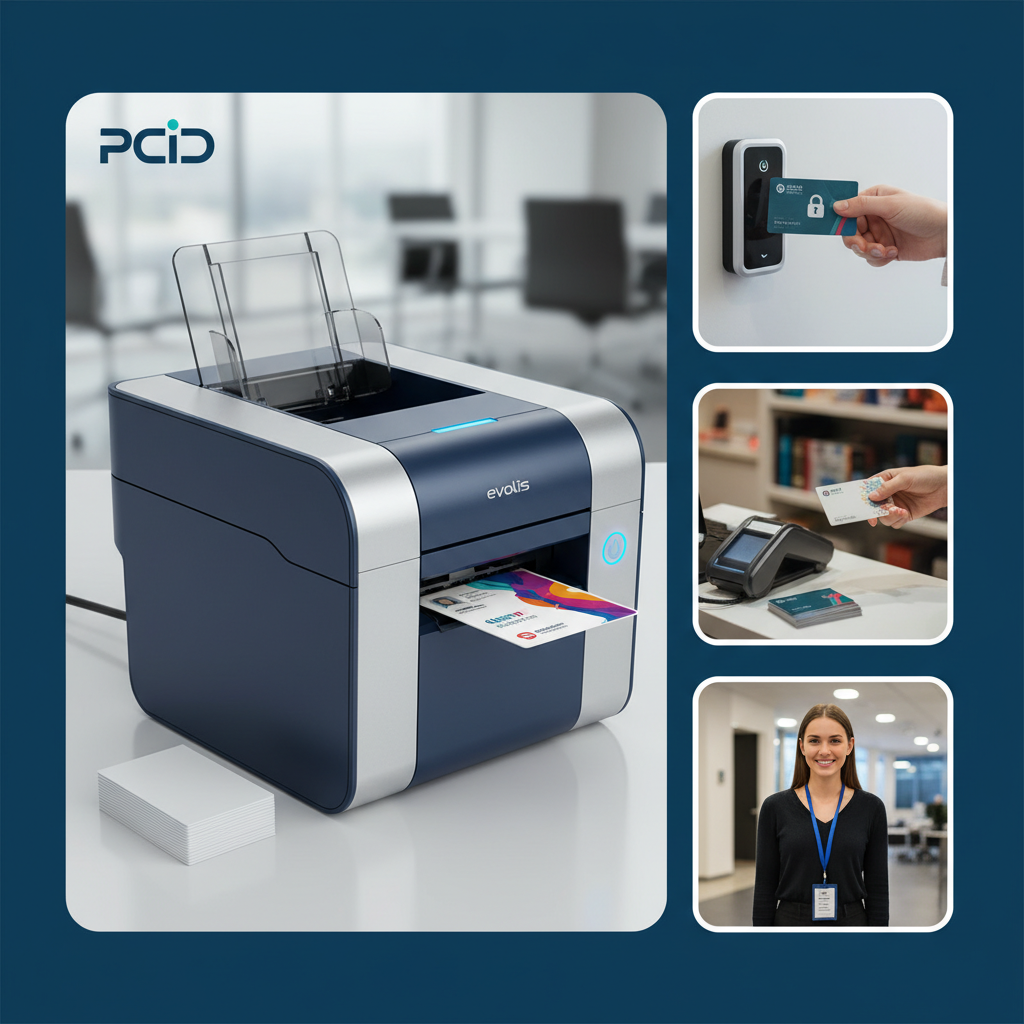 The range of organizations printing cards in-house is genuinely broad. What they share is a need for control, speed, and personalization that third-party print vendors simply can't match. From a single-location gym issuing membership cards at sign-up to a hospital network encoding smart credentials for staff across a dozen facilities, the use cases are diverse but the underlying logic is consistent.
In-house printing pays for itself faster than most organizations expect. The calculation is straightforward: compare your current per-card cost from a vendor, multiply by annual volume, then factor in the speed and flexibility you're not getting. For most programs running more than a few hundred cards per year, hardware ownership is the more economical - and operationally superior - choice.
Employee ID and Access Control Cards
Corporate ID programs are among the most common in-house card printing applications. New hires need credentials on day one. Employees change roles, departments, or access levels. Cards get lost, damaged, or expire. Every one of those events requires a new card, and waiting days for an outside vendor to fulfill each request creates real operational friction that compounds over time in larger organizations.
With an in-house printer, HR or security teams issue credentials in minutes. Magnetic stripe encoding, proximity chip programming, and photo personalization all happen at the point of issuance. That immediacy is not just convenient - for access control programs, it's a security requirement.
Membership, Loyalty, and Student ID Cards
Gyms, clubs, libraries, universities, and retail loyalty programs all share a common challenge: member cards need to be issued on the spot, personalized to the individual, and updated when information changes. Waiting on print runs from external vendors creates a gap between enrollment and card delivery that erodes member experience and operational efficiency simultaneously.
Student ID programs in particular benefit from in-house printing - academic calendars compress the issuance window dramatically during enrollment periods. The ability to print hundreds of cards in a day, each with a unique photo and encoded data, is not a luxury in that context. It's a functional necessity.
Hotel Key Cards, Event Credentials, and More
Hotels encoding room key cards, event venues issuing attendee credentials, healthcare facilities printing visitor badges - these are time-sensitive, high-frequency card applications where in-house production is the only practical model. No external vendor can match the real-time issuance speed these environments require. The Matica Event Printer, for example, is engineered specifically for burst credential production under the time pressure of live events.
Specialty applications like these also benefit from the full encoding and personalization capabilities of in-house systems. A hotel key card encoded at check-in, a conference badge printed and encoded at registration - these workflows require hardware that lives where the action is, not in a print shop across town.
Buyer's Guide: What to Ask Before Purchasing an In-House Plastic Card Printer
Walking into a card printer purchase without a clear picture of your actual requirements is one of the most common mistakes CPE helps businesses avoid. The right printer for a 300-card-per-year program is completely wrong for a 3,000-card-per-month operation. Volume, encoding needs, print quality expectations, and budget all interact in ways that make a structured evaluation genuinely valuable.

The questions below aren't exhaustive, but they frame the conversation correctly. Answering them honestly before you shop dramatically narrows the field to printers that will actually serve your program - not just check boxes on a spec sheet.
Volume, Encoding, and Feature Checklist
- How many cards do you currently print or expect to print per month?
- Do your cards require single-sided or dual-sided printing?
- Will cards need magnetic stripe encoding, smart chip programming, or both?
- Is lamination required for card durability or security features?
- What software platforms does your card program need to integrate with?
- Do you need monochrome-only printing for speed, or full-color YMCKO output?
- What is your realistic budget for hardware, ribbons, and ongoing supplies?
Working through this list before contacting Plastic Card ID will make the recommendation process faster and more precise. The team at CPE uses exactly this framework to match hardware to real operational requirements - not marketing categories.
Common Mistakes First-Time Buyers Make
Buying based on price alone is the most frequent misstep. An underpowered printer that can't handle actual monthly volume becomes a bottleneck - and often gets replaced within a year at greater total cost than buying the right printer from the start. Total cost of ownership matters far more than purchase price alone.
Ignoring ribbon costs is another common error. A printer priced at $300 with expensive or proprietary ribbons can cost more over two years than a $600 printer with standard, widely available consumables. Factor consumable pricing into every hardware comparison, not just upfront cost.
Get a Personalized Recommendation from Plastic Card ID
The fastest path to the right printer is a direct conversation. The team at Plastic Card ID has evaluated thousands of card programs and can apply that experience to your specific situation quickly. Call 800.835.7919 and walk through your requirements - volume, encoding, budget, use case - and leave the call with a clear recommendation backed by 25-plus years of industry knowledge.
There's no obligation and no pressure. Just a conversation with people who know this product category better than almost anyone in the country, focused entirely on finding the right fit for your operation.
Why Plastic Card ID Remains the Trusted Choice After 25 Years
 Trust in a supplier isn't built through marketing language - it's built through consistent delivery, accurate recommendations, and a product lineup that performs as promised year after year. Over 100,000 customers have brought their card printing programs to CPE, and the overwhelming majority return when hardware needs replacing or programs need expanding. That retention is the real measure of what Plastic Card ID delivers.
The combination of a curated, professional-grade hardware lineup, a comprehensive supply inventory, and experienced human guidance is not common in this industry. Many competitors offer either broad product catalogs with minimal expertise or narrow selections with inflexible recommendations. Plastic Card ID has built something more useful than either: a focused, supported, end-to-end card printing program resource.
A Lineup Built for Serious Card Programs
Evolis, Fargo, Zebra, Matica - these brands appear in Plastic Card ID's lineup because they consistently outperform alternatives in real-world card program environments. They are not the cheapest options on the market, and that's precisely the point. Professional card programs require hardware that runs reliably, produces consistent output, and supports the encoding and integration features that modern ID programs demand.
Cutting corners on hardware selection is a short-term decision with long-term consequences. Card programs built on professional-grade printers from day one operate more smoothly, cost less to maintain, and scale more predictably as organizational needs grow.
Supply Continuity That Programs Depend On
A card printer without ribbons is just an expensive paperweight. Supply continuity - knowing that the right ribbons, cleaning kits, and accessories will be available when you need them - is as important as the hardware itself. Plastic Card ID maintains inventory across the full range of consumables for every printer in its lineup, so programs don't get stranded by stockouts or substitutions that compromise output quality.
For high-volume programs where ribbon consumption is significant, the ability to order reliably and receive quickly is a genuine operational requirement. CPE has spent 25 years building the supply chain infrastructure to meet that requirement consistently.
Start Your In-House Card Program Today
Whether you're replacing a vendor relationship that's been frustrating for years or setting up an in-house card program for the first time, the path forward starts with a conversation. Every successful card program begins with the right hardware decision - and that decision is easier and more reliable when made with expert guidance.
Reach out to Plastic Card ID now. Call 800.835.7919 and let the team match your organization to the right in-house plastic card printer, ribbons, supplies, and encoding capabilities. Your card program deserves hardware and support that actually delivers - and that's exactly what Plastic Card ID has been providing to businesses across the United States for over a quarter century.
Previous Page