Plastic Card Printer Price Range Guide: All Budgets Covered
Table of Contents []
- Your Complete Plastic Card Printer Price Range Guide from Plastic Card ID
- Understanding the Plastic Card Printer Price Range Landscape
- Key Features That Shift the Plastic Card Printer Price Range
- Consumables: The Ongoing Cost Inside the Printer Price Range Discussion
- Brand Comparison: How Evolis, Fargo, Zebra, and Matica Fit the Price Range
- Buyer's Guide: Matching Your Needs to the Right Plastic Card Printer Price Range
- Ready to Print In-House? Plastic Card ID Makes It Simple
Your Complete Plastic Card Printer Price Range Guide from Plastic Card ID
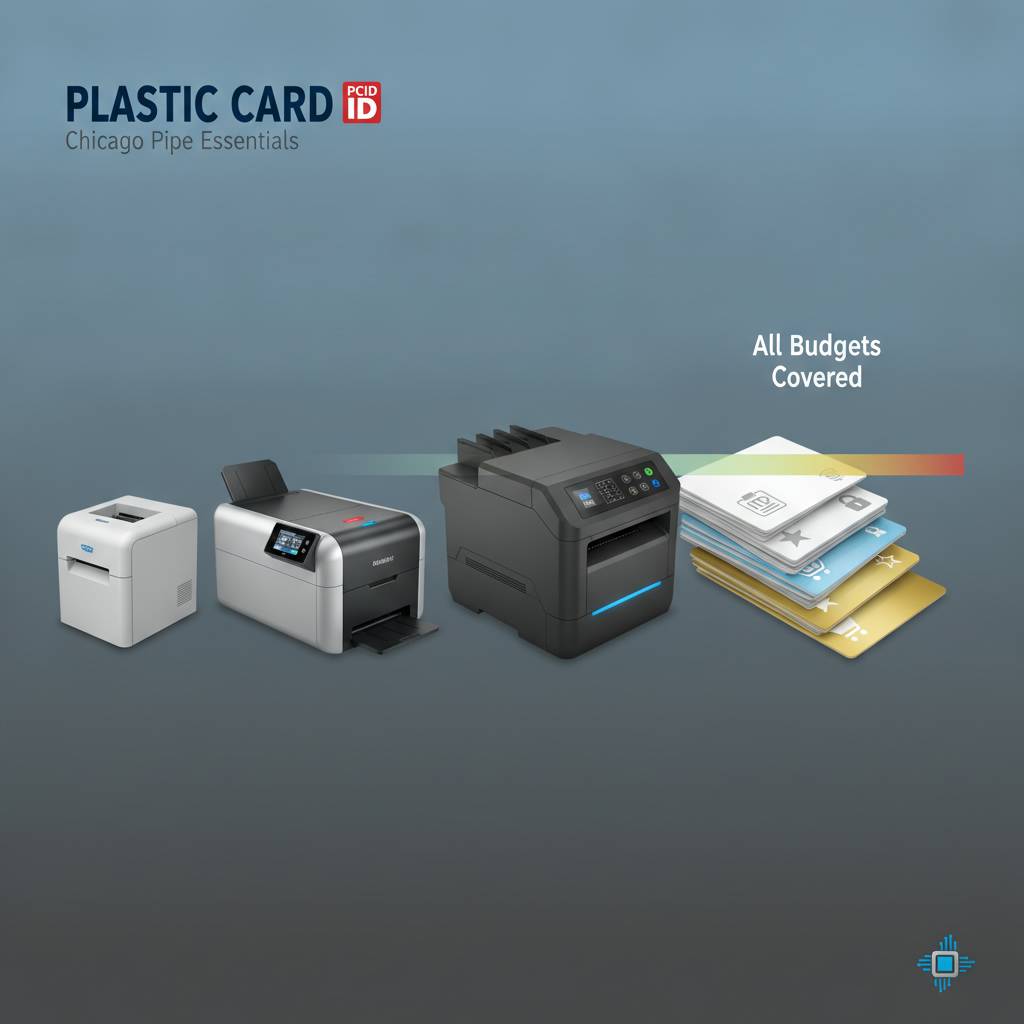 Shopping for a plastic card printer without a clear sense of what things cost is like walking into a car dealership blindfolded. Prices span an enormous range - from a few hundred dollars for a compact desktop unit to tens of thousands for industrial-grade issuance systems - and knowing where your needs fall on that spectrum is the single most important thing you can do before making a purchase decision.
Plastic Card ID has been supplying card printing hardware to businesses across the United States for over 25 years, and in that time, one question comes up more than almost any other: what should I expect to pay? This guide breaks it all down - printer tiers, consumable costs, optional upgrades, and the hidden variables that shift your total investment up or down.
| Printer Tier | Typical Price Range | Monthly Volume | Best For |
|---|---|---|---|
| Entry-Level | $300-$600 | Under 80 cards/month | Small offices, clubs, schools |
| Mid-Range | $800-$2,500 | 100-500 cards/month | Corporate HR, universities, gyms |
| Professional | $2,500-$6,000 | 500-2,000 cards/month | Enterprises, access control programs |
| Industrial / High-Volume | $6,000-$20,000 | 2,000 cards/month | Large issuers, event operations |
Understanding the Plastic Card Printer Price Range Landscape
 Price is almost never the full story when it comes to card printers, but it is almost always the starting point. The market breaks naturally into four tiers, and each tier reflects a genuine difference in build quality, throughput capacity, feature depth, and long-term durability - not just a branding tax.
What catches many buyers off guard is that the upfront hardware price is only part of your total cost of ownership. Ribbons, cleaning kits, blank card stock, lamination supplies, and optional encoding modules all layer into the real number. Understanding all of these components together is what separates a savvy purchase from an expensive surprise.
Entry-Level Printers: The $300-$600 Tier
At the bottom of the plastic card printer price range sits a legitimate, capable category of machines designed for low-volume environments. The Evolis Badgy200 is one of the most recognized names in this space - compact, USB-connected, and purpose-built for organizations printing fewer than 1,000 cards per year. That works out to roughly 80 cards per month, which covers a surprising number of real business scenarios.
Small nonprofits issuing membership cards, boutique fitness studios printing loyalty cards, local schools running a basic student ID program - these are exactly the use cases this tier was designed for. Don't let the modest price tag fool you into underestimating its output quality. At this price point, you're getting genuine dye-sublimation printing with respectable color fidelity and edge-to-edge coverage.
The tradeoff is throughput and durability. Entry-level printers print one card at a time, have smaller input hoppers, and typically come with lighter-duty internal components. If your volume is under that 1,000-cards-per-year threshold, this tier is exactly right. If it's not, moving up pays dividends quickly.
Mid-Range Printers: The $800-$2,500 Sweet Spot
This is where most businesses end up, and for good reason. The mid-range tier covers models like the Evolis Zenius and the Evolis Primacy2 - printers that handle 1,000 to 6,000 cards per month with consistent results, faster throughput, and a much broader menu of encoding and lamination options. These are workhorses built for daily production environments.
At this tier, you start to see options that matter to serious ID programs: dual-sided printing for cards that carry photo and data on the front with barcodes or signatures on the back, magnetic stripe encoding for access control and loyalty programs, and smart chip encoding for high-security credential issuance. The price jump from entry-level reflects genuine capability expansion, not just cosmetic upgrades.
Professional and Industrial Printers: $2,500 and Beyond
When volume climbs, reliability becomes a financial concern, not just a convenience preference. The professional tier - printers in the $2,500-$6,000 range from brands like Fargo and Zebra - brings robust construction, higher-capacity hoppers, advanced encoding options, and the kind of consistent performance that large organizations depend on for security-sensitive ID programs. These machines are built to run, day after day, without the fuss that plagues lighter-duty hardware.
Beyond $6,000, you enter the world of industrial card issuance systems and high-speed event printers like the Matica Event Printer. For organizations printing thousands of badges at a single event or issuing cards at enterprise scale, this tier is not optional - it is necessary infrastructure. The Evolis Agilia also occupies premium territory, delivering edge-to-edge, highest-quality output for organizations where card aesthetics are a brand statement.
Key Features That Shift the Plastic Card Printer Price Range
When buyers compare two printers that look similar on paper but differ by $500-$1,000 in price, the gap almost always comes down to a small set of specific features. Understanding these variables lets you spend precisely what you need to spend - and not a dollar more.
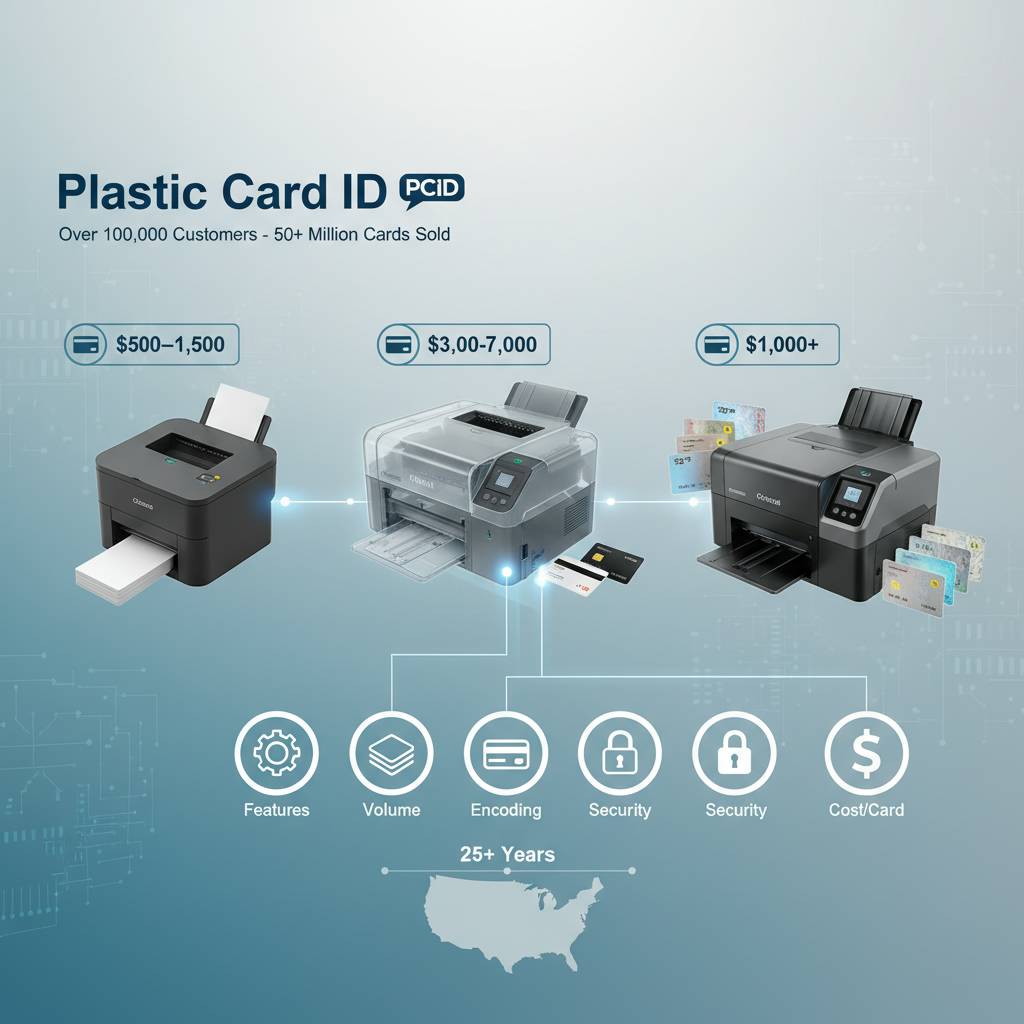
The most common mistake CPE customers make in this phase of the buying process is prioritizing the wrong features. A dual-sided printing module is useless if your ID card design is single-sided. A high-capacity 200-card input hopper adds real value only if you're running unattended batch jobs. Match features to your actual operational requirements, and the right price tier becomes obvious.
Single-Sided vs. Dual-Sided Printing
Adding a dual-sided printing module - also called a duplex module - typically adds $200-$600 to a printer's price depending on the model and brand. For organizations that need to print both faces of a card in a single pass, this upgrade is non-negotiable and well worth the investment. For those printing single-sided cards only, it is pure cost with zero return.
Dual-sided printing is most commonly required for employee ID cards (photo and name on the front, department and emergency contact on the back), student IDs, and membership cards with terms or barcodes on the reverse. If your card design is even considering a back panel, budget for duplex capability from the start - retrofitting later is possible but often more expensive than selecting the right model initially.
Encoding Upgrades: Magnetic Stripe and Smart Chip
Encoding options are some of the most misunderstood cost factors in the card printer price range conversation. A magnetic stripe encoder allows the printer to write data to the stripe on the back of a card during the print cycle - critical for hotel key cards, loyalty programs, access control credentials, and time-and-attendance systems. Magnetic stripe encoding typically adds $100-$400 to a printer's base price.
Smart chip encoding - for contact chip cards or contactless RFID/HF proximity cards - commands a higher premium, often $300-$800 above base pricing, because the technology is more complex and the components more sophisticated. If your access control or identity program requires chip-based credentials, this is a required investment, not an optional luxury.
Call 800.835.7919 to speak with a Plastic Card ID specialist who can walk you through exactly which encoding configurations are compatible with your existing access control or loyalty platform before you commit to a purchase.
Lamination Modules for Added Durability
Lamination overlaminates add a thin protective film to the printed card surface, dramatically extending card life and adding a visible layer of security with holographic or custom laminate options. Printers with integrated lamination modules sit at the higher end of the mid-range and professional tiers, typically $3,000-$8,000 depending on configuration.
For organizations issuing long-life credentials - multi-year employee IDs, student IDs that survive four years of daily use, or access cards exposed to outdoor conditions - lamination is a serious operational consideration. The cost-per-card math often justifies the lamination module investment within the first year of operation when you factor in replacement card frequency and the labor cost of reprinting.
Consumables: The Ongoing Cost Inside the Printer Price Range Discussion
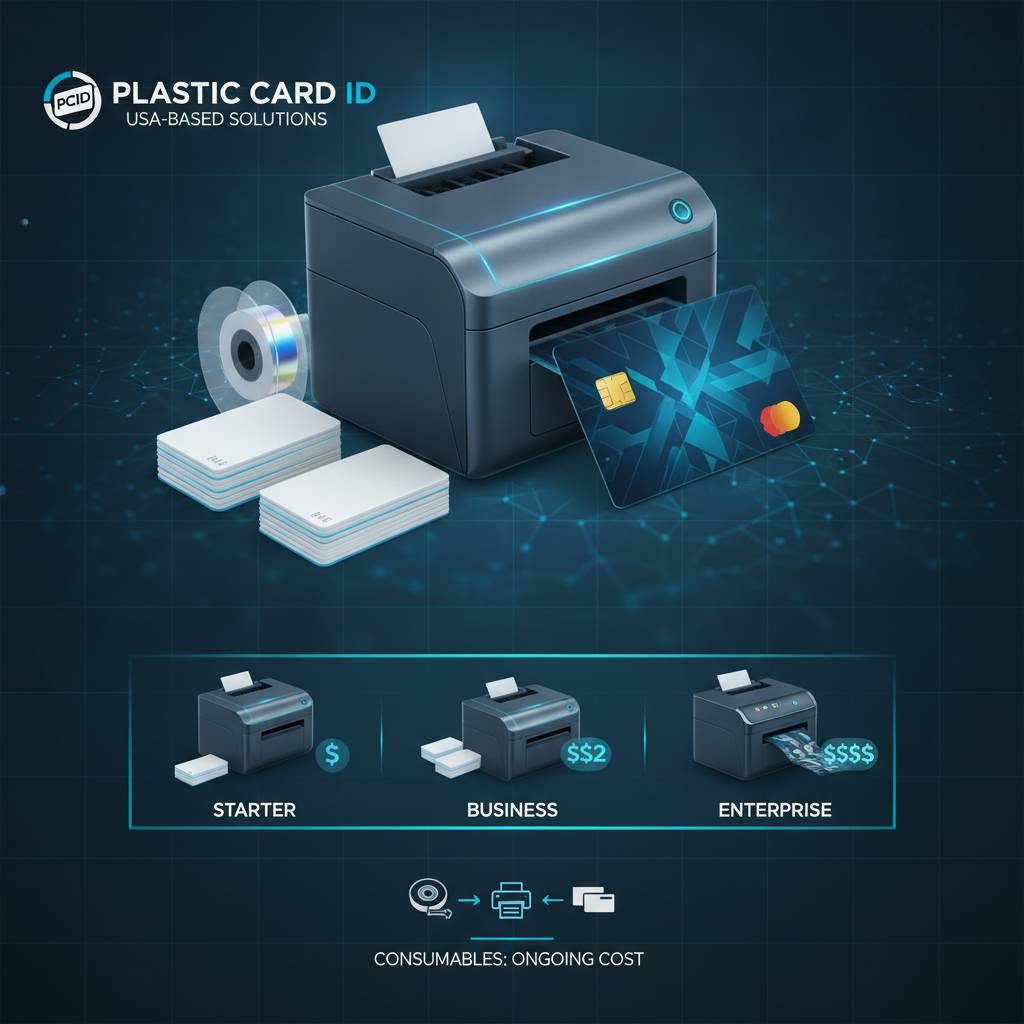 Hardware prices get all the attention, but consumables are where the real long-term math happens. A printer that costs $400 less upfront can easily cost you more over 24 months if its ribbon yields are lower or its cleaning cycle requirements are more frequent. Smart buyers factor consumable pricing into their total cost analysis from day one.
Plastic Card ID supplies a full lineup of consumables - ribbons, cleaning kits, lamination rolls, and blank card stock - to keep every card program running without interruption. Getting these numbers in front of you before you buy is part of what CPE does best: helping customers see the full financial picture, not just the sticker price.
Printer Ribbons: YMCKO, Monochrome, and Specialty
The most common ribbon type for full-color card printing is the YMCKO ribbon - Yellow, Magenta, Cyan, blacK, and Overlay panels in a single roll. YMCKO ribbons typically yield 200-500 prints per roll depending on the printer model and ribbon size, with costs ranging from $40-$120 per ribbon. That translates to a per-card consumable cost of roughly $0.15-$0.50 for the ribbon alone.
For applications that need only text or a single-color print - internal IDs, temporary badges, or high-volume black-and-white printing - monochrome ribbons are dramatically more cost-effective. A monochrome black ribbon can yield 1,000-1,500 prints per roll at a fraction of the YMCKO cost. Matching your ribbon type to your actual print requirements is one of the simplest ways to reduce your ongoing card program costs.
Blank Card Stock and Cleaning Kits
Blank PVC card stock - standard CR80 size, the same dimensions as a credit card - typically runs $15-$60 per box of 100 cards depending on whether the cards are plain white, pre-printed, mag stripe, smart chip, or specialty surface. Most organizations ordering in volume bring this cost down significantly through case-quantity purchasing.
Cleaning kits are a frequently overlooked line item that has a direct impact on print quality and printer longevity. Most manufacturers recommend cleaning cycles every 250-1,000 prints. A cleaning kit - typically including cleaning cards and swabs - costs $10-$30 and should be treated as a routine maintenance expense, not an optional purchase. Skipping cleaning cycles is one of the leading causes of premature printhead failure, which carries a replacement cost far exceeding any savings from skipping maintenance.
Calculating Your True Annual Cost
- Ribbon cost per card: $0.15-$0.50 depending on ribbon type and printer model
- Blank card cost per card: $0.15-$0.60 depending on card type and order volume
- Cleaning and maintenance: $30-$120 per year for average-volume programs
- Lamination cost per card (if applicable): $0.30-$0.90 per card
- Total per-card all-in cost estimate: $0.30-$2.00 depending on configuration
Running these numbers against your projected annual card volume gives you a true annual operating cost that goes well beyond the printer purchase price. A 500-cards-per-year program at $0.50 per card all-in costs $250 annually in consumables - meaning a $400 entry-level printer pays back its own price in just under two years through avoided outsourcing fees alone.
Brand Comparison: How Evolis, Fargo, Zebra, and Matica Fit the Price Range
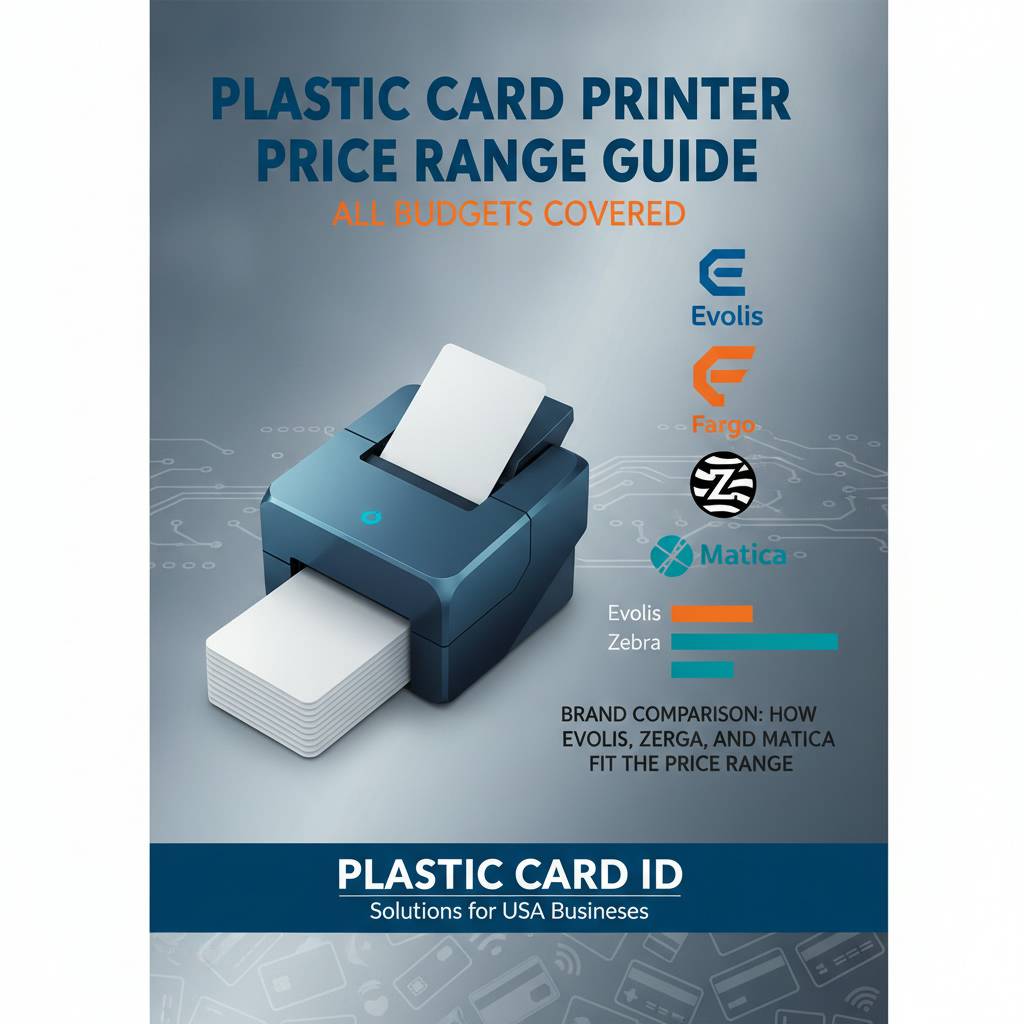 Brand selection is not purely a loyalty question. Each of the four major brands Plastic Card ID carries has a genuinely distinct positioning within the plastic card printer price range, and understanding those differences helps you land on the right machine for your specific needs without overpaying for capability you don't need.
There is no objectively best brand - there is only the best brand for a given use case, volume requirement, and budget. What follows is a practical breakdown of how each brand family fits within the broader pricing landscape.
Evolis: The Benchmark for Mid-Range to Premium
Evolis printers dominate the mid-range and professional tiers for good reason. The Badgy200 anchors the entry-level end, while the Zenius and Primacy2 own the productive middle ground at $800-$2,500. The Agilia represents the premium tier within the Evolis family - built for organizations that need the absolute highest print quality and are willing to pay for it. Evolis has built its reputation on print fidelity, ease of use, and a modular upgrade path that lets organizations start lean and scale capabilities as their programs grow.
One practical advantage of the Evolis lineup is its consistent ribbon and consumable ecosystem across models, which simplifies supply chain management for organizations running multiple printers across different locations. For a business adding a second or third printer to a distributed operation, that consistency has real operational value.
Fargo and Zebra: Security-First ID Solutions
Fargo and Zebra printers are particularly well-suited to security-focused ID programs - government contractors, healthcare systems, financial institutions, and enterprise access control environments. Both brands invest heavily in encoding depth, credential security features, and integration with established identity management platforms. Their price points typically fall in the $1,500-$6,000 range for core models, reflecting that enterprise-grade positioning.
Zebra printers are especially recognized for their reliability in high-volume, high-demand environments. If your card program runs continuously throughout the workday and downtime carries a measurable operational cost, Zebra's build quality and service ecosystem make a compelling case. Fargo similarly offers a well-supported hardware ecosystem with strong encoding capabilities for magnetic stripe and smart card credentials.
Matica: High-Speed Event and Batch Printing
The Matica Event Printer occupies a specific and important niche: rapid, high-volume on-site badge and card printing for conferences, conventions, sporting events, and large-scale credentialing operations. When you need to print and issue hundreds or thousands of credentials in a compressed time window, the Matica platform is designed precisely for that scenario.
Pricing for Matica systems reflects their specialized, high-throughput design - typically in the upper professional to industrial range. For event operations teams or organizations running annual credentialing programs at scale, the Matica investment pays for itself the first time it eliminates a pre-print bottleneck at a major event.
Buyer's Guide: Matching Your Needs to the Right Plastic Card Printer Price Range
With all the options laid out, the practical question becomes: how do I choose? The answer, honestly, lives in four specific questions that cut through the noise faster than any spec sheet comparison.

Take a few minutes to answer these honestly before calling CPE or placing an order. The answers will determine your tier, your required features, and your realistic budget - and they will save you from a purchase you'll regret six months in.
The Four Questions That Determine Your Printer Tier
- How many cards will you print per month? This single variable determines more about your required printer tier than any other factor. Under 80 per month: entry-level. 100-500 per month: mid-range. Over 500 per month: professional or industrial.
- Do you need single-sided or dual-sided output? Dual-sided printing requires either a built-in duplex module or an add-on module, both of which add to base cost. Decide this before you shop.
- Do your cards need encoding? Magnetic stripe, contact chip, or RFID encoding requirements each have different cost implications. Know your access control or loyalty platform's requirements upfront.
- How long do you need each card to last? Cards that need to survive years of daily use benefit from lamination overlaminates. Cards replaced annually or more frequently may not justify the additional investment.
Once you have clear answers to these four questions, the plastic card printer price range guide above maps directly to a recommended tier. From there, Plastic Card ID specialists can narrow the field to specific models that match your workflow, your encoding needs, and your budget ceiling.
Avoiding the Most Common Buying Mistakes
Overbuying is more common than you'd think. Organizations that anticipate high volume but never reach it end up with industrial machines running at 10% capacity - a poor return on a large investment. Conversely, underbuying creates a different kind of pain: entry-level printers pushed beyond their design parameters fail early and produce inconsistent output, forcing a costly mid-cycle replacement purchase.
Buy for your actual current volume with one tier of headroom for growth. If you're printing 200 cards per month today and expect to grow to 400 within two years, a solid mid-range machine at $1,200-$1,800 is a far more sensible investment than a $500 entry-level printer you'll outgrow in 18 months or a $4,000 professional system you won't need for years.
How to Contact Plastic Card ID for Personalized Guidance
Every card program is different, and the best printer for one organization may be completely wrong for another. The Plastic Card ID team has walked tens of thousands of customers through exactly this decision - across industries, volume ranges, encoding requirements, and budget parameters. That accumulated expertise is available to you at no charge simply by reaching out.
Call 800.835.7919 to speak directly with a card printing specialist. Whether you're starting a new program from scratch, replacing aging hardware, or scaling an existing operation, the team is ready to help you identify the right machine, the right consumables, and the right total investment for your specific situation.
Ready to Print In-House? Plastic Card ID Makes It Simple
 There is a reason over 100,000 businesses across the United States have trusted Plastic Card ID for their card printing hardware: the combination of a curated, professional-grade product lineup, deep product knowledge, and a genuine commitment to helping customers make the right purchase - not just the fastest sale - is genuinely rare in this industry.
In-house card printing gives your organization total operational control. Print on demand. Personalize every card with names, photos, and custom data. Encode magnetic stripes or smart chips without sending cards to an outside vendor. Eliminate lead times, reduce per-card costs at volume, and maintain the security of keeping your credential data entirely within your own walls. That level of control is what drives organizations from every sector - corporate, healthcare, education, hospitality, government, and more - to bring card printing in-house.
Whether you're issuing employee ID cards, student credentials, hotel key cards, access control badges, membership cards, loyalty cards, or event credentials, Plastic Card ID carries the hardware, the consumables, and the expertise to build a card program that actually works for your operation.
Take the next step today. Contact Plastic Card ID at 800.835.7919 and let our specialists match you to the right printer at the right price - so your card program runs smoothly from day one and for years to come.
Previous Page