Dye Sublimation Card Printer Explained: Complete Guide
Table of Contents []
- What Is a Dye Sublimation Card Printer? Plastic Card ID Breaks It Down
- Why In-House Dye Sublimation Printing Changes the Game
- The Plastic Card ID Printer Lineup: Matching Technology to Your Needs
- Supplies, Consumables, and Keeping Your Program Running
- Common Applications: Where Dye Sublimation Card Printers Deliver Real Value
- Buyer's Guide: Selecting the Right Dye Sublimation Card Printer
- Ready to Print? Plastic Card ID Is Your Partner in Professional Card Production
What Is a Dye Sublimation Card Printer? Plastic Card ID Breaks It Down
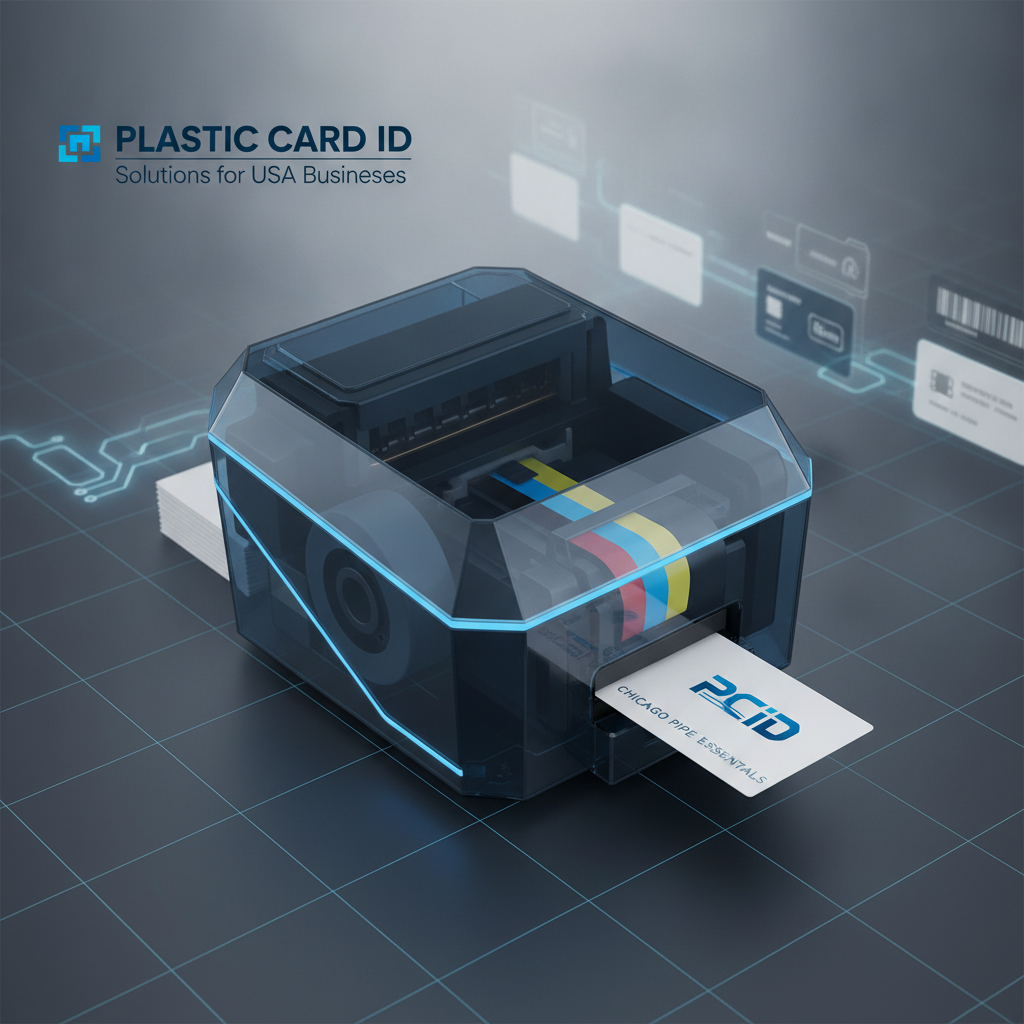 Walk into almost any organization that prints its own ID badges, membership cards, or access credentials in-house, and chances are high there's a dye sublimation card printer humming quietly somewhere in the building. Yet ask most people how it actually works, and you'll get a shrug. The technology behind those crisp, full-color plastic cards is genuinely fascinating - and understanding it can help you make a significantly better purchasing decision.
Dye sublimation, sometimes called dye-sub, is a thermal printing process where solid dye crystals are converted directly into a gas - bypassing the liquid stage entirely - and then absorbed into the surface of the card. The result is a print that is embedded in the card material itself, not sitting on top of it like an inkjet print. That means sharper edges, more accurate color gradients, and dramatically better durability than almost any competing technology at this price tier.
CPE has spent well over two decades helping U.S. businesses navigate exactly this kind of equipment decision. Whether you're outfitting a school district, a hotel chain, a corporate campus, or a membership organization, understanding the mechanics of dye sublimation printing will save you time, money, and frustration down the road.
The Science Behind Dye Sublimation: How Heat Becomes Color
A dye sublimation card printer uses a ribbon coated with panels of dye - typically yellow, magenta, and cyan (plus a black panel and a clear overlay). A thermal print head applies precise levels of heat across thousands of tiny points along that ribbon. As each point heats up, the dye sublimates - transitions from a solid to a gas - and diffuses into the top layer of the PVC card surface.
Because the amount of heat applied to each point is variable, the printer can produce a virtually continuous range of color tones. This is fundamentally different from inkjet printing, where each dot is either on or off. The result is photographic-quality, gradient-rich output that makes portraits, logos, and color-coded ID systems look genuinely professional rather than printed.
YMCKO Ribbons: The Color Foundation of Every Dye-Sub Card
The standard ribbon type for full-color dye sublimation card printing is called YMCKO - Yellow, Magenta, Cyan, Black, and Overlay. Each letter corresponds to a separate panel on the ribbon. The printer passes the card under the ribbon multiple times, applying one color layer per pass, then finishes with the clear overlay (O) panel that seals the print and adds an additional layer of protection.
The black panel (K) in YMCKO deserves special mention. It prints sharp, crisp text and barcodes that are cleaner than what the YMC color panels can produce on their own. Sharp, readable barcodes and text are critical for ID cards, membership cards, and access credentials. That's why YMCKO is the workhorse ribbon for the vast majority of in-house card printing programs.
Beyond YMCKO, specialty ribbons - including monochrome options in black, blue, red, silver, gold, and others - allow organizations to print single-color cards at a significantly lower cost per card. Monochrome ribbons are popular for organizations that need large quantities of simple text-and-logo cards without full-color photography.
Dye Sublimation vs. Other Card Printing Methods
It helps to understand what dye sublimation is competing against. Inkjet card printers exist but produce prints that sit on the card surface, making them more vulnerable to scratching and fading. Laser card printers are more common in office environments but were never truly designed for PVC cards and struggle with the smooth, non-porous card surface. Thermal transfer printing uses a wax or resin ribbon and produces solid, opaque dots rather than continuous tones.
Dye sublimation wins on color quality, gradient reproduction, and overall print permanence for most professional card programs. It is not the fastest technology at the industrial end of the spectrum - retransfer printing, which applies dye-sub output to a film that is then laminated onto the card, can produce even higher quality output for security-critical programs. But for the overwhelming majority of ID, membership, and loyalty card programs, dye sublimation represents the best balance of quality, speed, and cost.
Why In-House Dye Sublimation Printing Changes the Game
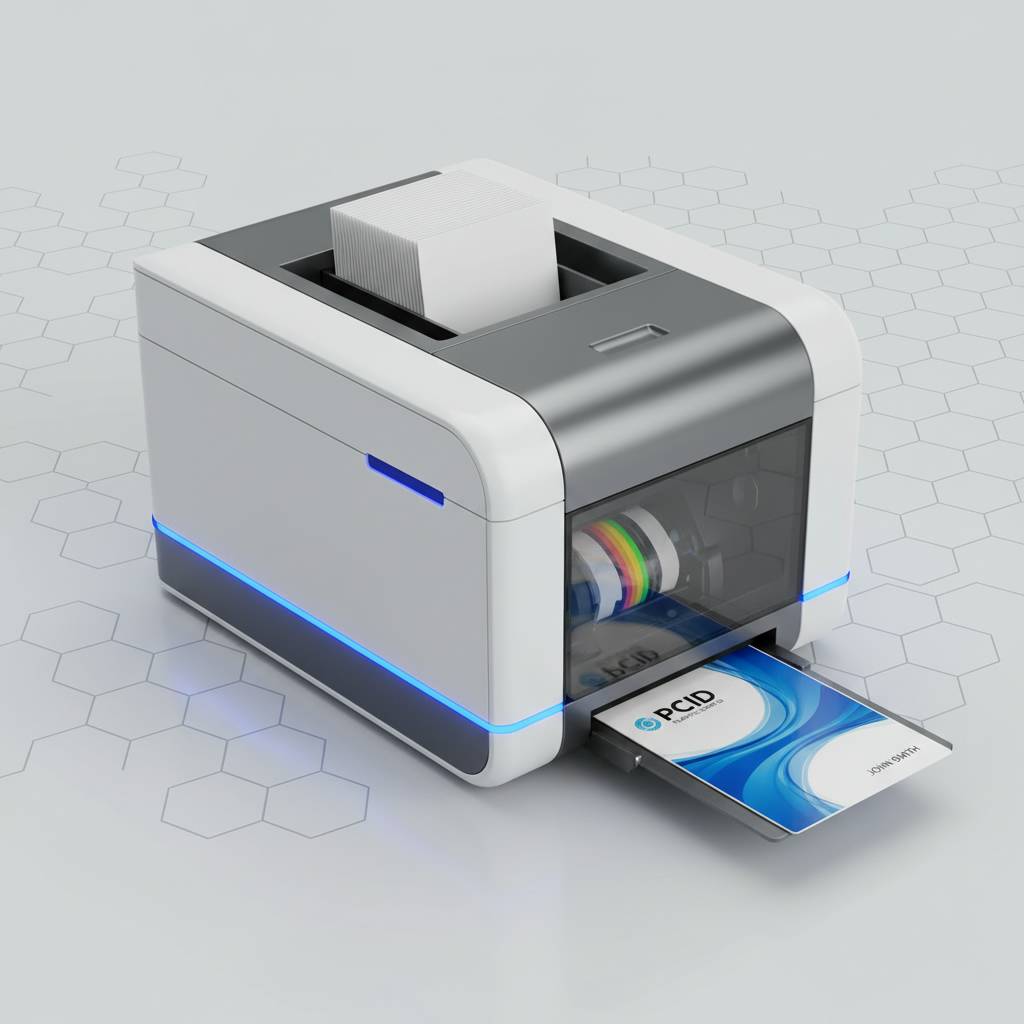 Outsourcing card production seems convenient until the day you urgently need 50 new employee badges before a Monday morning shift change and your vendor's five-day turnaround suddenly feels very, very long. In-house dye sublimation printing hands control back to the organization - you print what you need, when you need it, personalized exactly the way you want it.
The economics work out, too. Card printing services charge per card, and those per-card costs add up fast when you're running an ongoing program. With an in-house printer, your cost per card drops substantially once the hardware is paid for. For organizations printing hundreds or thousands of cards annually, the return on investment from in-house printing can be dramatic.
Print on Demand: The Operational Advantage
Print on demand is arguably the single most valuable capability that an in-house dye sublimation card printer delivers. New employee starting Monday? Print the badge Friday afternoon. Member lost their card? Reprint it while they wait at the front desk. Hotel guest needs a replacement key card? Encode and hand it over in under a minute. This operational agility is simply not possible when you depend on an outside vendor.
Organizations with seasonal or event-driven card needs benefit especially strongly from on-demand printing. A university that onboards thousands of students each August, a gym that runs a new-member promotion in January, or an event venue printing credentials for a weekend conference - all of these scenarios reward the flexibility that an in-house dye sublimation printer provides. Eliminating lead times is not a minor convenience; it's a genuine competitive advantage.
Personalization and Encoding Capabilities
Modern dye sublimation card printers don't just print images and text - many models support encoding capabilities that make each card functionally unique. Magnetic stripe encoding writes data to the stripe on the back of the card during the print process, enabling cards to work with access control systems, point-of-sale readers, and time-and-attendance terminals. Smart card encoding goes further, writing data to an embedded chip for higher-security applications.
This means a single device can produce a finished, fully functional card - printed, personalized, and encoded - in a single pass through the machine. No separate encoding step, no manual data entry downstream, no risk of a mismatch between the printed name and the encoded data. Integrated encoding is one of the most underappreciated features of professional dye sublimation card printers, and it's a capability that CPE can help you specify and configure for your exact application.
Lamination and Overlay Options for Extended Card Life
Many professional dye sublimation card printers support lamination modules that apply a thin protective film over the finished print. Lamination dramatically extends the life of a printed card - particularly important for cards that are handled frequently, carried in wallets, or used in outdoor environments. Laminated cards can last three to five times longer than non-laminated cards in comparable use conditions.
Even without a full lamination module, the overlay (O) panel in a YMCKO ribbon provides meaningful protection. It seals the dye layers beneath a clear protective coating, adding scratch resistance and UV protection. For organizations that don't need maximum durability but do need consistent, professional-looking cards over a reasonable lifespan, the standard overlay is entirely adequate. Organizations with more demanding requirements should seriously consider a printer model that supports lamination as an upgrade path.
| Print Volume | Recommended Model Range | Key Features | Typical Applications |
|---|---|---|---|
| Under 1,000 cards/year | Evolis Badgy200 | Compact, USB, bundled software | Small offices, clubs, small schools |
| 1,000-6,000 cards/month | Evolis Zenius, Primacy2 | Dual-sided, magnetic stripe, encoding | Corporate ID, universities, healthcare |
| High-volume / premium output | Evolis Agilia | Edge-to-edge, maximum resolution | Government, financial institutions, large enterprise |
| Security ID programs | Fargo, Zebra models | Retransfer, HoloKote, encoding | Law enforcement, secure campuses, access control |
| Event / on-site badging | Matica Event Printer | High-speed, portable-friendly | Conferences, trade shows, sporting events |
The Plastic Card ID Printer Lineup: Matching Technology to Your Needs
Not every organization has the same card printing needs, and not every dye sublimation card printer is engineered for the same workload. The lineup available through CPE spans the full spectrum - from desktop units ideally suited to occasional, low-volume printing all the way up to industrial-class systems designed for continuous, high-volume production environments.
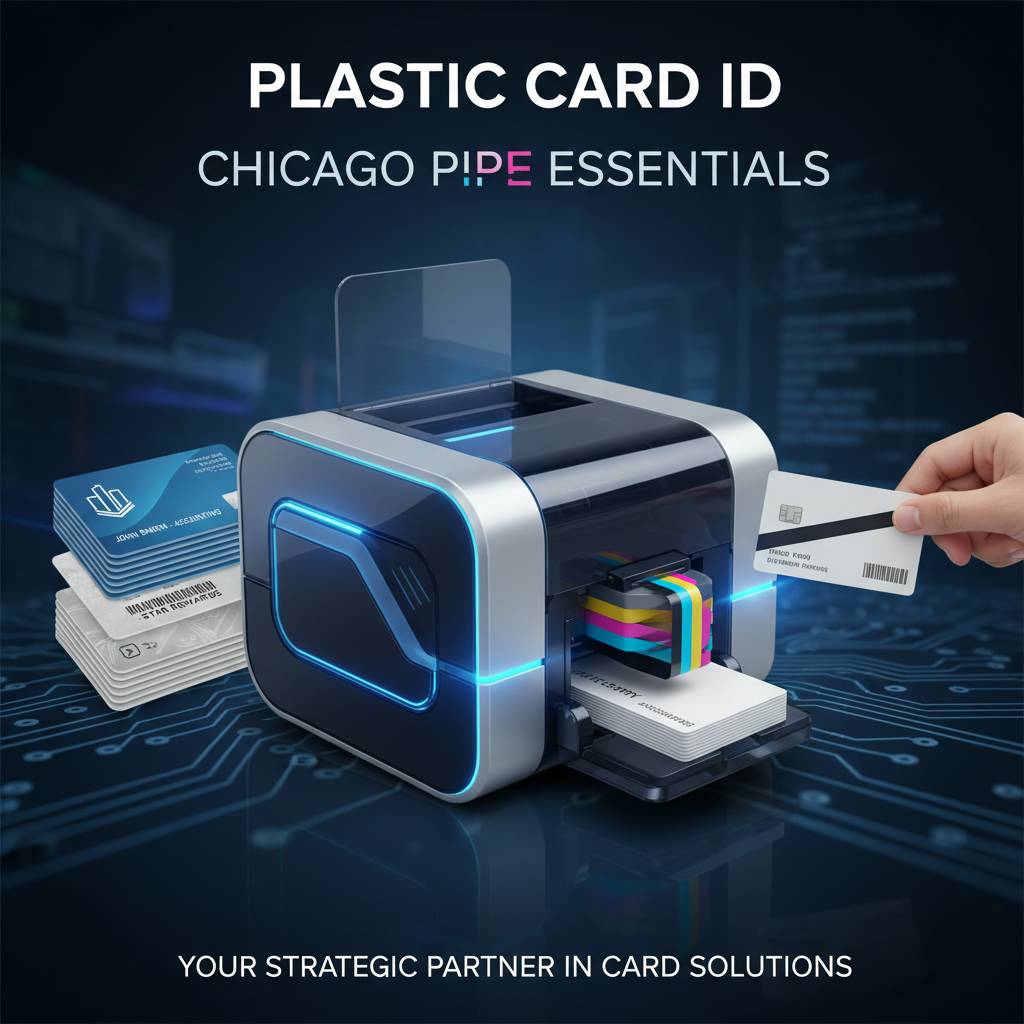
Choosing the right printer from the outset matters more than many buyers realize. An underpowered printer stressed by volume it wasn't designed for wears out prematurely and produces inconsistent output. An overspecified industrial printer parked in a small HR office represents budget wasted on capabilities that will never be used. Matching printer capacity to actual production requirements is the single most important buying decision in any card printing program.
Entry-Level Dye Sublimation: The Evolis Badgy200
The Evolis Badgy200 is engineered for organizations that need professional-quality dye sublimation printing without a large capital outlay or a steep learning curve. It's a compact desktop unit that connects via USB, bundles card design software, and produces full-color dye sublimation output that is indistinguishable in quality from what larger machines produce - just at lower volumes and slower throughput speeds.
For a small business, a community organization, a church, or any operation printing fewer than 1,000 cards per year, the Badgy200 hits a genuinely practical price point. It's not a compromise product - it produces true dye sublimation output, and it runs standard YMCKO ribbons. Small-scale doesn't mean unprofessional when you're working with dye sublimation technology, and the Badgy200 proves that convincingly.
Mid-Range Workhorses: Evolis Zenius and Primacy2
Step up in volume requirements and the Evolis Zenius and Primacy2 are where most growing organizations land. Both are designed for daily production workloads in the 1,000 to 6,000 cards per month range. The Zenius is a single-sided unit; the Primacy2 adds dual-sided printing - critical for organizations that need information, barcodes, or magnetic stripes on the card back.
The Primacy2 in particular has earned a strong reputation in corporate and institutional environments because it is genuinely reliable under sustained daily use. It supports optional magnetic stripe encoding and smart card encoding, making it adaptable to a wide variety of access control and credential management systems. If your organization is scaling a card program and needs a printer that can grow with it, the Primacy2 represents exceptional long-term value.
Premium Output: The Evolis Agilia
When the application demands edge-to-edge printing, the highest available print resolution, and output quality that holds up under scrutiny against commercially produced cards, the Evolis Agilia is the answer. It represents the top tier of direct-to-card dye sublimation printing and is designed for organizations where card quality is not negotiable.
Large enterprises, financial institutions, and organizations issuing cards that need to convey both functionality and prestige look to the Agilia for output that reflects the quality of their brand. The Agilia also supports an extensive range of encoding and lamination options, making it a complete card production platform rather than simply a printer. Call 800.835.7919 to discuss whether the Agilia is the right fit for your specific production requirements.
Security-Focused and Event Printing: Fargo, Zebra, and Matica
Fargo and Zebra printers bring a different set of priorities to the lineup. These brands have deep roots in security ID and access control environments. Fargo's HDP (High Definition Printing) technology uses a retransfer process - a variation on dye sublimation where the image is first printed onto a clear film, then transferred to the card surface - producing output that is highly resistant to tampering and suitable for the most security-sensitive credentialing programs.
The Matica Event Printer fills a specialized niche: high-speed on-site credential printing for live events. Conferences, trade shows, sporting events, and large corporate gatherings demand the ability to print large numbers of badges quickly, on location, with no lead time. The Matica delivers exactly that - fast, reliable, professional-quality output in event environments where speed and uptime are everything.
Supplies, Consumables, and Keeping Your Program Running
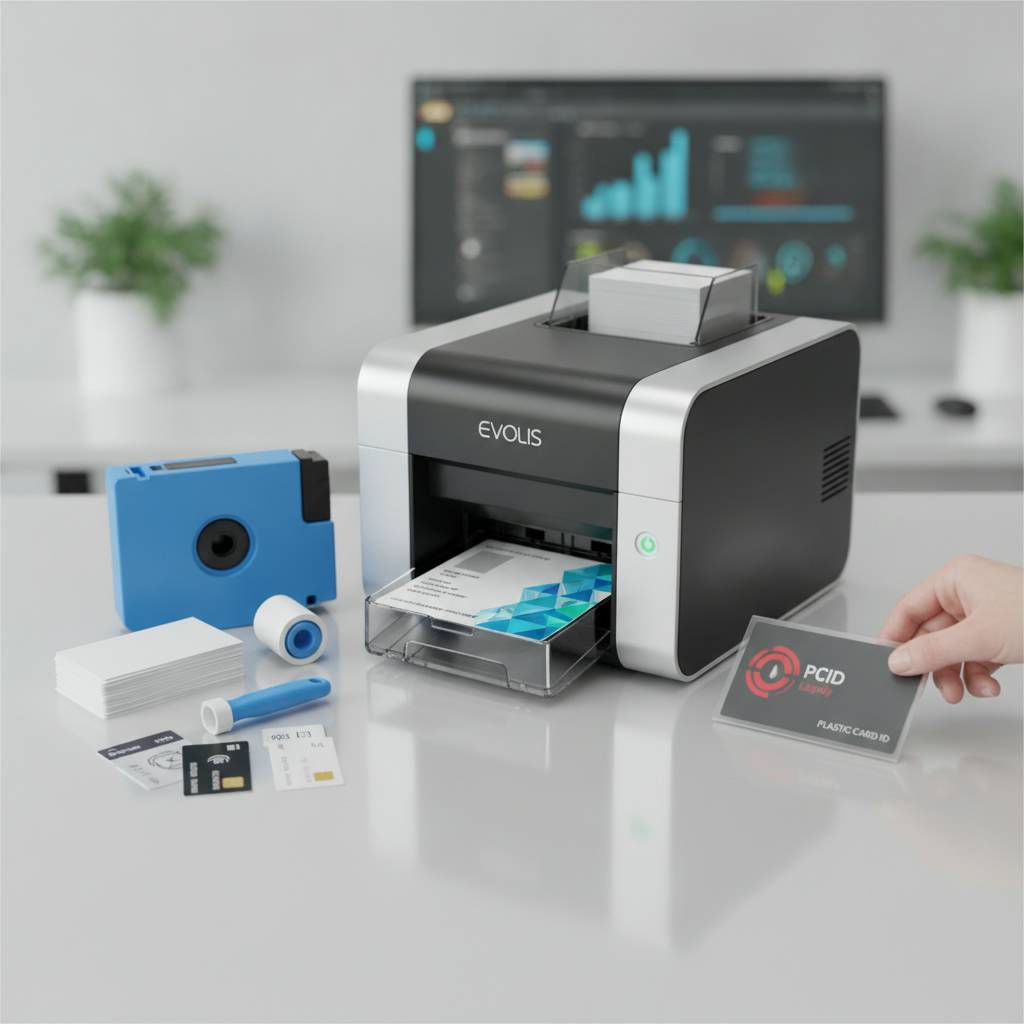 A dye sublimation card printer is only as good as the supplies feeding it. Ribbons, cleaning kits, and blank card stock are consumables that need to be managed, reordered, and stored correctly. Running out of ribbons mid-production, or using an incompatible ribbon in a printer that requires a specific formulation, are the kinds of operational headaches that derail what should be a smooth card program.
CPE supplies not just the printers but the full range of consumables and accessories needed to keep a card printing program running reliably. This means you don't have to source ribbons from one vendor, cleaning kits from another, and card stock from a third. A single-source supply relationship simplifies procurement and reduces the risk of incompatibility problems that arise when mixing components from different sources.
Ribbons: Choosing the Right Type for Your Application
YMCKO is the standard choice for full-color dye sublimation printing, but it's not the only ribbon type worth knowing. YMCKOK ribbons add a second black panel specifically optimized for printing barcodes on the card back - useful for dual-sided printing programs that require high-density barcode readability. KO ribbons (black plus overlay) are used for single-color printing programs where the card design doesn't require color photography.
- YMCKO: Full-color with clear overlay - standard for photo ID and membership cards
- YMCKOK: Full-color with dual black panels - ideal for dual-sided cards with barcodes
- Monochrome (K, Blue, Red, Silver, Gold): Single-color output at the lowest cost per card
- KO: Black plus overlay - professional text and logo cards without color
- Specialty ribbons: Metallic, UV, and custom formulations for specific security or aesthetic requirements
Choosing the wrong ribbon is a common and costly mistake. Using a standard YMCKO ribbon in a printer that needs a specific OEM-coded ribbon can trigger error messages or voided warranties. Always verify ribbon compatibility against your specific printer model before ordering in quantity. The team at CPE can confirm the correct ribbon specification for any printer in the lineup.
Cleaning Kits and Preventive Maintenance
Dye sublimation card printers are precision instruments. Dust, debris, and the residue left by card stock passing through the printer accumulate on rollers, the print head, and transport mechanisms over time. Left unaddressed, this contamination causes print defects - white streaks, banding, uneven color - and eventually leads to premature print head failure. Regular cleaning is not optional maintenance; it's mandatory for consistent output quality.
Most professional dye sublimation card printers include a cleaning card with each new ribbon. Running a cleaning card every time you load a fresh ribbon is the minimum recommended maintenance interval. Deeper cleaning with a cleaning kit - including cleaning swabs and solution for the print head and transport rollers - should be performed periodically based on print volume. Organizations that follow a consistent cleaning schedule typically get significantly longer print head life and more consistent print quality throughout the printer's service life.
Common Applications: Where Dye Sublimation Card Printers Deliver Real Value
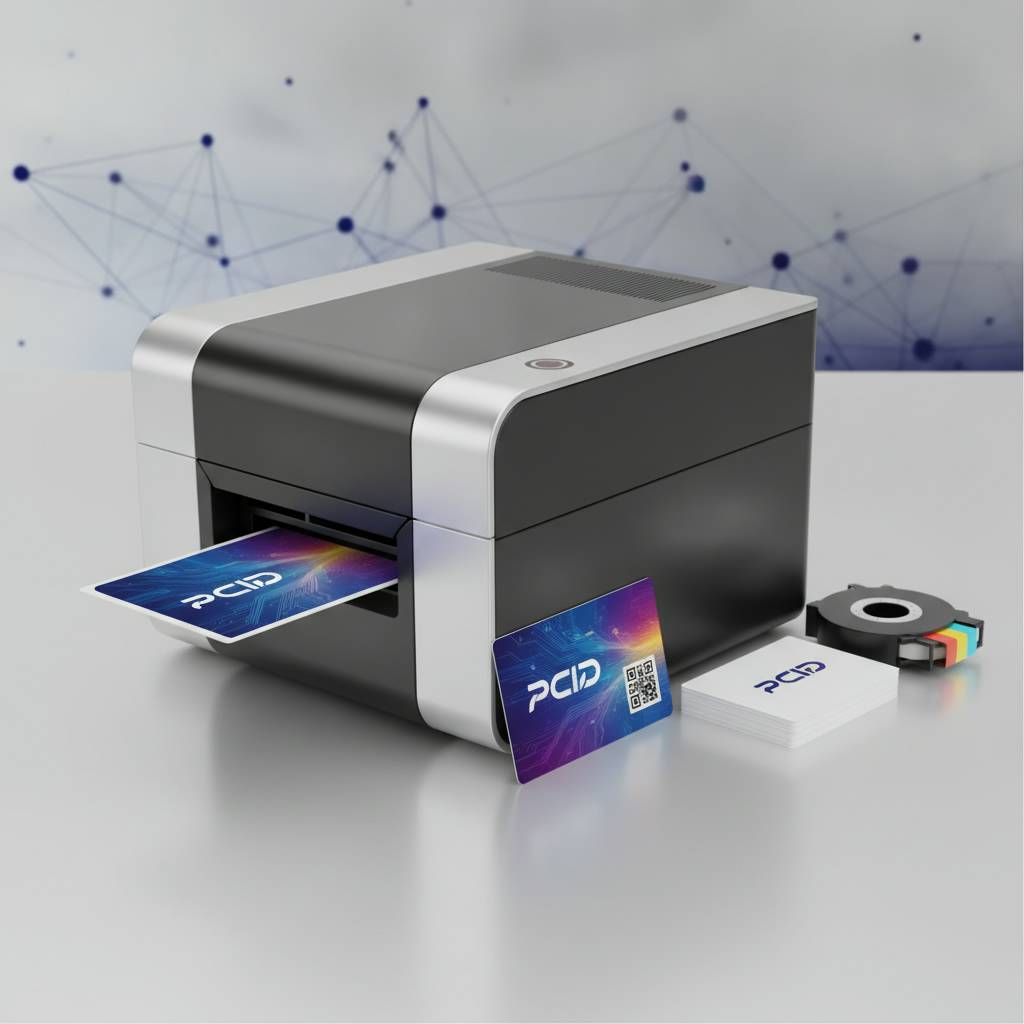 The range of applications that dye sublimation card printing serves is broader than many people initially assume. The technology isn't limited to large corporate ID programs - it's equally at home producing membership cards for a fitness center, student IDs for a K-12 school, key cards for a boutique hotel, or credentials for a professional association's annual conference.
Employee and Student ID Programs
Employee ID cards and student IDs are the most common applications for in-house dye sublimation card printers, and for good reason. These programs involve ongoing card production - new hires, new students, replacements for lost cards - that make the per-card economics of in-house printing very favorable compared to outsourcing. Full-color photo IDs with encoded magnetic stripes or smart chips integrate directly with access control and time-and-attendance systems.
For educational institutions in particular, the ability to print IDs during registration, at the start of each semester, or immediately upon enrollment is a significant operational advantage. Students expect their IDs on day one, and in-house dye sublimation printing makes that possible at a scale from a single community college to a large university system.
Membership, Loyalty, and Access Cards
Membership organizations - gyms, clubs, professional associations, libraries - use dye sublimation card printing to produce cards that look polished and carry the organization's brand effectively. Loyalty programs benefit from the ability to encode magnetic stripes for point-of-sale integration. Access control programs need cards that work reliably with readers while also conveying the right visual impression to users and security staff.
Hotel key cards, event credentials, and visitor access badges round out this category. Hotels printing their own key cards eliminate dependency on external suppliers for a high-turnover consumable. Event organizers printing badges on-site can accommodate last-minute registrations, staff changes, and VIP additions without the chaos that comes from relying entirely on pre-printed materials. In every one of these scenarios, in-house dye sublimation printing delivers agility and cost control simultaneously.
Frequently Asked Questions About Dye Sublimation Card Printing
Buyers new to in-house card printing tend to have consistent questions about dye sublimation technology. Addressing the most common ones upfront saves time and sets realistic expectations for what the technology can and cannot do.
- How long does a dye sublimation print last? With standard overlay protection, printed cards typically last 2-3 years under normal use. Laminated cards can last significantly longer.
- Can dye sublimation printers print white? No. Dye sublimation relies on the white of the card substrate as its lightest tone. White text or elements must be achieved by leaving those areas unprinted.
- What card stock do dye sublimation printers use? Standard CR-80 PVC cards (the same size as a credit card) are the baseline. Specialized card formulations for encoding, lamination, or specific surface treatments are also available.
- How many cards does a ribbon produce? This varies by ribbon type and model. A standard YMCKO ribbon typically produces 100-500 cards per ribbon, depending on the printer and ribbon yield specification.
- Do I need special software? Many printers bundle basic card design software. More sophisticated programs use dedicated ID card design software or integrate with existing HR and access control systems.
If your question isn't answered here, the team at CPE is available to walk through any technical or procurement question in detail. 800.835.7919 connects you directly with people who know this equipment.
Buyer's Guide: Selecting the Right Dye Sublimation Card Printer
The decision to invest in an in-house dye sublimation card printer is straightforward once you know the right questions to ask. Volume, output requirements, encoding needs, and budget are the four pillars of any card printer selection - and getting all four right means a printer that serves your organization well for years rather than one that frustrates everyone from day one.
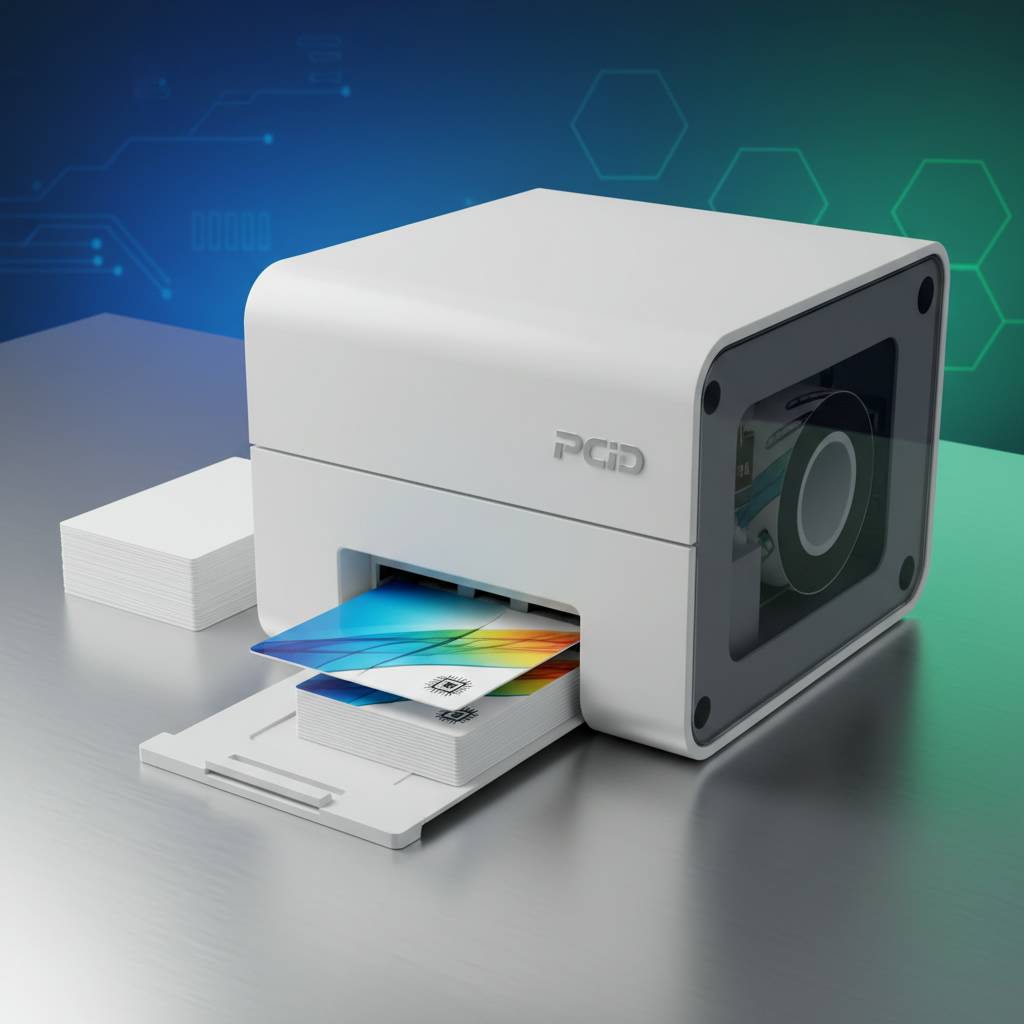
Calculating Your True Print Volume Needs
Underestimating print volume is the most common mistake buyers make. Think beyond initial card issuance to ongoing replacement volume. Cards get lost, damaged, stolen. Programs grow. Organizations add new card types - visitor cards, contractor badges, temporary access credentials. The printer that handles your day-one volume may be inadequate within 18 months if your program is growing.
A reasonable planning approach: estimate your current annual volume, then add 30-50% as a growth buffer. Map that projected volume against the rated monthly capacity of the printers you're considering. Choosing a printer rated well above your minimum requirement is almost always the smarter long-term investment - printers running at or near their rated capacity consistently wear out faster and produce less consistent output than printers operating well within their designed range.
Single-Sided vs. Dual-Sided Printing
Dual-sided printing capability is worth specifying even if your current card design only uses one side. Card programs evolve. An ID card that starts as a simple photo-and-name badge frequently gains a barcode, a magnetic stripe, emergency contact information, or department coding over time. Adding that information to the card back is only possible if you have a printer capable of dual-sided output.
Dual-sided printers cost more upfront - typically an additional $200-$600 depending on the model tier - but that incremental cost is trivial compared to replacing the printer when your program outgrows a single-sided unit. Unless your application is definitively, permanently single-sided, specifying dual-sided printing from the start is a straightforward future-proofing decision.
Encoding Options and System Integration
If your card program integrates with any kind of access control, time-and-attendance, point-of-sale, or other card-reading system, encoding capability in your printer is not optional - it's essential. Magnetic stripe encoding is the most common requirement and is available as an integrated option on many mid-range and above dye sublimation card printers. Smart card (contact and contactless) encoding is available on higher-end models and select configurations.
Verify that the encoding standard your printer supports matches what your reader infrastructure requires. Track specifications (HiCo or LoCo for magnetic stripe), chip standards (ISO 7816 for contact, ISO 14443 for contactless), and data format requirements all need to be confirmed before you specify a printer. This is an area where working with an experienced supplier like CPE pays dividends - getting encoding specifications wrong means the cards don't work, regardless of how beautifully they print. Reach out at 800.835.7919 before finalizing your configuration.
Ready to Print? Plastic Card ID Is Your Partner in Professional Card Production
 Dye sublimation card printing is a mature, proven, remarkably capable technology - and in-house ownership of that capability is now within reach of organizations of virtually any size. From the compact Evolis Badgy200 to the premium Evolis Agilia, from Fargo and Zebra security ID systems to the Matica Event Printer for live credential production, the range of hardware available covers every legitimate application and production scale.
The supplies, ribbons, cleaning kits, encoding upgrades, and accessories to keep any card program running are all available through Plastic Card ID - a single supplier relationship that simplifies procurement and ensures you're always working with components that are compatible and appropriately specified for your equipment. More than 100,000 customers across the United States have trusted CPE with their card printing programs, and the depth of that experience translates directly into better guidance for every new customer.
Don't guess at printer specifications, ribbon compatibility, or encoding configurations. Call Plastic Card ID at 800.835.7919 and speak with a team that has spent over 25 years matching the right hardware to the right application. Your card program deserves equipment that works the first time and keeps working - and that starts with the right conversation.
Previous Page