PVC Card Printer: Durable High-Quality Card Printing
Table of Contents []
- Why Plastic Card ID Is the PVC Card Printer Authority Businesses Trust
- Understanding the PVC Card Printer Lineup from Entry-Level to Industrial
- Fargo and Zebra PVC Card Printers for Security-Focused ID Programs
- The Full Ecosystem: Supplies and Accessories That Keep Cards Printing
- High-Speed Event Credentialing with the Matica Event Printer
- Frequently Asked Questions About PVC Card Printers
- Ready to Choose Your PVC Card Printer? Let Plastic Card ID Help
Why Plastic Card ID Is the PVC Card Printer Authority Businesses Trust
 Walk into almost any organization that prints its own ID cards, membership cards, or access credentials, and you will find a story behind the decision. Maybe they were tired of waiting weeks for cards from an outside vendor. Maybe they needed the freedom to encode a magnetic stripe or smart chip on the spot. Whatever the reason, the moment a business takes card production in-house, everything changes - and Plastic Card ID has been the company guiding that transition for more than 25 years.
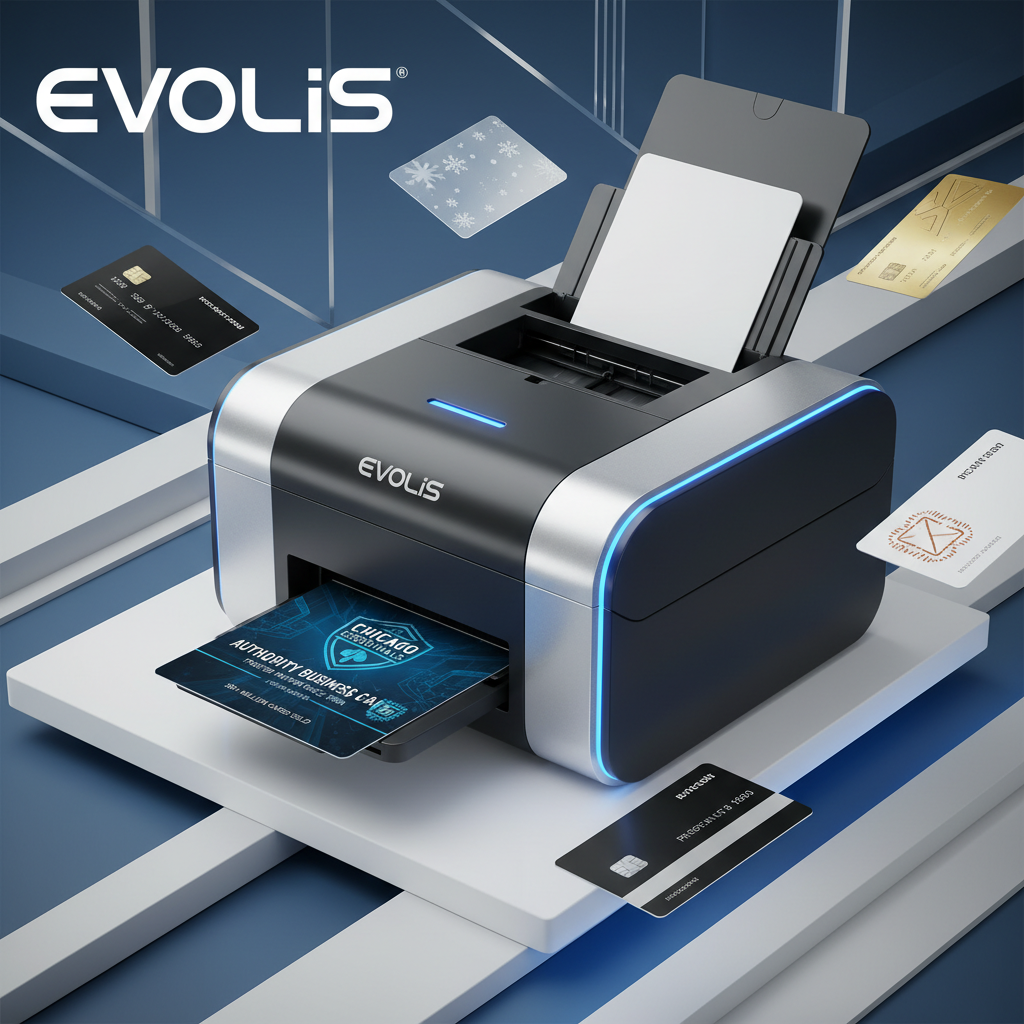
Serving over 100,000 customers across the United States, CPE carries a deliberately curated lineup of professional-grade PVC card printers from brands that have earned their reputation the hard way: Evolis, Fargo, Zebra, and Matica. This is not a warehouse stuffed with every gadget imaginable. It is a focused, expert selection built around what businesses actually need to print high-quality, durable plastic cards reliably, day after day.
The result? Organizations of every size - from a small gym printing 200 membership cards a year to a large university cranking out thousands of student IDs each semester - find exactly the right equipment here. And when they need supplies, support guidance, or an upgrade path, CPE is there for that too.
What Makes a PVC Card Printer the Right Investment
A PVC card printer is not just a piece of office equipment. It is infrastructure. When you print cards in-house, you control the timeline, the design, the encoding, and the security features. No minimums, no shipping delays, no back-and-forth with a vendor every time you need to update a photo or add a new employee.
The flexibility is extraordinary. Print on demand, one card at a time or by the batch, personalizing each card with a name, photo, barcode, or encoded data. For organizations managing access control, loyalty programs, or student identification, that level of control is not a luxury - it is a business necessity. The return on investment becomes obvious quickly when you factor in the eliminated outsourcing costs and reclaimed turnaround time.
The Brands Behind the Hardware
Evolis has long been a benchmark brand in desktop and professional card printing, known for clean output, reliable mechanisms, and a range of models that scale with business growth. Fargo and Zebra bring particular strength to security-focused ID programs, delivering the robust construction and encoding capabilities that government agencies, healthcare facilities, and corporate campuses depend on. Matica rounds out the lineup with solutions built for speed and high-volume event credentialing.
Each brand represents a different strength, and understanding those differences is part of what CPE does best. Rather than pushing a single product, the team helps match each customer to the printer that fits their specific volume, feature requirements, and budget. That kind of consultative expertise is rare in the hardware supply world, and it is a big reason why repeat customers keep coming back.
Who Needs a PVC Card Printer?
The honest answer is: more organizations than you might expect. Employee ID cards, hotel key cards, event credentials, access control cards, student IDs, loyalty cards, membership cards - the applications are almost endless. Any organization issuing cards regularly is a candidate for in-house printing, and most of them discover the economics favor ownership over outsourcing faster than they anticipated.
Healthcare clinics print staff ID badges that include photo, department, and encoded access data. Schools issue student cards with barcodes for library check-out and cafeteria payments. Hotels encode key cards on-site so a guest's room assignment never requires a wait at the front desk. Each of these use cases has a printer in the Plastic Card ID lineup perfectly suited to it.
| Volume Range | Recommended Model | Key Features | Typical Use Case |
|---|---|---|---|
| Under 1,000 cards/year | Evolis Badgy200 | Compact, easy setup, color printing | Small offices, clubs, nonprofits |
| 1,000-6,000 cards/month | Evolis Zenius / Primacy2 | Dual-sided, mag stripe encoding | Mid-size HR, education, hospitality |
| High volume, premium quality | Evolis Agilia | Edge-to-edge printing, superior output | Enterprise ID, government, large campuses |
| Security-critical programs | Fargo / Zebra models | Encoding, lamination, high durability | Corporate, healthcare, government |
| On-site event credentialing | Matica Event Printer | High-speed, high-throughput | Conferences, trade shows, large events |
Understanding the PVC Card Printer Lineup from Entry-Level to Industrial
 Choosing the right PVC card printer starts with an honest assessment of volume. The difference between a printer that handles 500 cards a year and one engineered for 50,000 is enormous - in mechanism, speed, ribbon capacity, and price. Getting that match right from the start saves money, frustration, and the headache of outgrowing equipment prematurely.
CPE makes it straightforward. The lineup is organized around real-world production scales, so whether you are a small nonprofit printing membership cards twice a year or a logistics company badging hundreds of warehouse employees monthly, there is a model built for your actual needs - not a theoretical average.
Entry-Level: The Evolis Badgy200
For organizations printing fewer than 1,000 cards per year, the Evolis Badgy200 is often the perfect starting point. It is compact, straightforward to set up, and produces full-color PVC card prints at a quality level that would have required expensive equipment just a decade ago. Small offices, community organizations, and recreational clubs consistently find it hits the sweet spot of capability and affordability.
Do not let the entry-level label mislead you - the Badgy200 delivers genuinely professional output. Cards come out crisp, vibrant, and durable. The learning curve is minimal, and the included software covers the basics of card design and printing without requiring a graphic design background. For low-volume needs, it is difficult to argue against.
Mid-Range Workhorses: Evolis Zenius and Primacy2
Step up to the Evolis Zenius and Primacy2 and you are stepping into a different category entirely. These printers are engineered for consistent, high-quality output at volumes between 1,000 and 6,000 cards per month. Dual-sided printing capability means you can fit more information on each card without compromising design quality. Magnetic stripe encoding opens the door to access control, loyalty program integration, and time-and-attendance systems.
HR departments, university registrar offices, and mid-size hospitality operations frequently land on one of these models. The Primacy2 in particular has developed a strong reputation for print consistency over long production runs - it does not fade or drift after the first few hundred cards, which is exactly what you want when you are issuing badges for an entire department in a single afternoon.
Premium Output: The Evolis Agilia
The Evolis Agilia is for organizations where card quality is not a preference but a requirement. Edge-to-edge printing produces cards that look completely finished, with no white borders or color drop-off near the edges. The output quality sits at the highest end of what desktop card printing can achieve, making it the natural choice for enterprise identity programs, government-issued credentials, and any application where the card itself is a representation of the issuing organization's standards.
Beyond appearance, the Agilia supports advanced encoding and security feature integration. When every card needs to be perfect, this is the machine that delivers. Organizations that have made the upgrade from a mid-range printer to the Agilia consistently describe the output difference as immediately apparent - the kind of quality gap visible to any observer, not just a printing specialist.
Fargo and Zebra PVC Card Printers for Security-Focused ID Programs
There is a reason security-conscious organizations gravitate toward Fargo and Zebra. Both brands have built their card printer reputations around durability, encoding capability, and the kind of consistent performance that mission-critical ID programs demand. When a hospital needs staff badges that also function as access control credentials, or a corporate campus needs cards encoding both smart chip and magnetic stripe data, these are the printers that deliver without compromise.
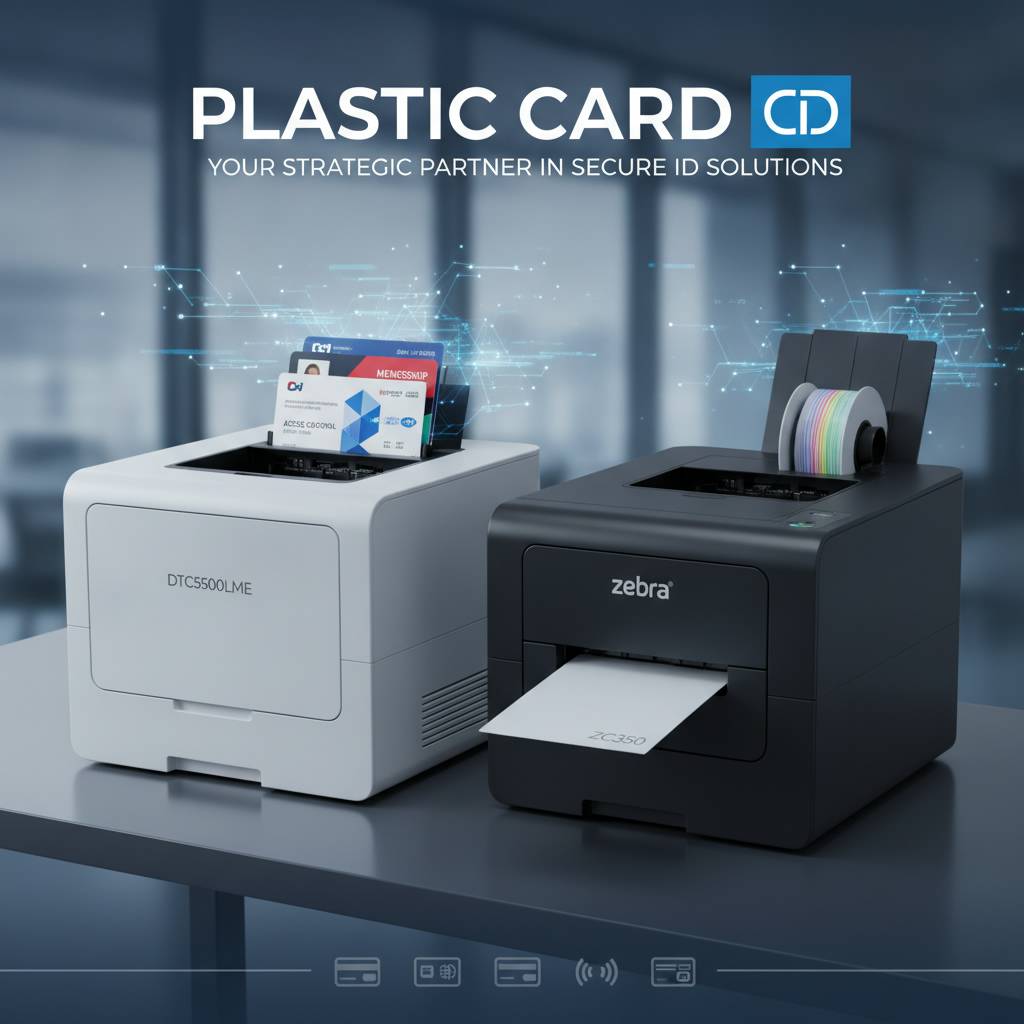
Both Fargo and Zebra offer models with built-in lamination modules - an important feature when card durability matters as much as print quality. A laminated card resists scratching, fading, and general wear far better than an unlaminated one, which translates directly to longer card lifespans and lower replacement costs over time.
Fargo Printers: Trusted in High-Stakes Environments
Fargo printers have been a fixture in corporate and government ID programs for good reason. They are robust, their encoding options are comprehensive, and the print quality on color cards is excellent. For organizations where the ID card is also a security credential, Fargo's combination of physical card quality and encoding precision is a compelling package.
The Fargo lineup includes both single-sided and dual-sided models, with options for magnetic stripe, smart card, and proximity card encoding. Whether a customer needs a relatively straightforward desktop unit or a more capable system for a larger deployment, Fargo's range within the Plastic Card ID catalog covers the spectrum effectively.
Zebra Printers: Built for Demanding Deployments
Zebra's card printers bring a reputation built across decades of industrial and enterprise-grade label and card printing. Their construction is serious - designed to handle the wear of constant use in environments that are not always gentle on hardware. Zebra printers tend to reward buyers who value reliability over the long term, particularly in deployments where the printer is running daily and downtime is simply not acceptable.
Smart card encoding capability is a Zebra strength worth highlighting. Organizations moving toward chip-based credentials for enhanced security find Zebra printers well-suited to the task, and the range of models available through CPE means there is a Zebra option at multiple budget points.
Comparing Fargo and Zebra: Which Is Right for You?
Both brands produce excellent PVC card printers, and the choice often comes down to specific feature needs and volume profile. Contact 800.835.7919 to discuss which brand and model best fits your organization's security requirements, encoding needs, and production volume. The team at Plastic Card ID can walk through the specifications in plain language, without jargon or pressure.
Generally speaking, organizations with existing Zebra infrastructure in other areas often find Zebra card printers a natural fit. Organizations coming to card printing fresh, particularly in corporate or government ID contexts, frequently find that Fargo's feature set and support ecosystem align well with their requirements.
The Full Ecosystem: Supplies and Accessories That Keep Cards Printing
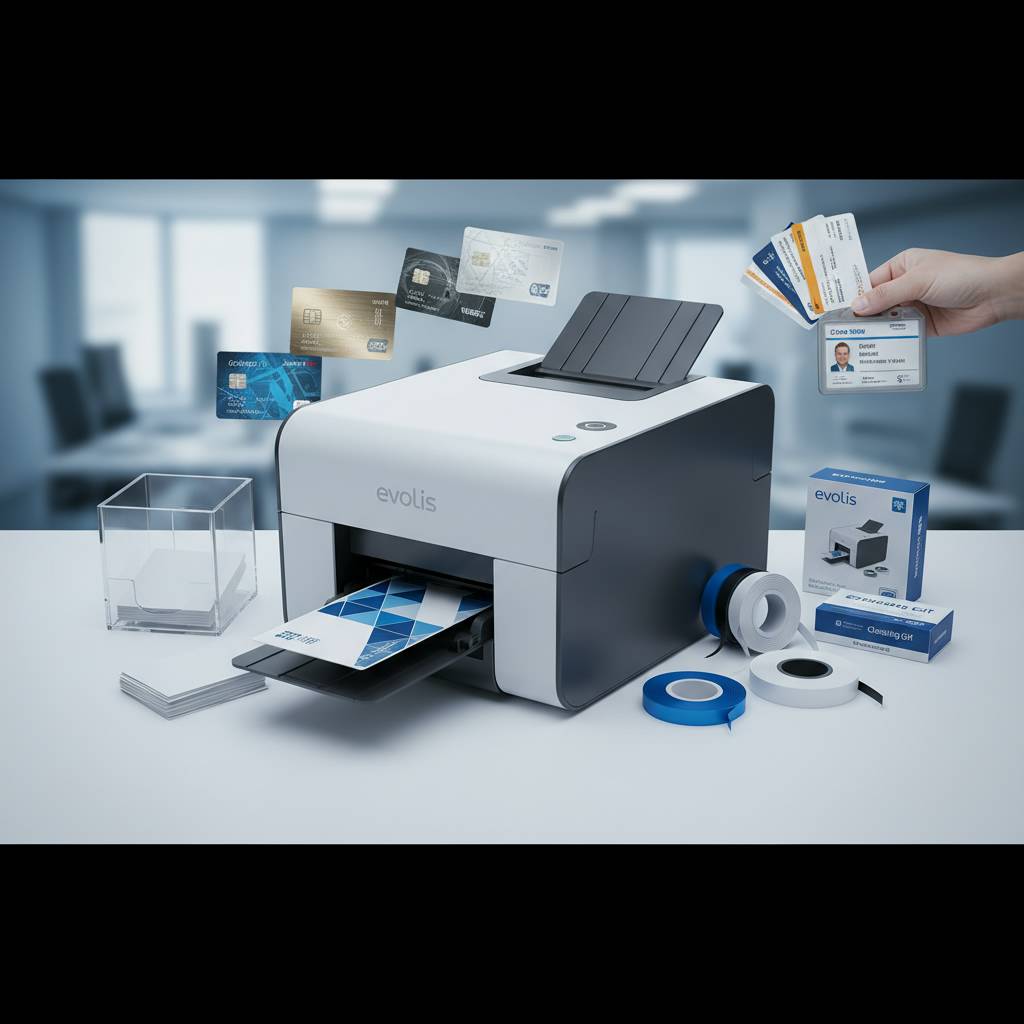 A PVC card printer is only as good as the consumables and accessories supporting it. Ribbons run out. Cleaning kits extend print head life. Lamination modules add durability. Input hoppers increase unattended production capacity. Every element of a card printing program has a supply component, and Plastic Card ID stocks them all - not as an afterthought, but as a core part of what a complete card printing supplier should offer.
This matters more than it might seem at first glance. Organizations that invest in a quality printer and then struggle to source compatible ribbons or cleaning kits quickly find their card program grinding to a halt. A complete supply chain from a single trusted source eliminates that vulnerability entirely.
Printer Ribbons: YMCKO, Monochrome, and Specialty Options
The ribbon is the consumable that most directly affects print quality and cost per card. YMCKO ribbons - combining yellow, magenta, cyan, black, and overlay panels - are the standard for full-color card printing. Monochrome ribbons in black or single colors cost significantly less per card and are the right choice when cards do not require full-color personalization. Specialty ribbons cover applications like scratch-off panels or metallic overlays.
Matching the right ribbon to the right printer and application is something CPE takes seriously. Using a ribbon not designed for your specific printer model can affect output quality, damage the print head, or void the printer warranty. The correct ribbon is not a minor detail - it is fundamental to a well-functioning card program.
Cleaning Kits and Maintenance Supplies
Card printer print heads are precision components. They are also consumable, in the sense that they degrade over time - and that degradation is significantly accelerated by skipping routine cleaning. Cleaning kits typically include cleaning cards and swabs designed to remove dust, debris, and residue from the card path and print mechanism without scratching sensitive surfaces.
Most manufacturers recommend a cleaning cycle at specific card count intervals, and adhering to those recommendations meaningfully extends print head life. Given that print head replacement can run anywhere from $75-$200 or more depending on the model, a $15-$30 cleaning kit that prevents premature wear is one of the best investments in a card printing program. Preventive maintenance pays for itself many times over.
Encoding Upgrades, Lamination Modules, and Card Accessories
Many PVC card printers ship in a base configuration that can be upgraded with encoding modules for magnetic stripe or smart chip, and with lamination modules that apply a protective overlay to finished cards. These upgrades transform a basic color card printer into a fully capable credential issuance system. Plastic Card ID supplies these modules for compatible printers, along with input hoppers that increase unattended batch capacity.
Card carriers and sleeves complete the picture - protecting cards during handling and storage, and giving organizations a polished, professional presentation when cards are issued. These are the details that distinguish a well-run card program from one that feels improvised, and they are available alongside the printers and supplies in one place.
- YMCKO color ribbons for full-color card printing
- Monochrome ribbons for cost-effective single-color output
- Specialty ribbons for unique card applications
- Cleaning kits including cleaning cards and swabs
- Lamination modules for enhanced card durability
- Magnetic stripe encoding upgrades
- Smart chip encoding modules
- High-capacity input hoppers for batch printing
- Card carriers and protective sleeves
High-Speed Event Credentialing with the Matica Event Printer
 Event credentialing is a unique card printing challenge. The volume is high, the timeframe is compressed, and the cost of a bottleneck is measured in frustrated attendees and chaotic check-in lines. The Matica Event Printer was designed specifically for this context - high-speed, high-throughput, and built to perform under the pressure of real-world event production.
Conferences, trade shows, corporate summits, and large-scale public events all share the same credentialing pain point: you need a lot of cards printed fast, on-site, often in a space that is not set up as a print shop. The Matica's design addresses exactly those constraints. Speed and reliability at scale are the defining characteristics, and they are precisely what event organizers need.
Why On-Site Badge Printing Changes the Game for Events
Pre-printed badge approaches have a fundamental weakness: last-minute changes. Speakers cancel, VIP guests are added, attendee names are misspelled or updated after the print run. With on-site printing capability, none of that is catastrophic. Corrections happen immediately, reprints take seconds, and the registration desk can handle walk-in registrants without sending anyone to the back of a "badge problem" line.
The operational flexibility of on-site credentialing is transformative for event teams that have lived through the alternative. Organizations that have made the switch rarely go back to pre-printed approaches for events of any meaningful size.
Matica Event Printer: Key Capabilities
The Matica Event Printer's throughput is its headline specification, but the feature set behind it is equally important. Print quality does not degrade under high-volume continuous runs. Card handling is designed for the kind of intensive use that an all-day conference registration push demands. This is not a desktop printer pushed beyond its design limits - it is a machine purpose-built for the application.
For event planners and production companies who regularly manage large-scale credentialing, owning a Matica Event Printer is often more economical over time than renting equipment or outsourcing badge production. The Plastic Card ID team can help model that math for your specific event profile and frequency.
Pairing the Matica with the Right Supplies
Event printing at high speed demands a reliable supply of compatible ribbons and cards staged and ready before the event begins. Running out of ribbon during a morning registration rush is not a scenario any event organizer wants to navigate. CPE supplies the compatible ribbons, blank PVC cards, and card carriers that event teams need to walk into a venue fully prepared.
Planning the supply side of an event credentialing setup is just as important as choosing the right printer. The right preparation eliminates the most common on-site printing failures, and it is something the Plastic Card ID team actively helps customers think through before equipment ships.
Frequently Asked Questions About PVC Card Printers
Buyers approaching their first PVC card printer purchase often have similar questions, and getting clear answers early prevents costly mismatches. Below are the questions CPE hears most often, with straightforward answers that cut through the noise.
What Is the Actual Cost of Running a PVC Card Printer?
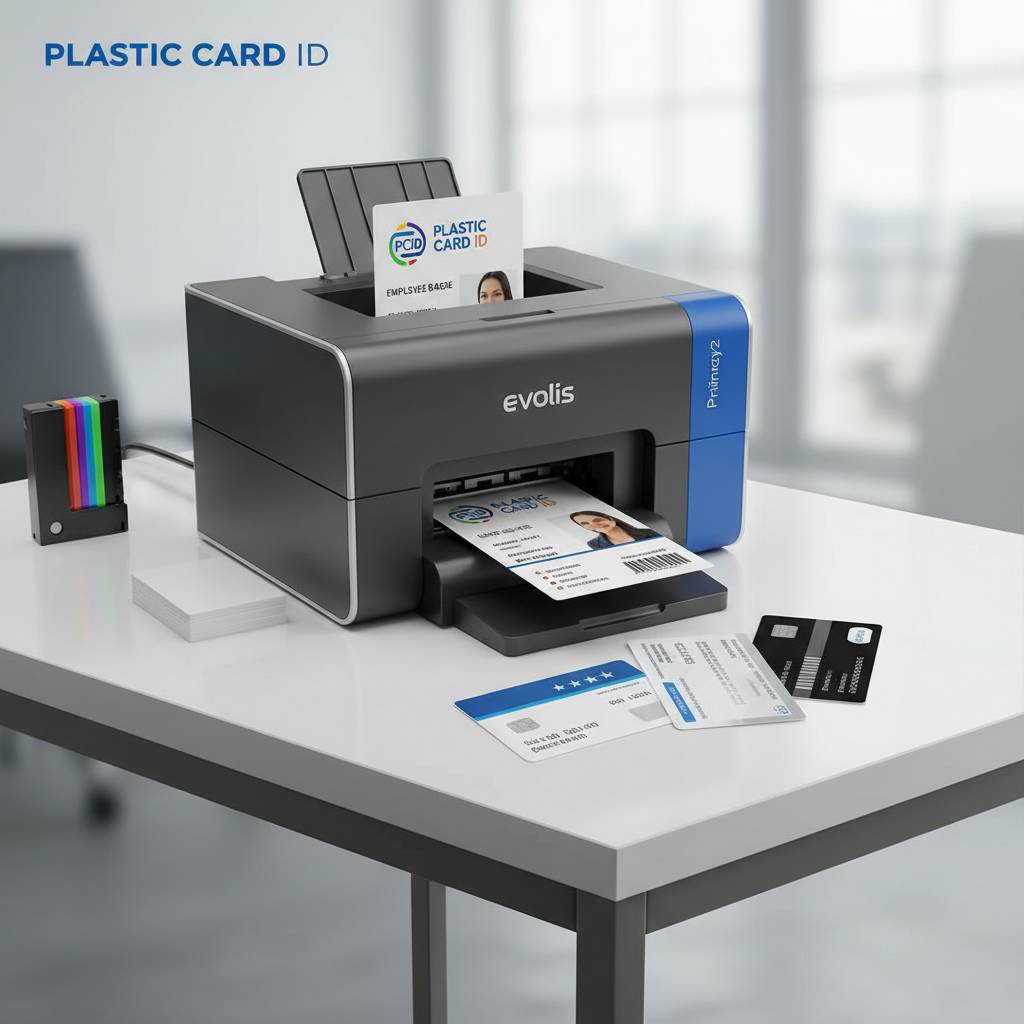
The total cost of in-house card printing includes the printer, ribbons, blank PVC cards, and occasional maintenance supplies. A color YMCKO ribbon yields a certain number of prints per ribbon panel set - typically in the range of 100-500 cards depending on the ribbon and printer model. Blank PVC cards in quantity typically run $0.10-$0.30 per card. When you total the per-card cost and compare it to outsourced card printing, in-house printing almost always wins at any meaningful volume.
Printer prices range widely by model and capability. Entry-level units like the Evolis Badgy200 are accessible for smaller organizations, while mid-range and premium models represent larger investments that pay back through volume and feature capability. The economics of in-house card printing improve with scale, and CPE can help you model the numbers for your specific situation.
Can I Encode Magnetic Stripes and Smart Chips on the Same Printer?
Yes, in most cases - depending on the model and whether the appropriate encoding modules are installed. Many printers in the Plastic Card ID lineup support both magnetic stripe and smart card encoding, either from the factory or through available upgrade modules. Combining print and encode in a single pass is a significant efficiency advantage for organizations issuing credential cards that need both physical appearance and functional data.
The key is specifying your encoding requirements before selecting a printer, not after. Some models support these features as factory options, others as add-on modules, and a few are print-only. The team at Plastic Card ID can match your encoding requirements to the right model from the start.
How Long Do PVC Card Printers Last?
With proper maintenance - primarily regular cleaning at the manufacturer's recommended intervals - a quality PVC card printer can deliver years of reliable service. The print head is the most wear-sensitive component, and its lifespan is directly tied to cleaning discipline and using compatible, quality ribbons. Skipping cleaning to save time is the single most common mistake that leads to premature print head failure.
Most professional-grade printers from Evolis, Fargo, Zebra, and Matica are engineered for the long haul. Organizations that treat their printer as an asset - cleaning it regularly, using OEM-compatible supplies, and storing it properly - routinely get five or more years of productive use from a single unit.
- Clean the card path and print head at manufacturer-specified intervals
- Use ribbons designed for your specific printer model
- Store blank PVC cards in a dust-free environment
- Keep the printer covered when not in use to prevent dust accumulation
- Follow the printer manual's guidance on operating temperature and humidity
Ready to Choose Your PVC Card Printer? Let Plastic Card ID Help
 The decision to bring card printing in-house is one of the most straightforward wins available to organizations that issue credentials regularly. The control, the speed, the personalization capability, and the long-term cost advantages all point in the same direction. What stops most organizations is the uncertainty about which printer to choose - and that is exactly where Plastic Card ID makes the difference.
With over 25 years of experience and more than 100,000 customers served across the United States, CPE brings a depth of practical knowledge that generic hardware retailers simply cannot match. The team understands card printing programs from the inside out - the volume math, the encoding requirements, the supply chain, the maintenance realities. That expertise translates directly into better purchase decisions for every customer who calls or visits.
How to Get Started
Starting is simpler than most buyers expect. Think through your estimated annual or monthly card volume, whether you need single or dual-sided printing, and whether encoding capability is required. Those three data points alone narrow the field considerably and make it easy to have a focused, productive conversation about the right model for your needs.
From there, Plastic Card ID can guide you through ribbon and supply selection, help you think through the accessories that will make your card program run smoothly, and ensure your printer arrives with everything you need to start printing from day one. The goal is not just a sale - it is a card program that works.
Contact Plastic Card ID Today
Do not spend another day managing the delays and costs of outsourced card printing when a better solution is a phone call away. Call 800.835.7919 to speak directly with a card printing specialist who can match your organization to the right PVC card printer, ribbons, and accessories without guesswork or overselling.
Plastic Card ID is ready to put the right PVC card printer in your hands. Call 800.835.7919 today and take control of your card program.
Previous Page