Card Printer for Plastic Cards: Choose the Right One
Table of Contents []
- Why Plastic Card ID Is the Card Printer Source Businesses Trust
- The Full Lineup: Matching Every Printer to the Right Job
- Supplies That Keep Your Card Program Running
- Applications: What Organizations Actually Print With These Machines
- Buyer's Guide: How to Choose the Right Card Printer
- Frequently Asked Questions About Card Printers for Plastic Cards
- Get Started With Plastic Card ID - The Card Printer Experts
Why Plastic Card ID Is the Card Printer Source Businesses Trust
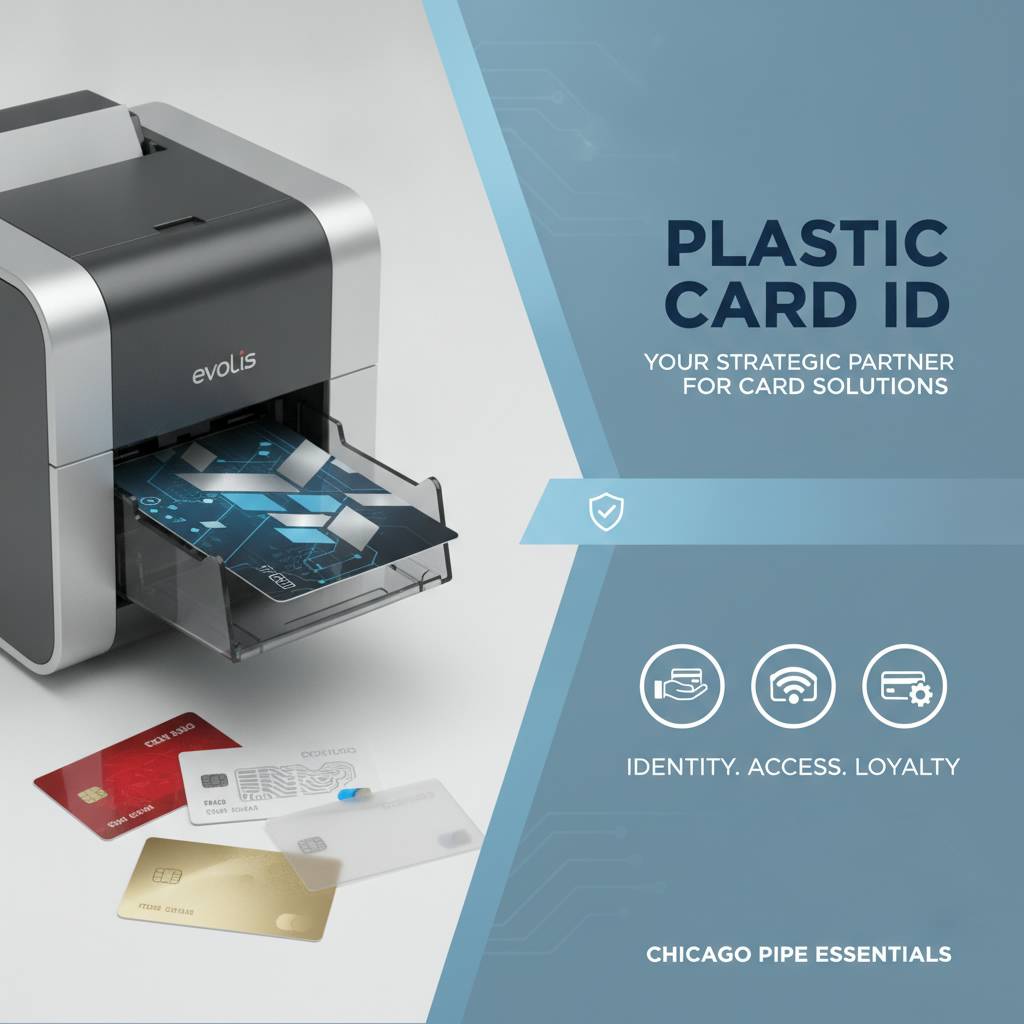 Walk into almost any organization that prints its own credentials in-house, and you'll find a story behind that decision - a moment when someone realized that waiting weeks for an outside vendor, or losing control over card quality, simply wasn't acceptable anymore. That's the inflection point Plastic Card ID has served for over 25 years, supplying professional-grade card printers for plastic cards to businesses across every industry in the United States. With more than 100,000 customers served, this isn't a company that stumbled into the market - it's one that built deep expertise in it.
What separates Plastic Card ID from a generic hardware reseller is the curated nature of its lineup. Rather than stocking every printer that hits the market, CPE carries a deliberate selection from the industry's most respected manufacturers: Evolis, Fargo, Zebra, and Matica. Each brand earns its place because it solves a specific problem for a specific kind of organization. The result is a catalog that doesn't overwhelm buyers - it guides them.
The Business Case for In-House Card Printing
Let's be direct: outsourcing card production to a third-party printer feels convenient until it isn't. Lead times stretch. Minimum order quantities mean you're sitting on 500 cards when you needed 12. A new employee starts Monday - and their ID won't arrive until Thursday. In-house card printing eliminates that friction entirely. Print one card. Print fifty. Print them at 9 PM on a Sunday if that's what the situation demands.
Beyond flexibility, there's the matter of personalization and security. Every card printed in-house can carry a unique photo, name, department, barcode, or encoded magnetic stripe - tailored to the individual, not pulled from a pre-printed stack. That level of control is why organizations running employee ID programs, access control systems, membership cards, and loyalty programs consistently migrate to on-demand, in-house production.
What a Card Printer Actually Does - And Why It Matters
A card printer for plastic cards isn't a standard office printer loaded with cardstock. These are precision thermal transfer or dye-sublimation devices engineered specifically to bond color panels, protective overlays, and encoded data directly onto rigid PVC plastic cards. The output is a durable, professional credential - not a laminated paper badge that curls at the edges after a week.
Modern card printers also do far more than print color. With the right configuration, a single machine can print full-color graphics on the front, encode a magnetic stripe on the back, and apply a protective laminate layer - all in one pass. That's the kind of capability CPE helps customers unlock, whether they're printing student IDs at a university or hotel key cards at a resort property.
Serving Over 100,000 Customers Across the U.S.
Numbers tell part of the story. More than 100,000 businesses have trusted Plastic Card ID to equip their card programs - from small nonprofits printing fewer than 200 membership cards per year to large enterprises churning through thousands of employee credentials per month. That breadth of experience means CPE has encountered virtually every printing challenge a business can face.
The practical benefit to new customers is real: when you call Plastic Card ID, you're not explaining your use case to someone reading from a script. You're talking to a team that has navigated the same decisions with hundreds of similar organizations and can tell you, with confidence, what will and won't work for your volume, your budget, and your card program goals. Reach the team directly at 800.835.7919.
| Volume Range | Recommended Models | Best For |
|---|---|---|
| Under 1,000 cards/year | Evolis Badgy200 | Small offices, clubs, nonprofits |
| 1,000 - 6,000 cards/month | Evolis Zenius, Evolis Primacy2 | Mid-size businesses, schools, healthcare |
| High-volume / premium output | Evolis Agilia | Enterprise ID programs, edge-to-edge printing |
| Security-focused programs | Fargo, Zebra | Government, law enforcement, corporate access control |
| On-site event badging | Matica Event Printer | Conferences, trade shows, large events |
The Full Lineup: Matching Every Printer to the Right Job
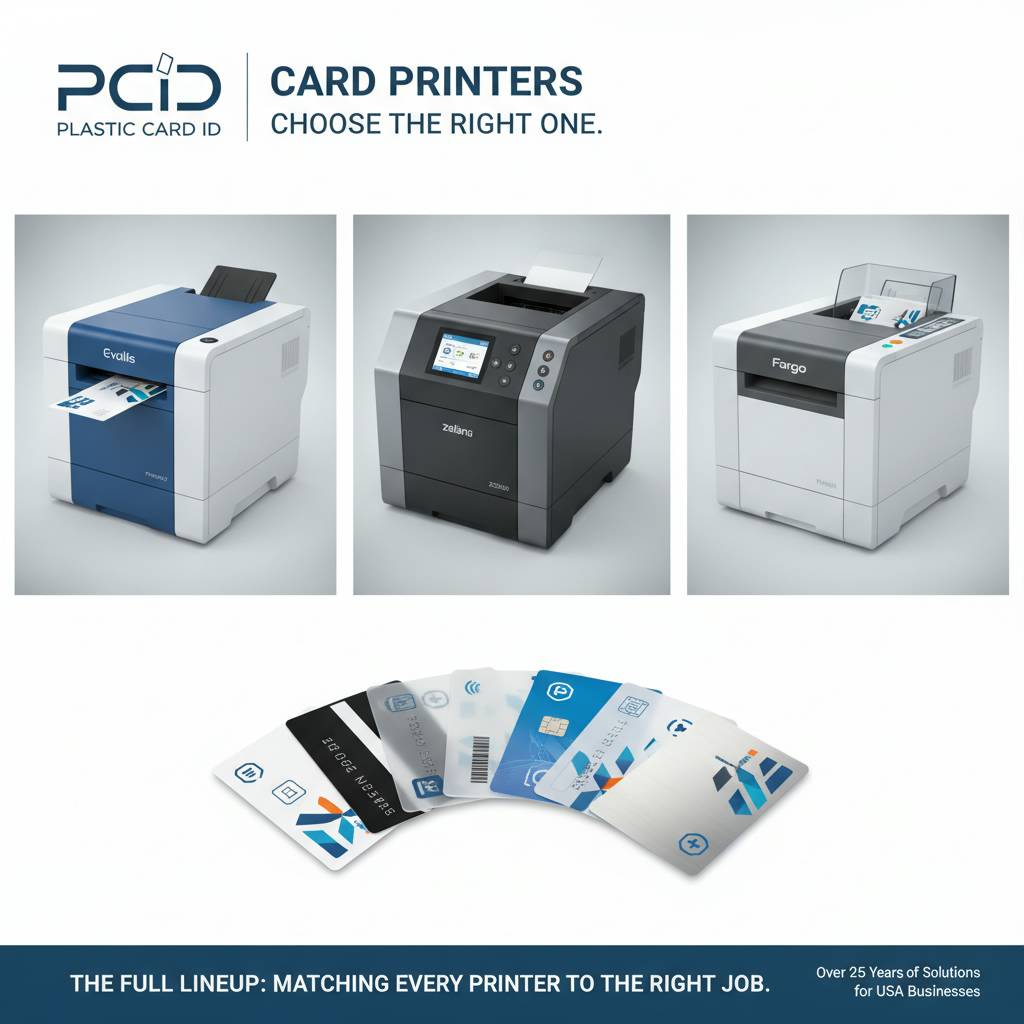 Buying a card printer without understanding volume requirements is like buying a commercial oven for a single household or a compact microwave for a restaurant kitchen. The mismatch doesn't just cause frustration - it costs money. Plastic Card ID organizes its lineup so buyers can move confidently from their actual printing needs to the right hardware, without second-guessing the decision six months later.
From the entry-level desktop units designed for light, occasional printing to the heavy-duty industrial systems built for relentless daily throughput, the brands carried by CPE cover every realistic use case in the market. Here's how the lineup breaks down.
Evolis: Precision Engineering for Every Scale
Evolis is arguably the most versatile brand in the lineup, offering a clear progression from beginner-friendly units to professional-grade powerhouses. The Evolis Badgy200 is the ideal entry point for organizations printing fewer than 1,000 cards per year - think small membership clubs, boutique gyms, or community organizations that need professional output without industrial overhead. It's compact, intuitive, and priced to match its purpose.
Step up in volume and the Evolis Zenius and Primacy2 take over. These mid-range workhorses handle 1,000 to 6,000 cards per month with ease, offering options for dual-sided printing and magnetic stripe encoding - features that matter enormously for loyalty card programs, student IDs, and access badges. For organizations that demand nothing less than edge-to-edge, flawless output at the highest quality tier, the Evolis Agilia delivers premium results that set a new standard for in-house card production.
Fargo and Zebra: Built for Security-Driven ID Programs
Not every card program prioritizes aesthetics above all else. Some exist specifically to enforce physical security - to ensure that only the right people gain access to the right spaces. Fargo and Zebra card printers are engineered with that mission in mind, offering robust construction, advanced encoding capabilities, and the kind of reliability that security administrators depend on.
These are the printers found in government buildings, corporate campuses, and law enforcement facilities where a malfunctioning credential printer isn't just inconvenient - it's a security liability. Fargo and Zebra represent the gold standard for high-stakes ID programs, and Plastic Card ID stocks both brands with the accessories and supplies needed to keep them running at peak performance.
Matica: Speed and Throughput for Live Events
The Matica Event Printer solves a problem that standard desktop units simply cannot: printing hundreds or thousands of badges, on the spot, as attendees arrive at a conference, trade show, or corporate event. Speed is non-negotiable in that environment. Delays at the registration desk don't just frustrate attendees - they create bottlenecks that ripple through the entire event experience.
The Matica unit is purpose-built for high-speed on-site badge printing, producing credentials fast enough to keep registration lines moving even at large-scale events. If your organization runs events where professional, personalized credentials must be produced instantly, this is the hardware that makes it possible. Call CPE at 800.835.7919 to discuss event-specific configuration options.
Supplies That Keep Your Card Program Running
A card printer without the right consumables is just an expensive paperweight. What makes a card program truly functional - reliable, consistent, and cost-effective - is having the right ribbons, cleaning kits, and accessories in stock before you need them. Plastic Card ID supplies everything downstream of the printer itself, so customers aren't scrambling to source components from three different vendors.

This complete-supply approach matters more than it might seem at first glance. Card printer ribbons, for instance, are not interchangeable across brands and models. Using an incorrect or low-quality ribbon doesn't just produce inferior results - it can damage the printhead, voiding warranties and creating repair costs that dwarf the ribbon savings. CPE supplies OEM-compatible consumables matched to every printer in the lineup.
Ribbons: Choosing the Right Panel Configuration
The ribbon is the single most impactful consumable in any card printing operation. YMCKO ribbons - yellow, magenta, cyan, black resin, and overlay - are the standard choice for full-color printing with a protective finish. They're the workhorses of most ID and membership card programs. Monochrome ribbons (available in black, blue, red, gold, and silver) produce crisp, single-color output at a significantly lower cost per card, making them ideal for applications where color photography isn't required.
Specialty ribbons extend what a printer can accomplish - fluorescent panels for security features, holographic overlays for authentication, and dual-sided YMCKO configurations for printers with flip mechanisms. The right ribbon choice isn't just a quality decision; it's a cost-per-card calculation that Plastic Card ID can help any buyer optimize based on their specific program.
Cleaning Kits and Maintenance Essentials
Printheads are precision components, and dust, debris, and ribbon residue are their enemies. Regular cleaning - performed on the schedule the printer manufacturer specifies - is the single most effective way to extend printhead life and maintain consistent print quality over thousands of cards. Neglecting cleaning cycles is the most common cause of preventable card printer failures.
Cleaning kits from Plastic Card ID include the cleaning cards, swabs, and solution needed to maintain every model in the lineup properly. These aren't optional accessories - they're maintenance fundamentals that belong in every card program's supply inventory, reordered on a regular schedule just like ribbons and cards themselves.
Encoding Upgrades, Laminators, and Hoppers
Many organizations discover, after initial deployment, that their printing needs expand. An employee ID program that started as a simple photo-ID system may later require magnetic stripe encoding for access control integration. A membership card program may evolve to include smart chip encoding for digital loyalty point tracking. Plastic Card ID supplies encoding upgrade modules - magnetic stripe and smart chip - that extend printer capabilities without requiring a complete hardware replacement.
Lamination modules add a durable protective layer to printed cards, extending their functional lifespan significantly. High-capacity input hoppers allow printers to run unattended batch jobs without manual card feeding. Card carriers and sleeves protect finished credentials during handling and issuance. Together, these accessories transform a basic print station into a fully capable, professional card production system.
Applications: What Organizations Actually Print With These Machines
 The range of legitimate business applications for a card printer for plastic cards is genuinely broad - broader than most buyers initially realize when they're shopping for their first unit. Plastic Card ID serves organizations across an enormous diversity of industries, and the variety of cards those organizations produce reflects the flexibility of modern card printing technology.
Understanding the full scope of applications isn't just interesting context - it's practically useful for buyers who may be underestimating what their own card program could accomplish with the right hardware configuration. Here's a look at the most common use cases across the customer base.
Employee ID and Access Control Programs
The most universally common application is employee identification. Organizations of every size and type - from 20-person professional services firms to multi-site enterprises with thousands of staff - need a reliable, fast way to produce photo ID badges for new hires and replacements. The ability to print and issue a new ID badge on an employee's first day is something that in-house card printing makes effortless and that outsourced printing makes nearly impossible.
Access control integration elevates the employee ID from a visual identification tool to a functional security credential. Magnetic stripe or smart chip encoding allows the same card that displays an employee's photo and name to also grant or restrict access to physical spaces within a facility - eliminating the need for separate key fobs or PIN systems.
Membership, Loyalty, and Gift Card Programs
Gyms, retailers, professional associations, country clubs, libraries, and specialty retailers all run membership or loyalty programs - and all of them benefit from the ability to produce cards in-house, on demand. A new member who joins a gym on a Tuesday afternoon can walk out with a professional plastic card, not a paper slip with a promise of something better coming by mail in two weeks.
Magnetic stripe encoding on loyalty and gift cards opens up point-of-sale integration, allowing card data to be read by standard card terminals. This transforms a simple printed card into a functional transactional tool, and it's a capability CPE can help organizations configure from day one.
Student IDs, Hotel Key Cards, and Event Credentials
Schools and universities rely on student ID programs for everything from library access to meal plan management to on-campus security protocols. These programs demand both high print quality and encoding capability - often both magnetic stripe and smart chip on the same card. The mid-range and premium Evolis models, along with Fargo and Zebra units, are purpose-built for exactly this kind of multi-function credential.
Hotel properties printing key cards in-house gain the ability to issue replacements instantly at the front desk - no waiting, no apologizing to a guest. Event organizers using the Matica Event Printer produce professional credentials for conferences and trade shows at speeds that keep registration moving. Every one of these applications shares a common thread: control, speed, and professionalism that only in-house printing can deliver.
Buyer's Guide: How to Choose the Right Card Printer
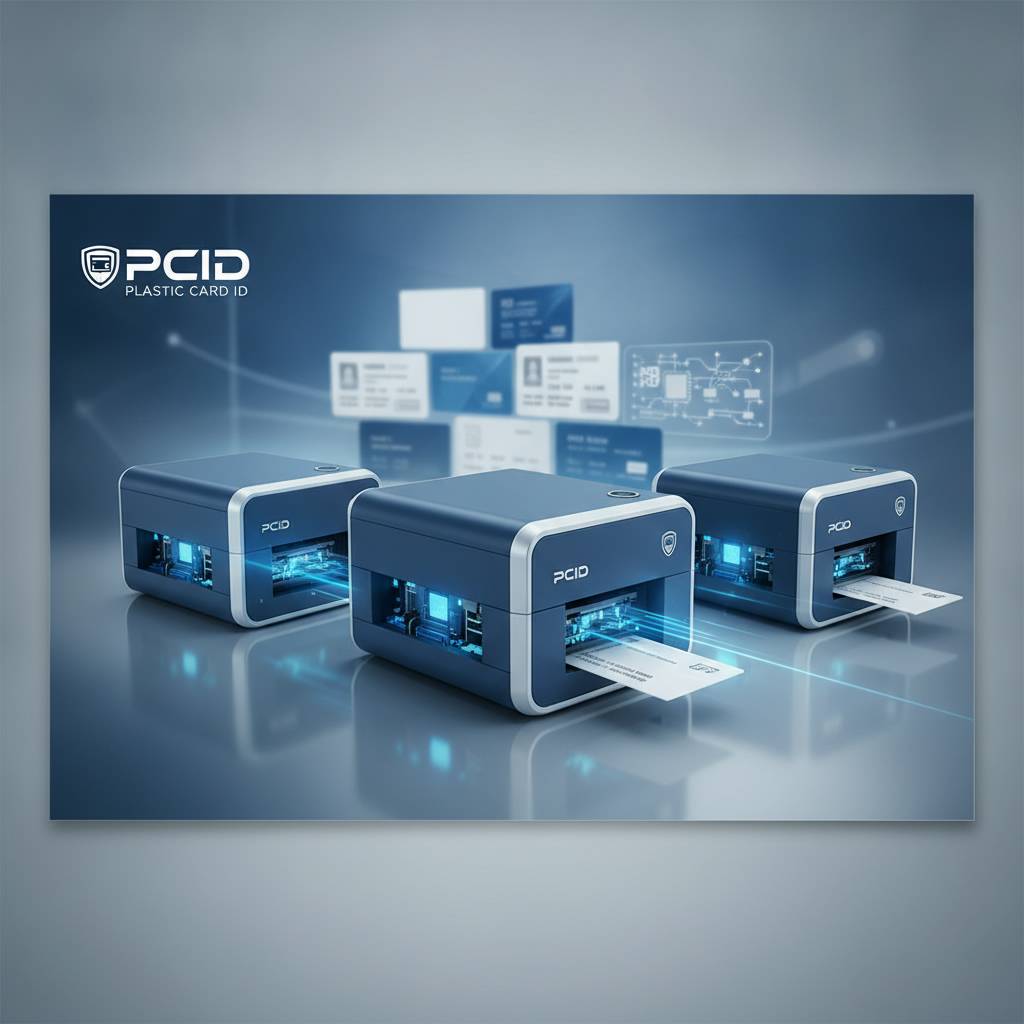 Selecting the right card printer is less complicated than it might appear - but only if you approach it systematically. The wrong choice isn't necessarily the most expensive printer or the cheapest one. It's the printer that doesn't match your actual volume, your encoding requirements, or your operational workflow. Here's a practical framework for making the decision correctly the first time.
Step 1 - Determine Your Annual Card Volume
Volume is the most fundamental variable in printer selection. A unit designed for 500 cards per year, run at 5,000 cards per year, will fail prematurely. A unit engineered for 50,000 cards per year is cost-inefficient for an organization printing 300. Start here, and be honest about projected growth - not just current volume.
- Under 1,000 cards per year: Entry-level units like the Evolis Badgy200 are purpose-built for this range.
- 1,000 to 6,000 cards per month: Mid-range models like the Evolis Zenius and Primacy2 handle this comfortably.
- High-volume or premium output requirements: The Evolis Agilia and enterprise-grade Fargo and Zebra units are the appropriate tier.
- On-site event badge printing: The Matica Event Printer is the only purpose-built solution for this use case.
Step 2 - Identify Required Card Features
A printed card and an encoded card are not the same product - and the printer that produces them is not the same machine. Before purchasing, identify whether your cards need to carry a magnetic stripe (for access control or point-of-sale integration), a smart chip (for advanced authentication or digital data storage), or both. Dual-sided printing is another common requirement for cards that carry information or branding on both faces.
These features must be configured at the printer level - either as standard inclusions or factory-added modules. Plastic Card ID can advise on which models support which encoding combinations and whether a current printer can be upgraded rather than replaced when encoding needs evolve. Contact the team at 800.835.7919 to discuss your specific configuration requirements.
Step 3 - Budget for Consumables, Not Just Hardware
The upfront price of a card printer - typically ranging from $300-$600 for entry-level units to $1,500-$5,000 or more for enterprise models - is only part of the total cost of ownership picture. Ribbons, cleaning kits, and blank PVC cards are ongoing costs that vary by volume and print type. A realistic cost-per-card calculation should always include consumables before any printer purchase decision is finalized.
YMCKO full-color ribbons typically yield 200-500 cards per ribbon and cost $25-$85 depending on the model and ribbon type. Monochrome ribbons yield significantly more cards per ribbon at a lower cost. Understanding this math upfront prevents budget surprises after deployment and helps organizations plan their supply inventory appropriately from the start.
Frequently Asked Questions About Card Printers for Plastic Cards
After serving over 100,000 customers, Plastic Card ID has heard virtually every question a buyer can ask. These are the ones that come up most consistently - answered directly and without jargon.
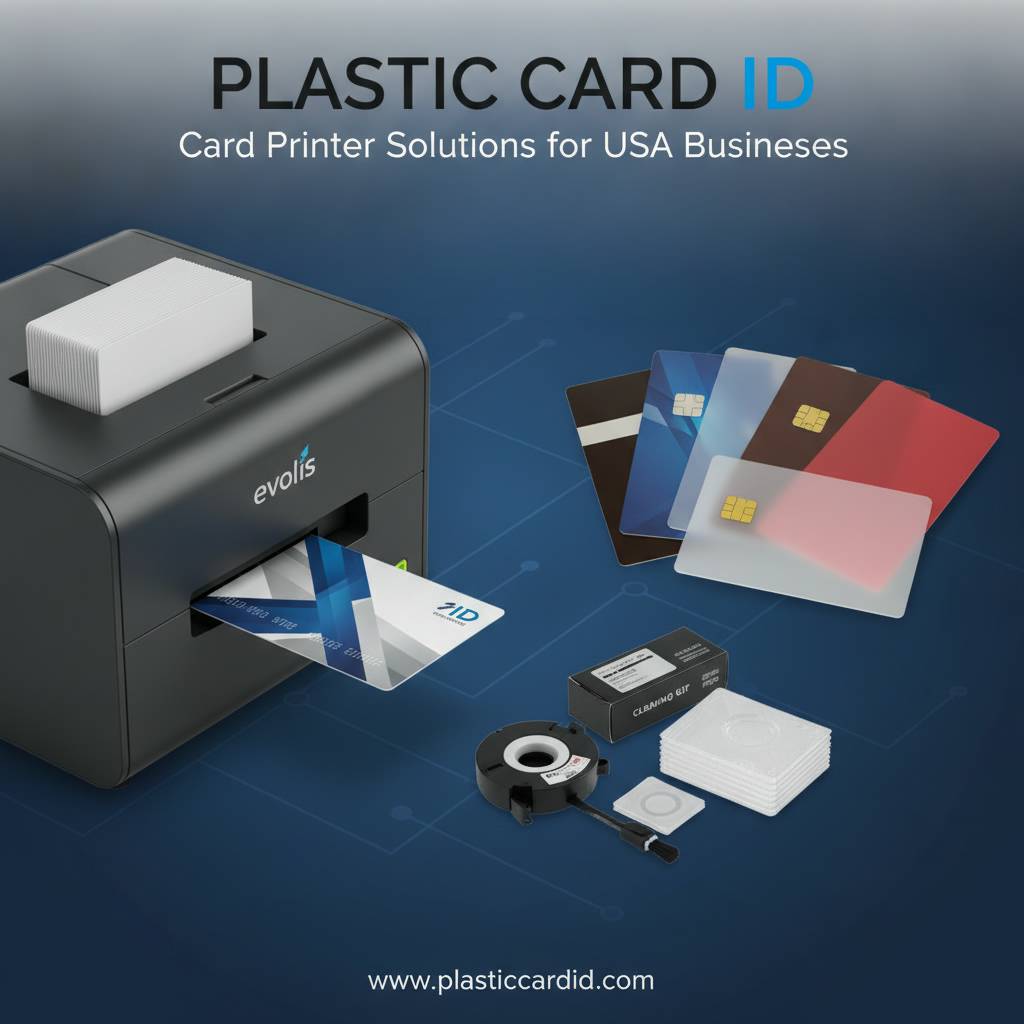
Can I print cards for multiple departments or locations from one printer?
Yes - and this is one of the significant advantages of in-house card printing. A single mid-range or enterprise printer can serve multiple departments within an organization, producing distinct card designs for each. Most card printer software supports multiple templates, allowing HR, IT, facilities, and visitor management to each have their own card design running through the same hardware.
Organizations managing multiple locations may find that deploying one printer per site is the more practical solution, particularly when real-time issuance - printing and issuing a card immediately when someone arrives at that location - is a requirement. CPE can help buyers think through centralized vs. distributed printing models based on their specific organizational structure.
What's the difference between dye-sublimation and thermal transfer printing?
Dye-sublimation uses heat to convert solid dye into gas, which then bonds directly into the card surface at a molecular level. The result is smooth, photographic-quality color with no raised surface texture - exactly what you see on a professional ID card. Thermal transfer uses heat to transfer a resin layer from a ribbon onto the card surface, producing sharp, durable monochrome or limited-color output.
Most full-color card printers use dye-sublimation for color panels and thermal transfer for black resin text and barcodes in a combined process - which is precisely what YMCKO ribbon configurations accomplish. Understanding this distinction helps buyers appreciate why card printer output quality differs so fundamentally from standard office laser or inkjet printing.
How long do plastic card printers last, and what maintenance do they require?
A well-maintained card printer from a professional brand - Evolis, Fargo, Zebra, or Matica - can realistically last 5-10 years or longer when operated within its rated volume range and cleaned on schedule. The printhead is the component most sensitive to neglect, and regular cleaning with the appropriate kit is the single most important maintenance task for longevity.
Beyond cleaning, keeping consumables - particularly ribbons - stored in cool, dry conditions away from direct sunlight preserves their quality and prevents print defects. Plastic Card ID recommends establishing a regular cleaning schedule based on the manufacturer's specification for each model, and tracking it just as you would any other routine equipment maintenance.
Get Started With Plastic Card ID - The Card Printer Experts
 There's a reason organizations come back to Plastic Card ID when their card programs grow, when they need to add encoding capabilities, or when it's time to upgrade to a higher-volume unit. The combination of a genuinely curated product lineup, deep category expertise, and a full complement of consumables and accessories makes CPE the logical single source for everything a professional card program requires.
Whether you're building a card program from scratch or looking to upgrade an existing one, the decision starts with a conversation. The team at Plastic Card ID has helped more than 100,000 organizations navigate exactly this process - and they can help yours too. Don't spend hours researching specifications when a single phone call can get you to the right printer, the right supplies, and the right configuration for your specific needs.
Ready to Print Professional Plastic Cards In-House?
The technology to produce durable, professional, encoded plastic cards in-house - on demand, personalized to each individual, at a predictable cost per card - is accessible to organizations of every size. Entry-level systems are available at price points that make the economics work for small nonprofits and boutique businesses. Enterprise systems deliver the throughput and encoding sophistication that large-scale programs demand. Plastic Card ID carries the full range.
Stop waiting on outside vendors. Stop ordering minimum quantities you don't need. Stop issuing paper badges when your employees, members, students, and guests deserve something more professional. Plastic Card ID is ready to help you build the card program your organization needs - call 800.835.7919 today and speak directly with a card printing specialist who can match you to the right solution from the very first conversation.
Previous Page