Plastic Card Printer: Find the Right Model for Your Needs
Table of Contents []
- Your Source for Professional Plastic Card Printers - Plastic Card ID
- Understanding What a Plastic Card Printer Actually Does
- The Printer Lineup: Matching Hardware to Your Actual Needs
- Fargo and Zebra: Security-First Card Printing
- Supplies, Accessories, and Keeping Your Program Running
- Applications: Who Prints Cards In-House and Why
- Buyer's Guide: Selecting the Right Plastic Card Printer for Your Organization
- Start Printing Professional Cards In-House with Plastic Card ID
Your Source for Professional Plastic Card Printers - Plastic Card ID
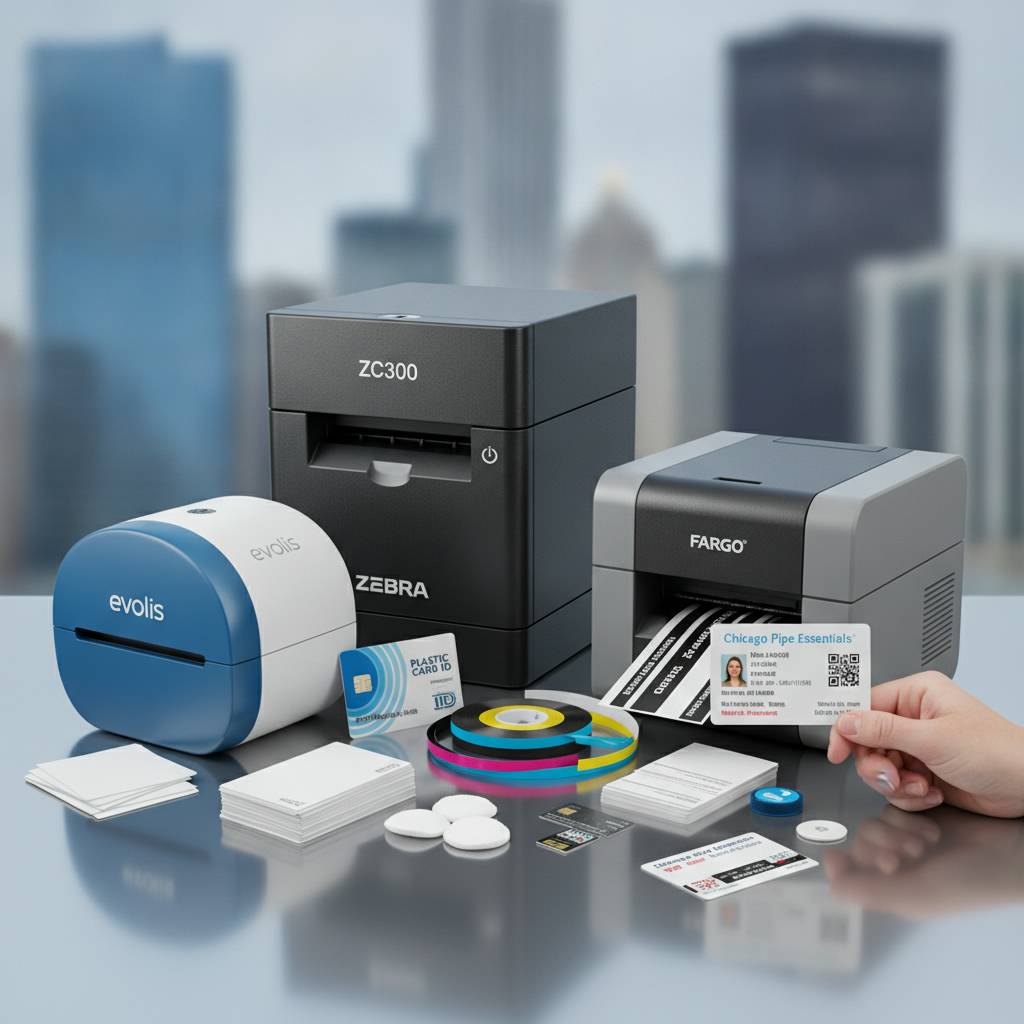 There's a moment every organization reaches - the realization that outsourcing card production is costing more than it's saving. Lead times stretch. Minimum order quantities pile up. A single employee change means reprinting an entire batch. Taking card production in-house with a dedicated plastic card printer changes everything. It puts control back where it belongs: with you.
Plastic Card ID has spent more than 25 years helping businesses across the United States make that shift. Over 100,000 customers have trusted us to match them with the right hardware, supplies, and support to build a card program that actually works. Whether you're printing 200 cards a year or 60,000 cards a month, the right printer exists - and we carry it.
From employee ID cards and membership credentials to hotel key cards and event badges, the applications for in-house plastic card printing are broader than most people initially realize. This guide walks through everything you need to make a confident, well-informed purchase decision.
| Category | Recommended Printer | Cards Per Year | Best For |
|---|---|---|---|
| Entry-Level | Evolis Badgy200 | Up to 1,000 | Small offices, clubs, schools |
| Mid-Range | Evolis Zenius / Primacy2 | 1,000-72,000 | Corporate ID, membership, access |
| Premium Output | Evolis Agilia | High volume, any scale | Edge-to-edge, highest quality |
| Security-Focused | Fargo / Zebra | Varies by model | Government, enterprise, campus |
| Event Badging | Matica Event Printer | High-speed, on-site | Conferences, trade shows, venues |
Understanding What a Plastic Card Printer Actually Does
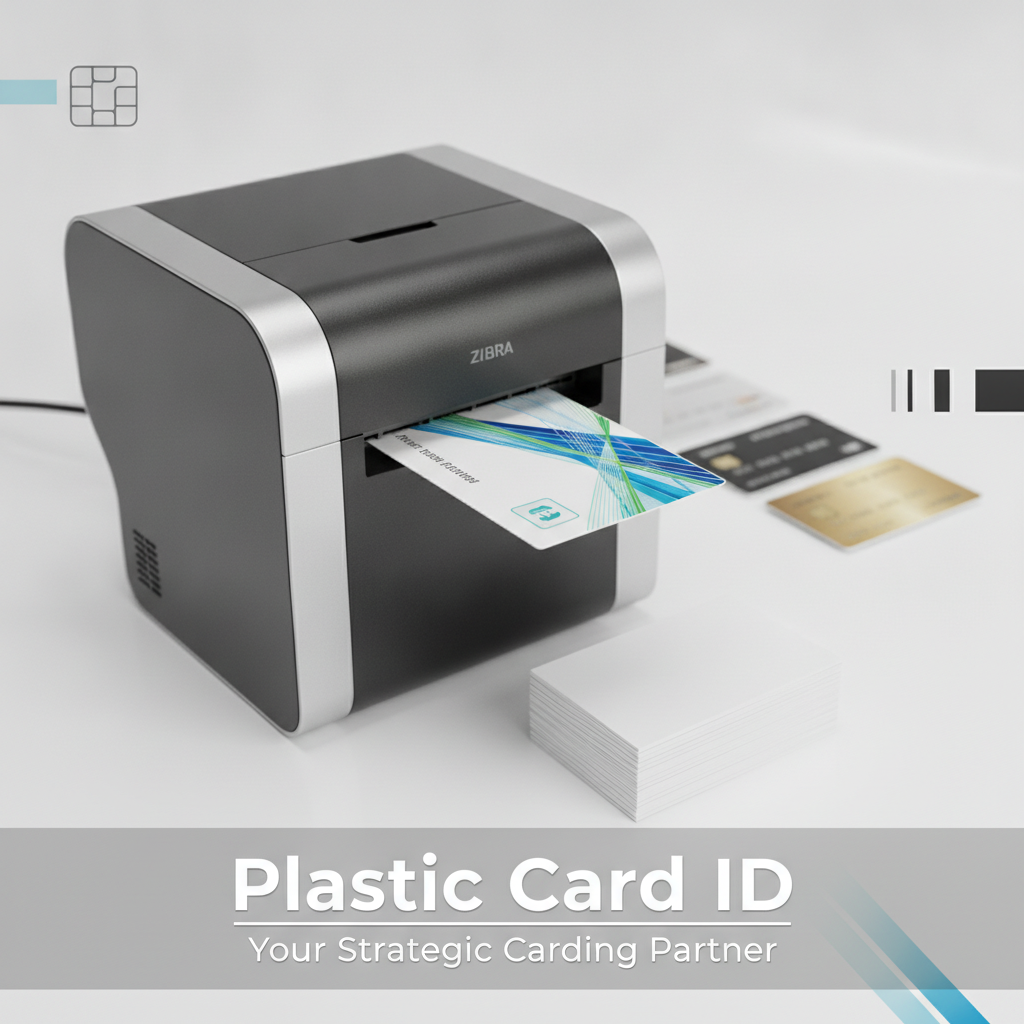 The term "plastic card printer" covers a surprisingly wide spectrum of hardware. At its core, these are purpose-built dye-sublimation or direct-to-card thermal printers engineered specifically for CR80-format PVC cards - the standard size of a credit card. They are not standard document printers with a card tray bolted on. The technology is fundamentally different, optimized for full-color photographic output on hard plastic surfaces.
Most card printers use ribbon-based printing, where panels of color dye (yellow, magenta, cyan, black, and overlay - the classic YMCKO configuration) transfer onto the card surface through heat. The result is a vibrant, durable, professional credential that holds up to daily handling, badge clips, wallet storage, and years of use. Understanding this distinction matters when budgeting and planning a card program.
Dye Sublimation vs. Direct-to-Card Printing
Two primary printing technologies dominate the card printer market. Dye-sublimation retransfer printing involves printing the image onto a clear film that is then fused to the card surface - enabling true edge-to-edge printing with no white borders and exceptional image quality. Direct-to-card printing transfers dye directly onto the PVC surface, which is faster and more cost-effective for most standard applications.
For most businesses printing employee IDs, membership cards, or loyalty cards, direct-to-card technology delivers excellent results at a lower cost per card. Retransfer technology - as found in the Evolis Agilia - is the choice when image precision, edge-to-edge printing, or printing on smart card surfaces with raised chip contacts is a priority. Knowing which technology fits your needs prevents overspending or under-specifying.
Single-Sided vs. Dual-Sided Printing
Many organizations underestimate how much information needs to fit on a card until they start designing one. Employee IDs often carry a photo, name, title, department, and barcode on the front - plus emergency contact info, building access details, or legal text on the back. Dual-sided printing doubles your available real estate without increasing card size.
Mid-range printers like the Evolis Primacy2 support dual-sided printing through a flipper module, automatically flipping the card mid-print cycle so both sides receive a full-color pass. This feature is well worth the investment for organizations with information-rich card designs. Single-sided models remain the right call for applications where the reverse side will be left blank or pre-printed by the card manufacturer.
Encoding Options That Add Real Functionality
A plastic card printer can do far more than apply an image to a card. Magnetic stripe encoding allows the printer to write data to a mag stripe during the print cycle - enabling hotel key cards, loyalty program cards, access control credentials, and more. Smart chip encoding goes further, programming contact or contactless chips embedded in the card for high-security access systems.
These encoding capabilities are built into or added to the printer as factory-installed upgrades. The Evolis Zenius, Primacy2, and several Fargo and Zebra models all support magnetic stripe encoding. For organizations building a complete access control or loyalty infrastructure, selecting a printer with encoding capability from the start eliminates the need to purchase separate encoding hardware or send cards out for encoding after printing.
The Printer Lineup: Matching Hardware to Your Actual Needs
Walking into the plastic card printer market without a volume estimate is like shopping for a vehicle without knowing how far you drive. The hardware exists across a wide range of speeds, capacities, and feature sets - and choosing the right tier matters as much as choosing the right brand. CPE carries printers from Evolis, Fargo, Zebra, and Matica specifically because these brands represent the reliable, proven options that serious organizations depend on.
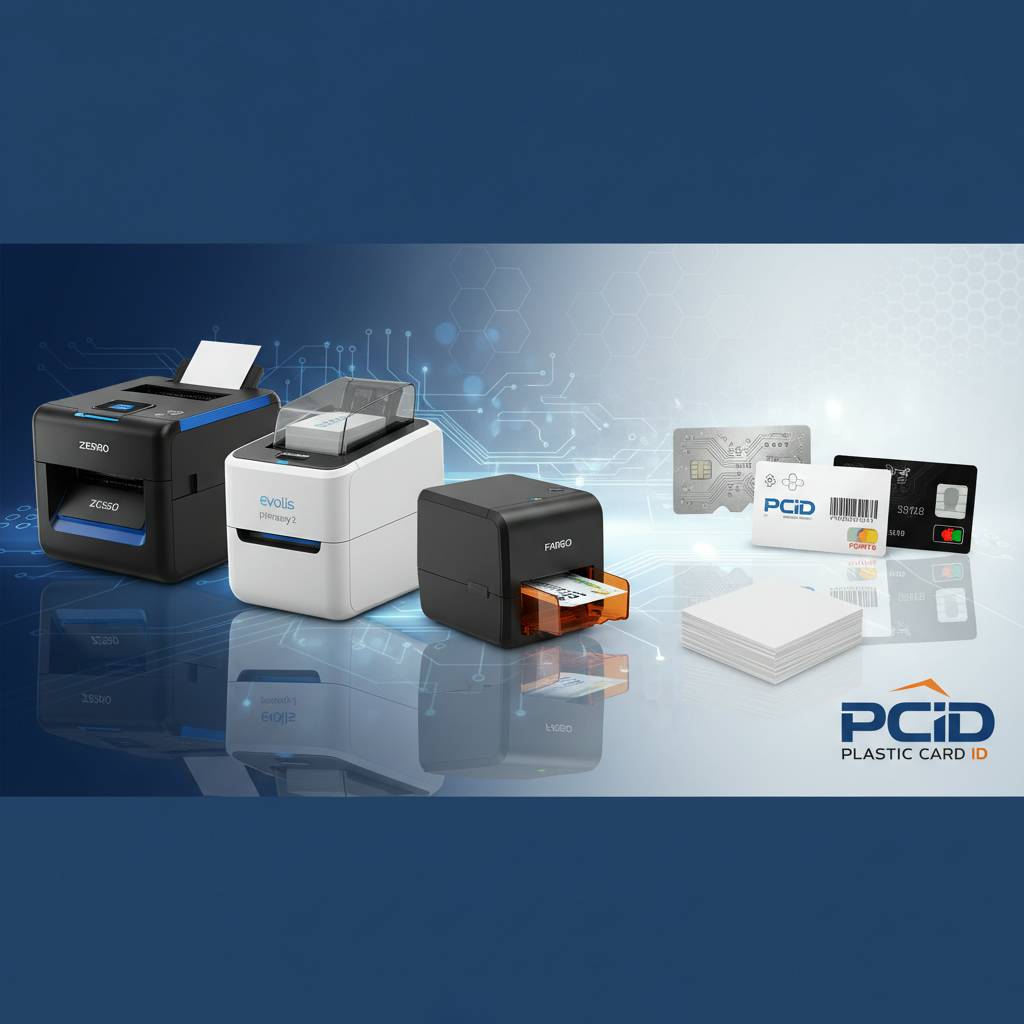
What separates a well-matched printer from a frustrating purchase is honest volume planning. Pull your employee headcount. Estimate annual card replacements. Factor in new hires, lost cards, and any membership or loyalty program scale. Then match that number to the appropriate hardware tier. It's a simple exercise that prevents buying a $150 desktop unit for a 10,000-card-per-year operation - or overspending on industrial hardware for a 400-card school program.
Entry-Level: The Evolis Badgy200
The Badgy200 is the answer to a very specific question: "We need to print cards occasionally - nothing fancy, just clean professional credentials." Designed for organizations printing fewer than 1,000 cards per year, this compact desktop unit bundles card design software with a plug-and-play printer that genuinely lives up to that description. Setup is measured in minutes, not hours.
Small offices, community organizations, fitness clubs, youth sports leagues - these are the environments where the Badgy200 earns its place. It handles color photo ID printing with solid results, accepts standard YMCKO ribbons, and fits comfortably on any desk. It's not built for speed or volume, and it doesn't pretend to be. For the right application, it's exactly what's needed and nothing more.
Mid-Range Workhorses: Evolis Zenius and Primacy2
These two models represent the most popular tier in professional card printing - and for good reason. The Evolis Zenius and Primacy2 handle between 1,000 and 6,000 cards per month with consistent quality, reliable throughput, and a modular design that allows encoding and lamination upgrades without replacing the base unit. They're workhorses in the truest sense of the word.
The Zenius suits single-sided applications with moderate volume requirements, while the Primacy2 steps up with higher throughput and dual-sided capability. Both support magnetic stripe encoding upgrades, making them strong candidates for access control programs, membership systems, and employee ID programs at mid-size companies. Call 800.835.7919 to discuss which of these models aligns with your specific program requirements.
Premium Output: The Evolis Agilia
Some card programs simply demand more. Government-issued credentials, premium loyalty cards for high-value retail programs, campus IDs for major universities - these applications require edge-to-edge printing, flawless color reproduction, and a finished card that communicates quality as clearly as the organization it represents. The Evolis Agilia delivers on every one of those demands.
Using retransfer printing technology, the Agilia produces cards with no white border - the image extends fully to every edge of the card. Color accuracy is exceptional, and the retransfer film creates a protective layer over the printed image that enhances durability. For organizations where the card itself is a brand statement, the Agilia is the appropriate tool.
Fargo and Zebra: Security-First Card Printing
 Certain environments demand more than visual quality from a plastic card printer. Corporate campuses with physical access control systems, healthcare facilities managing staff credentials, government agencies issuing official IDs - these programs require printers built around security from the ground up. Fargo and Zebra have built their reputations precisely in these demanding environments.
Both brands offer printers with robust encoding options, security lamination capabilities, and integration pathways into enterprise identity management systems. Fargo's HID pedigree means deep compatibility with the HID access control ecosystem. Zebra's industrial engineering background translates into printers built for sustained high-volume operation in demanding physical environments. CPE carries these brands because the customers who need them have no tolerance for compromise.
Fargo Printers: Built for Identity Programs
Fargo printers are a natural fit for organizations already running HID-based access control infrastructure. The integration is seamless, the encoding options are comprehensive, and the output quality supports photo-ID programs where visual verification is part of the security protocol. Fargo's lineup spans from desktop single-card issuance to high-volume industrial systems capable of supporting large enterprise deployments.
Beyond access control, Fargo printers appear in healthcare, financial services, and education - anywhere that the ID card is both a credential and a security document. The ability to add holographic overlaminates, UV-fluorescent ink panels, and smart chip encoding within a single print pass makes Fargo a compelling choice for multi-layer security card programs.
Zebra Printers: Industrial Reliability at Scale
Zebra's card printers carry the same engineering DNA as the company's legendary industrial label printers - built for environments where downtime is not an option. High input hopper capacity, robust card handling mechanisms, and enterprise-grade connectivity make Zebra printers the choice for operations running cards in sustained, high-volume bursts. Campus card offices, large hospital networks, and enterprise HR departments are natural fits.
Zebra models also support a full range of encoding options including magnetic stripe, contact smart card, and contactless smart card - covering virtually every card technology in current use. For IT departments evaluating a card printer that integrates cleanly into an existing enterprise software ecosystem, Zebra's SDK and driver support is notably strong.
Choosing Between Fargo and Zebra
The honest answer is that both brands are excellent, and the right choice usually comes down to your existing infrastructure. If your access control system runs on HID technology, Fargo is the natural path. If your card volume is very high and your IT environment favors Zebra's enterprise connectivity tools, Zebra wins on those terms. Neither choice is wrong - the wrong choice is selecting based on price alone.
Contact CPE at 800.835.7919 to walk through your specific program setup. With 25 years of experience matching organizations to hardware, the team can cut through the spec sheets and identify the right fit quickly. It's a conversation that regularly saves organizations from expensive mismatches.
Supplies, Accessories, and Keeping Your Program Running
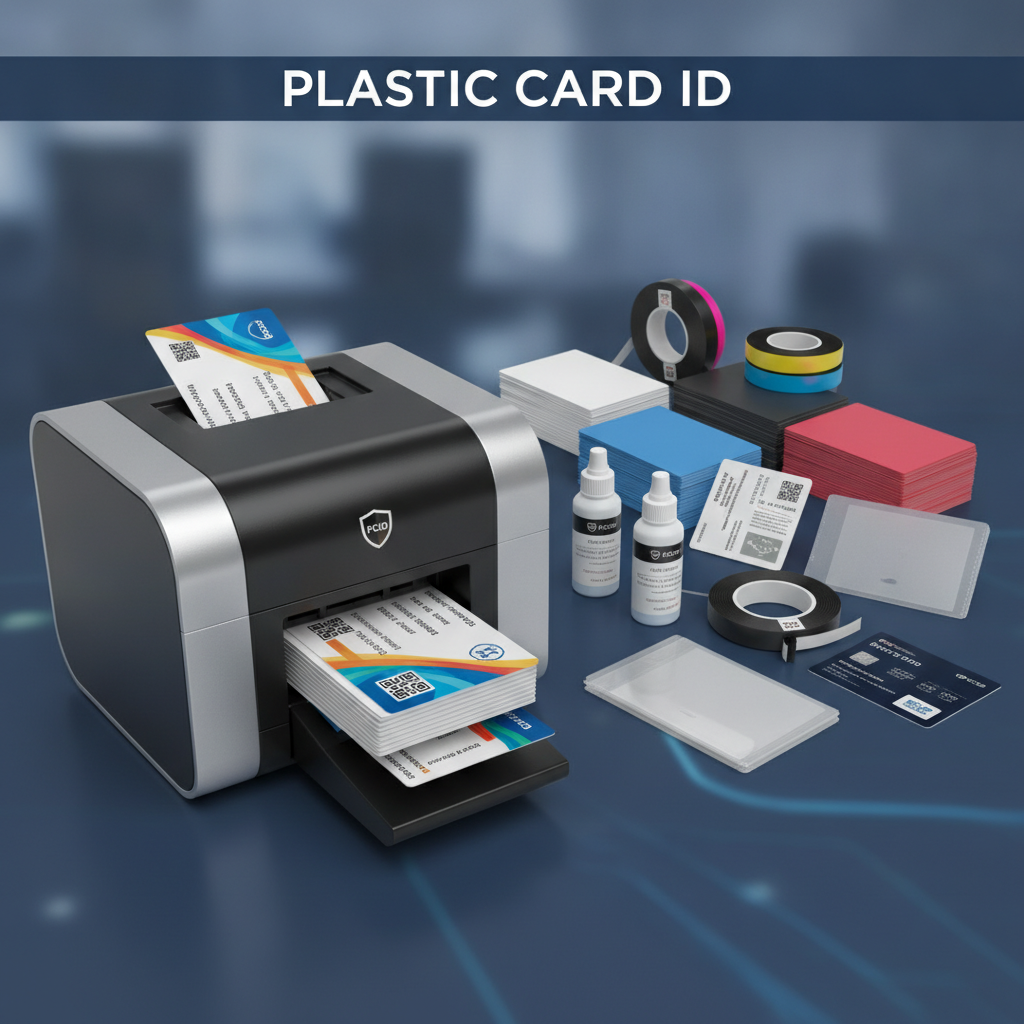 A plastic card printer without a steady supply of ribbons and cleaning kits is just expensive furniture. The operational side of a card printing program deserves as much attention as the hardware selection. CPE supplies everything needed to keep a card program running cleanly and consistently, from YMCKO color ribbons to monochrome black ribbons for simple text-only applications.
Ribbon selection matters more than most buyers initially realize. YMCKO ribbons produce full-color output with an overlay panel. Monochrome ribbons in black, white, gold, silver, or other colors produce single-color output at a lower cost per card - ideal for applications where color printing isn't needed on every card. Specialty ribbons support UV-fluorescent printing for covert security features. Matching the right ribbon to the application controls consumable costs significantly.
Ribbons, Cleaning Kits, and Lamination Modules
Regular cleaning is not optional for card printers - it's the single most important factor in print quality and equipment longevity. Dust, card debris, and ribbon residue accumulate inside the print mechanism and degrade output quality over time. Cleaning kits designed specifically for card printers include cleaning cards, swabs, and adhesive rollers that remove contamination from the print path without damaging sensitive components.
Lamination modules add a protective film layer over the printed card surface, dramatically extending card life in high-wear environments and enabling the application of holographic security overlaminates. For programs issuing long-life credentials - annual membership cards, multi-year employee IDs, or access control cards that see daily reader contact - lamination is a worthwhile investment that reduces replacement frequency.
Input Hoppers and Card Carriers
- High-capacity input hoppers allow unattended batch printing runs without constant card reloading - critical for high-volume operations.
- Card carriers and sleeves protect finished credentials during distribution and storage, maintaining the professional finish of the printed card.
- Output hoppers catch finished cards as they exit the printer, keeping batches organized and preventing cards from accumulating in a disordered pile.
- Card retransfer film rolls are the primary consumable for retransfer-technology printers like the Evolis Agilia.
- Blank PVC cards in CR80 standard format are available in white, pre-printed, or specialty materials depending on the application.
Stocking these supplies proactively - rather than ordering reactively when you run out mid-batch - is the difference between a smooth card program and a frustrating one. CPE makes it straightforward to order everything from a single source, ensuring compatibility between ribbons, cleaning supplies, and hardware.
Applications: Who Prints Cards In-House and Why
The diversity of organizations running in-house card programs is wider than most people expect. The unifying factor isn't industry or size - it's the need for control, speed, and the ability to personalize each card individually. Batch ordering from an outside vendor works until it doesn't. A new employee waiting three weeks for a photo ID badge, a membership card that can't be personalized at point of sale, an access control credential that has to be mailed after encoding - these friction points drive organizations toward in-house production.
Physical card printing on-site eliminates vendor lead times entirely. Print one card or print five hundred in the same session. Update a photo, correct a name, change an access level - without waiting for a production run minimum to justify the order. For organizations where the card is also a functional key or credential, that flexibility is often the deciding factor.
Employee ID and Access Control Programs
Corporate HR departments and facility security teams represent the largest single segment of card printer buyers. An in-house plastic card printer means a new hire can have a photo ID on their first day - not three weeks later when the vendor batch arrives. Combined with magnetic stripe or smart chip encoding, the same card can serve as both a visual ID and a physical access credential, reducing the number of cards an employee carries.
Replacement cards for lost or damaged credentials can be reprinted within minutes rather than requiring a new vendor order. For multi-site organizations, a printer at each location enables decentralized card issuance without sacrificing consistency - as long as a standardized card template and ribbon specification are used across locations.
Membership, Loyalty, and Event Credentials
Gyms, clubs, professional associations, retailers running loyalty programs, conference organizers - these applications share a common need: cards that are personalized, produced quickly, and handed directly to the recipient. The Matica Event Printer is specifically engineered for on-site, high-speed badge production at conferences, trade shows, and large venues where hundreds or thousands of credentials need to be issued in a compressed time window.
For ongoing membership programs, a mid-range printer like the Evolis Primacy2 handles day-to-day issuance at the front desk without requiring dedicated print staff. Membership cards with magnetic stripe encoding can store loyalty points balances or access tier information, adding functional value to what would otherwise be a simple identification card.
Education, Healthcare, and Hospitality
Schools and universities issue student IDs, faculty credentials, library cards, and cafeteria payment cards - often all on the same platform. A single mid-range card printer with encoding capability can consolidate what was previously a multi-vendor, multi-system credential program. Hotels use card printers to issue guest key cards on-site, enabling same-day programming without pre-encoding inventory from an outside vendor.
Healthcare facilities face strict requirements around staff credential verification. Photo ID badges with clear department identification, role designations, and often smart chip encoding for electronic health record system access are standard in modern healthcare environments. In every one of these applications, in-house printing delivers the combination of speed, personalization, and control that outside vendors simply cannot match.
Buyer's Guide: Selecting the Right Plastic Card Printer for Your Organization
 The single most valuable thing a buyer can do before purchasing a card printer is spend twenty minutes honestly assessing their program requirements. Volume, card design complexity, encoding needs, and budget together define the right answer. No single printer is right for every organization, but for every organization there is a printer that fits precisely - and finding it requires asking the right questions upfront.
Here's a straightforward framework for working through the decision. Start with annual volume. Then identify whether you need single or dual-sided printing. Determine if encoding is required now or likely required in the future. Set a realistic total cost of ownership budget that includes consumables, not just hardware. Finally, consider whether on-site technical support or remote diagnostics matter for your environment.
Key Questions to Ask Before You Buy
- How many cards will you print per year - and is that number likely to grow?
- Do you need full-color printing, or will monochrome suffice for your application?
- Will the card need to function as a key card, loyalty card, or smart credential requiring encoding?
- Is dual-sided printing necessary for your card design?
- What is the total budget including ribbons, cleaning kits, and blank cards for the first year?
- Do you have existing access control or loyalty software that the printer must integrate with?
Answering these questions honestly takes five minutes and eliminates the most common purchasing mistakes. The goal is to match capability to requirement - not to buy the most impressive spec sheet. A Badgy200 that serves a 500-card-per-year program flawlessly is a better purchase than a $2,500 industrial unit that sits idle.
Total Cost of Ownership: Hardware Is Just the Beginning
Card printer pricing spans a wide range - entry-level desktop units start around $300-$500, mid-range models run $800-$2,500, and premium or industrial systems can reach $4,000-$10,000 or more. But the hardware purchase price is only part of the equation. Ribbon costs, cleaning kit cadence, and blank card pricing determine the true per-card cost of running your program over time.
A standard YMCKO color ribbon typically yields 200-500 prints per roll depending on the model and ribbon specification. Monochrome ribbons yield significantly more prints per roll. Cleaning kits should be used at regular intervals - typically every ribbon change for card printers with integrated cleaning cycles. Factoring these consumable costs into the budget upfront prevents sticker shock after the printer arrives.
Getting Expert Guidance Before You Commit
Spec sheets answer some questions and obscure others. The most reliable way to select the right plastic card printer for a specific program is to talk with someone who has matched thousands of organizations to hardware across every industry and volume range. That's exactly what the CPE team does - and has done for more than 25 years.
Whether the question is which Evolis model handles a specific ribbon type, whether a Fargo printer will integrate with an existing access control system, or how the Matica Event Printer compares to a Zebra unit for a specific conference application - the answers are available. Call 800.835.7919 and get clarity before committing to a hardware investment. It costs nothing and regularly saves organizations from expensive decisions made on incomplete information.
Start Printing Professional Cards In-House with Plastic Card ID
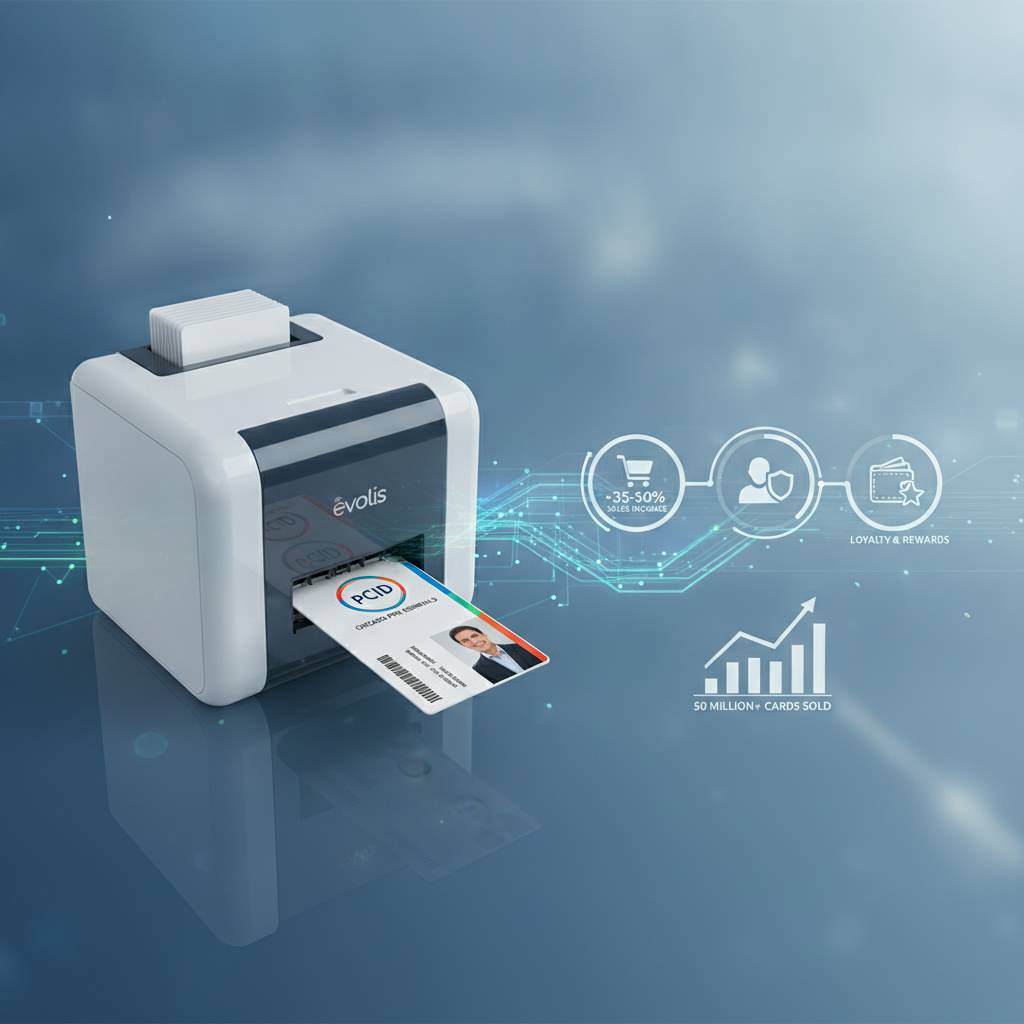 Outsourcing card production made sense once. It probably doesn't anymore - not when in-house plastic card printers have become this accessible, this capable, and this well-supported. The shift to in-house printing pays for itself faster than most organizations expect, in both hard cost savings and the operational flexibility that comes with producing cards on demand, on your timeline, personalized to each individual recipient.
Plastic Card ID has equipped over 100,000 businesses with the hardware, supplies, and expertise to run professional card programs entirely in-house. Evolis, Fargo, Zebra, Matica - the full lineup of industry-leading brands is available, matched to every volume tier and application type. From the first printer purchase through years of ribbon and cleaning kit replenishment, CPE is the single source that keeps card programs running.
Contact Plastic Card ID today at 800.835.7919 to find the right plastic card printer for your organization. The right hardware, the right supplies, and 25 years of expertise are ready to work for you.
Previous Page