Magnetic Stripe Card Printer: Encode and Print Cards
Table of Contents []
- Why Plastic Card ID Is the Go-To Source for Magnetic Stripe Card Printers
- The Magnetic Stripe Card Printer Lineup: Brands, Models, and What They Do
- Supplies That Keep Your Card Program Running
- Matching the Right Magnetic Stripe Card Printer to Your Volume
- Applications: What Are These Cards Actually Used For?
- Frequently Asked Questions About Magnetic Stripe Card Printers
- Ready to Print? Plastic Card ID Has the Right Magnetic Stripe Card Printer for You
Why Plastic Card ID Is the Go-To Source for Magnetic Stripe Card Printers
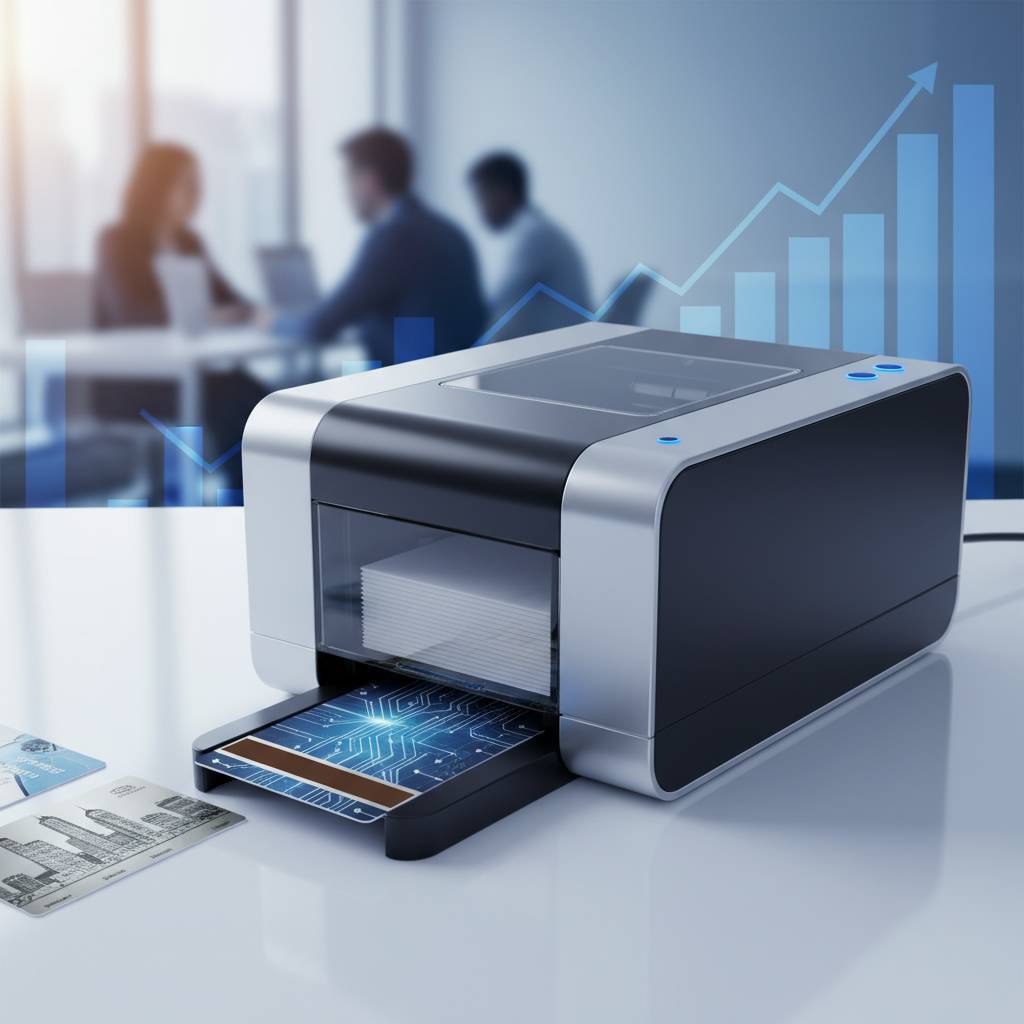 Walk into almost any hotel, gym, university, or corporate office and you'll find plastic cards quietly doing serious work - unlocking doors, logging attendance, tracking loyalty points, granting access. Behind every one of those cards is a printer capable of encoding data onto a magnetic stripe. Choosing the right magnetic stripe card printer is not a trivial decision, and that's precisely where Plastic Card ID comes in.
With more than 25 years in the industry and a customer base exceeding 100,000 businesses across the United States, Plastic Card ID has built a reputation as a trusted, knowledgeable supplier of professional card printing hardware. They carry a carefully curated lineup from the world's most respected brands - Evolis, Fargo, Zebra, and Matica - so regardless of your production volume or encoding requirements, there's a solution waiting for you.
This page is your complete guide: what magnetic stripe encoding actually means, which printers support it, how to match a machine to your organization's needs, and why in-house card production consistently outperforms outsourcing. Let's get into it.
What Makes a Magnetic Stripe Card Printer Different?
A standard card printer lays down color or monochrome print onto a PVC card surface. A magnetic stripe card printer does all of that - and simultaneously writes encoded data to the magnetic stripe laminated onto the card's back. That stripe holds machine-readable information: employee IDs, access codes, loyalty account numbers, or hotel room assignments.
The encoding process happens in a single pass through the printer. You design the card, send the print job, and the printer both prints the visual surface and writes the magnetic data - no secondary step, no separate encoder required. This seamless workflow is what makes on-site card production so efficient for organizations managing active, frequently updated card programs.
Magnetic stripes come in different coercivity ratings: low coercivity (LoCo) for hotel keys and short-lifespan cards, and high coercivity (HiCo) for employee IDs, access cards, and anything intended to last years without data corruption. Most printers sold by CPE support both standards, either natively or via an upgradeable encoding module.
The Real Cost of Not Printing In-House
Organizations that rely on third-party card vendors are essentially surrendering control over one of their most operationally critical assets. Minimum order quantities, production lead times, reorder delays, and the inability to personalize individual cards on demand - these are real friction points that compound over time and cost real money.
Consider a mid-size company that needs to issue a replacement employee badge immediately. With an in-house magnetic stripe card printer, a new card is ready in under a minute. With an outside vendor, that same card might take three to ten business days and carry a per-card premium for small quantities. Multiply that scenario across months and years, and the math overwhelmingly favors in-house printing.
Who Needs a Magnetic Stripe Card Printer?
The range of organizations benefiting from magnetic stripe card printing is broader than most people initially realize. Hotels encoding room keys, universities issuing student IDs with meal plan access, retail chains running loyalty programs, corporate offices managing access-controlled entry points, healthcare facilities tracking staff - these are not niche use cases. They are everyday operations across nearly every industry sector.
CPE works with businesses at every scale, from small nonprofits printing a few hundred membership cards per year to enterprise organizations producing tens of thousands of cards monthly. The printer that's right for a boutique fitness studio is very different from the one that's right for a hospital network, and understanding those differences is where expert guidance pays off.
Call 800.835.7919 to speak directly with a specialist who can assess your volume, encoding requirements, and budget to recommend the ideal solution from the current lineup.
The Magnetic Stripe Card Printer Lineup: Brands, Models, and What They Do

| Printer Model | Brand | Volume Range | Magnetic Stripe Support | Dual-Sided |
|---|---|---|---|---|
| Badgy200 | Evolis | Under 1,000/year | Optional upgrade | No |
| Zenius | Evolis | 1,000-3,000/month | Available | No |
| Primacy2 | Evolis | Up to 6,000/month | Available | Yes |
| Agilia | Evolis | High volume | Available | Yes |
| Fargo / Zebra Models | Fargo / Zebra | Variable | Available | Yes (select models) |
| Matica Event Printer | Matica | High-speed on-site | Available | Yes |
Evolis: Precision Engineering for Every Scale
Evolis has earned a commanding position in the card printing industry through consistent quality, modular design, and an impressive range of models that serve organizations at genuinely different production scales. The Badgy200 is a compact, approachable entry-level unit ideal for organizations printing fewer than 1,000 cards per year. It's a real workhorse for small associations, boutique businesses, or startups that want professional-quality cards without overinvesting in hardware.
Step up the ladder and you reach the Zenius and Primacy2 - two of the most popular mid-range magnetic stripe card printers in the industry. The Zenius handles single-sided printing with reliable throughput for volumes between 1,000 and 3,000 cards per month. The Primacy2 adds dual-sided printing capability and comfortably scales to 6,000 cards per month, making it the right choice for organizations printing both employee credentials and access-encoded cards simultaneously.
At the top of the Evolis range sits the Agilia, a premium printer engineered for edge-to-edge, high-definition output. For organizations that refuse to compromise on visual quality - think luxury hotel key cards, high-profile event credentials, or corporate ID programs representing polished brand identities - the Agilia delivers results that genuinely impress.
Fargo and Zebra: Security-First Printing
Fargo and Zebra bring something distinct to the lineup: a deep engineering focus on security features and government-grade ID program requirements. These brands are frequently specified in law enforcement, healthcare, education, and federal contractor environments where card integrity is non-negotiable and encoding accuracy must be flawless.
Both brands offer magnetic stripe encoding as standard or optional upgrades across their respective model ranges. Zebra printers in particular are known for their robust construction and compatibility with enterprise credential management systems, making integration into existing access control infrastructure relatively straightforward. CPE carries a selection of models from both brands to cover these higher-security use cases.
Matica: When Speed Is the Priority
The Matica Event Printer occupies a specific and valuable niche: high-speed, on-site badge and credential printing for events, conferences, conventions, and large-scale registrations. When you need to process hundreds of attendees per hour and encode access-level data onto each card in real time, the Matica is purpose-built for exactly that scenario.
Its throughput capabilities and reliability under continuous-use conditions make it a different kind of tool than a typical office card printer. Organizations running annual conventions, trade shows, or multi-day corporate events often find the Matica pays for itself in a single deployment by eliminating pre-printed badge logistics and enabling last-minute registrant processing.
Supplies That Keep Your Card Program Running
Printer Ribbons: The Consumable You Cannot Ignore
A magnetic stripe card printer is only as good as the ribbon running through it. Plastic Card ID stocks a comprehensive range of ribbons to match every printer model and application type. YMCKO ribbons (Yellow, Magenta, Cyan, Black, Overlay) produce full-color prints with a protective overlay panel that significantly extends card lifespan. Monochrome ribbons - black, white, silver, gold, red - are used for single-color printing at higher speeds and lower cost per card.
Specialty ribbons add capabilities like UV-reactive panels for security verification, scratch-off panels for promotional cards, and holographic overlays for high-security credentials. Matching the right ribbon to your printer model and card application isn't guesswork - it's a specification decision that affects both print quality and cost efficiency. The team at CPE can help you identify the correct ribbon part numbers for your specific setup.
Call 800.835.7919 to confirm ribbon compatibility or place a supplies order with a knowledgeable specialist.
Cleaning Kits and Maintenance Supplies
Card printers that encode magnetic stripes are precision instruments. Dust, debris, and residue accumulating inside the printer mechanism directly degrade print quality and encoding accuracy over time. Regular cleaning is not optional - it's the single most effective thing you can do to extend printer life and maintain consistent output quality.
Plastic Card ID supplies cleaning kits specifically designed for each printer model in the lineup. These kits typically include cleaning cards that run through the printer's card path, cleaning swabs for rollers and printheads, and cleaning solution for external surfaces. Following the manufacturer-recommended cleaning schedule - usually every ribbon change or every 500 cards - protects your investment and keeps encoding performance reliable.
Encoding Upgrades: Magnetic Stripe, Smart Chip, and More
Many card printers are sold in base configurations that can be upgraded with encoding modules at the time of purchase or retrofitted afterward. Magnetic stripe encoding modules are available for most models in HiCo, LoCo, or dual-coercivity configurations. Smart chip encoding modules - supporting contact and contactless (RFID) technologies - extend card functionality into access control and cashless payment ecosystems.
Organizations often start with a basic print-only configuration and add encoding capabilities as their card program evolves. This modular approach lets you invest incrementally rather than buying maximum capability upfront. CPE carries the upgrade modules and can advise on compatibility with your existing hardware before you commit.
Matching the Right Magnetic Stripe Card Printer to Your Volume
Low-Volume Applications: Under 1,000 Cards Per Year
Small businesses, local nonprofits, community organizations, and boutique hospitality operations often fall into the under-1,000-cards-per-year category. This is the right profile for an entry-level printer like the Evolis Badgy200. The cost of ownership is low, the footprint is compact, and the card quality is genuinely professional - more than sufficient for membership cards, small employee ID programs, or seasonal loyalty card initiatives.
At this volume, the per-card cost of in-house printing versus outsourcing tends to be roughly comparable, but the operational advantages of on-demand printing - instant replacement cards, real-time personalization, no minimum order quantities - typically tip the scales decisively in favor of owning a printer. Even modest volumes justify the investment when you factor in the control and flexibility gained.
Mid-Range Volume: 1,000 to 6,000 Cards Per Month
This is where the Evolis Zenius and Primacy2 do their best work. Organizations in this volume band - mid-size employers, regional hotel chains, university departments, healthcare networks - need consistent throughput without industrial complexity. Both models offer magnetic stripe encoding as a standard option and produce crisp, professional output that meets the expectations of branded ID programs.
The Primacy2's dual-sided capability is particularly valuable here. Most professional ID cards carry information on both faces - a photo, name, and title on the front; a magnetic stripe, barcode, or policy text on the back. Dual-sided printing in a single pass significantly reduces production time and eliminates the manual card-flipping step that introduces alignment errors and slows workflows.
High-Volume and Enterprise Needs
Enterprise organizations, large universities, healthcare systems, and government contractors operating high-throughput card programs need industrial-grade hardware. The Evolis Agilia, select Fargo and Zebra models, and the Matica Event Printer serve this tier. These machines are built for continuous operation, high input hopper capacity, automated card handling, and integration with enterprise identity management platforms.
At this scale, the total cost of ownership calculation shifts significantly. The per-card cost advantage of in-house printing over outsourcing widens dramatically as volume increases, and the operational value of real-time, on-demand card issuance becomes a genuine competitive and security asset. For organizations in this tier, the right printer is infrastructure - not just equipment.
Applications: What Are These Cards Actually Used For?
Employee ID and Access Control Cards
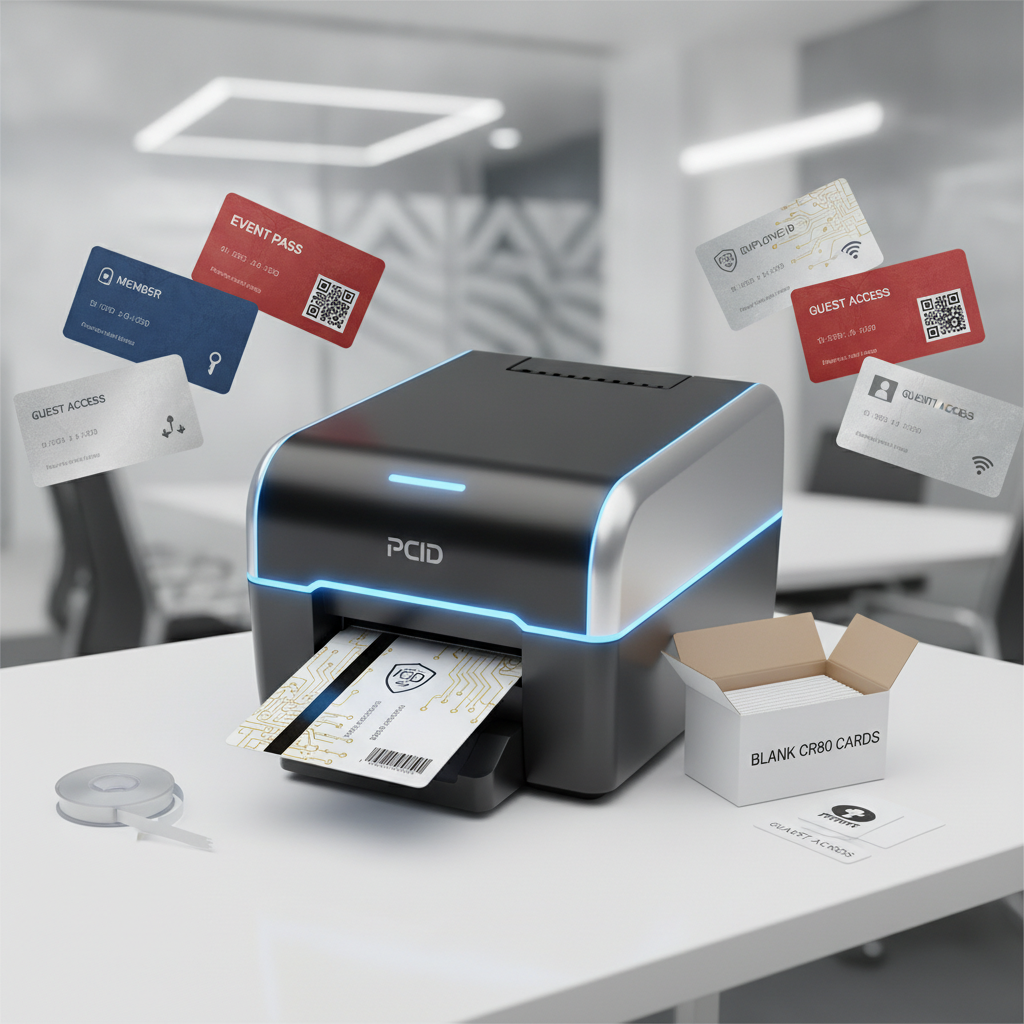
The most universal application for magnetic stripe card printers is employee identification. A well-designed employee ID card does multiple jobs: it visually identifies the cardholder, carries machine-readable access data on the magnetic stripe, and represents the organization's professional brand. Organizations with controlled-access facilities encode access level data directly onto the stripe, enabling door readers and security checkpoints to authenticate credentials automatically.
Because employee populations change constantly - new hires, departures, role changes, lost cards - the ability to print replacement and updated cards immediately is operationally critical. In-house printing eliminates the gap between an access change decision and card availability, which is both a security improvement and an administrative efficiency gain.
Loyalty, Membership, and Gift Cards
Retail chains, fitness studios, cafes, and service businesses use magnetic stripe cards to power loyalty and membership programs. The magnetic stripe stores account numbers that link to customer databases, enabling point accumulation, tier status, and personalized rewards - all without requiring a smartphone app or internet connectivity at the point of interaction.
Printing loyalty cards in-house means zero minimum order quantities, instant new-member enrollment, and the ability to run promotional card campaigns with short lead times. For businesses that run seasonal loyalty pushes or frequent member recruitment drives, this agility is a meaningful competitive advantage over competitors still ordering batches from outside vendors weeks in advance.
- Retail and boutique loyalty programs
- Gym and fitness center membership cards
- Library and community center access cards
- Hotel key card programs with magnetic encoding
- Event credential and VIP access passes
- Student ID cards with dining and facility access
- Corporate employee ID with building access encoding
Hotel Key Cards and Hospitality Credentials
Hospitality is one of the highest-volume use cases for low-coercivity magnetic stripe card printing. Hotel room key cards are encoded and re-encoded constantly - at check-in, after a lost card report, during room reassignment, and at checkout reset. A property-level printer capable of encoding LoCo stripes in seconds is standard infrastructure for any hotel operating its own key card system.
Beyond room keys, hotels use card printers for staff credentials, parking access cards, spa and amenity access passes, and event badges for conferences held on property. The Matica Event Printer in particular is well suited to large hotel properties running multiple concurrent events requiring on-site credential issuance.
Frequently Asked Questions About Magnetic Stripe Card Printers
What Is the Difference Between HiCo and LoCo Magnetic Stripes?
High coercivity (HiCo) stripes require a stronger magnetic field to write data but retain that data reliably for years, even when exposed to everyday magnetic interference. They're the right choice for employee IDs, long-term membership cards, access control credentials, and any card intended for extended use. Low coercivity (LoCo) stripes are easier and faster to encode and re-encode, making them ideal for hotel key cards and short-lifespan applications.
Most printers in Plastic Card ID's lineup support both coercivity standards, either natively or through selectable encoding modes. When in doubt, HiCo is the safer default for any card program where longevity and data integrity matter. Encoding the wrong coercivity type is a common and preventable mistake - one that a knowledgeable supplier can help you avoid at the spec stage.
Reach the team at 800.835.7919 for direct guidance on coercivity selection for your specific card application.
Can I Upgrade My Existing Printer to Add Magnetic Stripe Encoding?
In many cases, yes. Several models in the Evolis, Fargo, and Zebra lineups are designed with modular architecture that allows magnetic stripe encoding modules to be added after initial purchase. Whether a retrofit upgrade is available depends on the specific printer model and its internal configuration. CPE can confirm upgrade availability and pricing for your existing hardware before you invest in a new unit.
For older printers that have reached end-of-life status or that aren't compatible with encoding upgrades, a new printer purchase often makes more financial sense than attempting to extend aging hardware. Current models offer better speed, improved print quality, and more reliable encoding performance than their predecessors from even five years ago.
How Many Cards Can a Magnetic Stripe Printer Produce Per Hour?
Print speed varies considerably by model, print mode, and whether dual-sided printing is active. Entry-level models like the Badgy200 typically produce 15-30 cards per hour in full-color mode. Mid-range models like the Primacy2 operate in the range of 150-250 cards per hour for single-sided color printing. High-throughput models can exceed 500 cards per hour in optimized configurations.
Magnetic stripe encoding adds minimal time to the card cycle - typically less than a second per card - so encoding does not meaningfully reduce throughput compared to print-only operation. Understanding your peak production demand is the key to selecting a printer with adequate speed, and CPE can walk you through that calculation based on your specific workflow.
Ready to Print? Plastic Card ID Has the Right Magnetic Stripe Card Printer for You
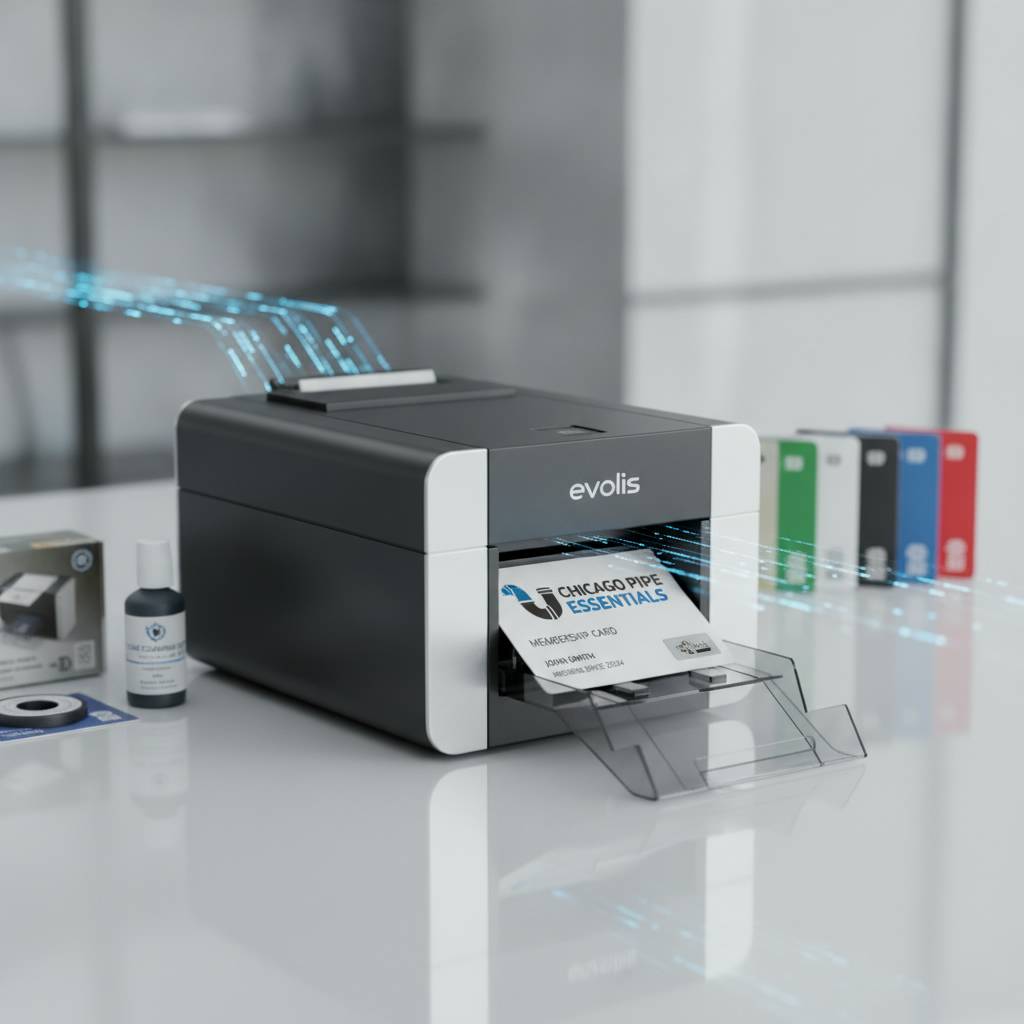 Whether you're launching a brand-new employee ID program, upgrading aging card printing equipment, or scaling an existing loyalty card operation to meet growing demand, Plastic Card ID has the hardware, supplies, and expertise to get your program running correctly from day one.
With more than 25 years of experience, a customer base that spans over 100,000 U.S. businesses, and a lineup that covers every production scale from desktop to industrial, CPE is not a general electronics retailer - it's a specialized supplier that understands card programs at a level that makes a genuine difference in the quality of guidance you receive.
The Advantages of Buying From a Specialist Supplier
Purchasing a magnetic stripe card printer from a specialist supplier rather than a generalist retailer means you get recommendations based on actual operational knowledge, not catalog descriptions. A specialist knows which models have the most reliable encoding mechanisms, which ribbons produce the best output at a given price point, and which accessories are genuinely necessary versus nice-to-have. That knowledge translates directly into better purchasing decisions and fewer costly mistakes.
Plastic Card ID also supplies the full ecosystem of consumables and accessories needed to keep your card program operational long after the initial purchase. Ribbons, cleaning kits, encoding modules, lamination supplies, input hoppers - everything ships from a single, reliable source that already knows your equipment and requirements. That continuity of supply and support is a practical advantage that becomes clearer with every ribbon reorder and every maintenance cycle.
Get Expert Guidance Before You Buy
The best way to avoid a mismatched purchase is to talk to someone who has helped thousands of organizations solve exactly the same problem you're facing right now. CPE specialists ask the right questions - volume projections, encoding requirements, card application, budget parameters, integration needs - and translate those answers into a concrete recommendation you can act on confidently.
No pressure, no upsells you don't need, no confusing spec comparisons that leave you more uncertain than when you started. Just clear, practical guidance from people who have spent decades in this industry and know the product lineup inside and out.
Start Your Card Program With Confidence
Every great card program starts with a single decision: choosing the right printer. From that foundation, everything else - ribbons, cleaning schedules, encoding configurations, card designs - builds naturally and manageably. Get that first decision right, and the rest falls into place.
Plastic Card ID is ready to help you make that decision today. Call 800.835.7919 and speak with a specialist who can match you to the ideal magnetic stripe card printer for your organization's exact needs, volume, and budget. Your next card - and the thousand after it - deserves professional equipment from a supplier that stands behind every recommendation it makes.
Previous Page