Fargo Card Printer: Reliable ID and Badge Printing
Table of Contents []
- Why Plastic Card ID Is the Smart Choice for Your Fargo Card Printer Needs
- Understanding Fargo Card Printer Technology: More Than Just Color Printing
- The Full Ecosystem: Supplies, Accessories, and Ongoing Support
- Who Actually Uses Fargo Card Printers? Real Applications Across Industries
- How to Choose the Right Fargo Card Printer for Your Organization
- Frequently Asked Questions About Fargo Card Printers
- Ready to Print? Plastic Card ID Makes It Simple
Why Plastic Card ID Is the Smart Choice for Your Fargo Card Printer Needs
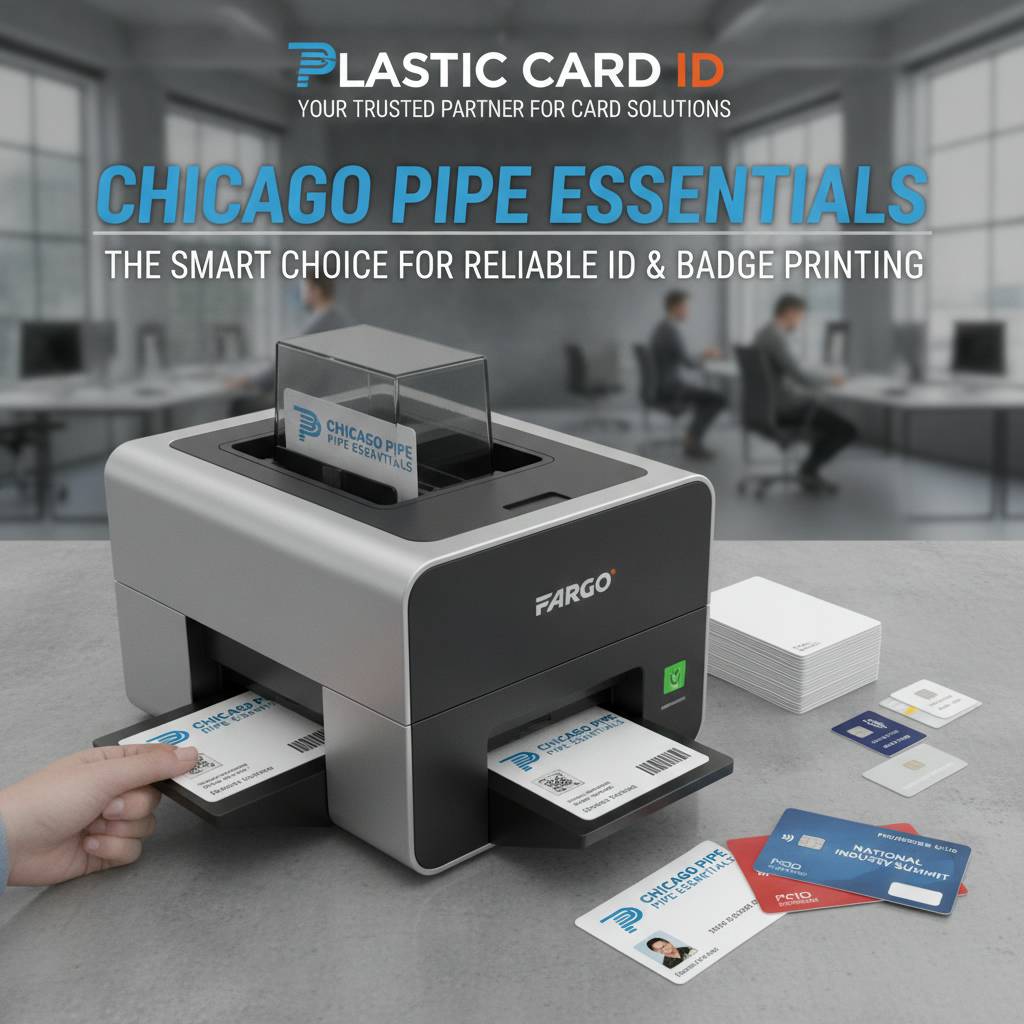 Walk into almost any organization that takes ID card printing seriously, and there's a good chance a Fargo card printer is humming somewhere in the building. These machines have earned a reputation that's difficult to argue with - consistent output, security-forward design, and a hardware ecosystem built for businesses that can't afford downtime or mediocre badge quality. Finding the right supplier to back that investment, though? That's where the decision gets interesting.
Plastic Card ID has spent more than 25 years putting professional-grade card printers into the hands of businesses across the United States. With over 100,000 customers served and a curated lineup that includes Fargo alongside Evolis, Zebra, and Matica, CPE brings a level of product depth and hands-on expertise that generic office supply vendors simply cannot match. Whether you're launching a new ID program or upgrading aging hardware, this is the resource worth bookmarking.
What Sets Fargo Printers Apart in a Crowded Market
Fargo - now operating under the HID Global umbrella - has long been synonymous with security-grade card printing. Their machines aren't designed for the occasional birthday badge. They're engineered for organizations that issue government IDs, corporate access cards, student credentials, and other documents where both visual quality and encoded data integrity matter. The difference shows up in every print.
Fargo printers lead the industry in security feature integration, supporting holographic overlaminates, UV printing panels, and smart card encoding that turns a simple PVC card into a multi-layered security credential. For organizations managing physical access control, visitor management, or regulated identity verification, that capability isn't optional - it's the baseline requirement.
The Fargo Lineup: Models That Cover Real Business Needs
Fargo's product family spans a meaningful range of production scales and feature sets. Entry-level desktop models handle lower-volume programs gracefully, while mid-range units like the DTC4500e step up for organizations pushing higher monthly card volumes. At the top end, Fargo's high-capacity printers address institutional and enterprise demands without flinching.
What makes selecting the right Fargo model genuinely important - and occasionally tricky - is matching specifications to your actual workflow. Dual-sided printing, magnetic stripe encoding, smart chip contact and contactless options, and lamination modules all add capability and cost. Buying more printer than you need wastes budget; buying less creates operational headaches fast. Plastic Card ID helps clients navigate that decision with real guidance, not just a product catalog link.
Reach the Experts Before You Commit
Questions about Fargo models, ribbon compatibility, or encoding options don't belong in a search engine rabbit hole. The team at CPE has direct product knowledge built over decades of hands-on experience with these exact machines. A conversation that takes five minutes can save weeks of research and prevent a costly mismatch between hardware and application.
Call 800.835.7919 to speak with a card printing specialist who understands the Fargo ecosystem inside and out. From first-time buyers to organizations replacing aging fleets, Plastic Card ID is ready to assist.
| Model Tier | Typical Volume | Key Features | Best For |
|---|---|---|---|
| Entry-Level Desktop | Under 1,000 cards/year | Single-sided, basic color | Small offices, clubs |
| Mid-Range | 1,000-6,000 cards/month | Dual-sided, mag stripe encoding | Corporate ID, universities |
| Security-Grade | High volume, ongoing | Laminators, smart card, UV | Government, enterprise access |
| High-Throughput | 10,000 cards/month | Automated feeding, dual hoppers | Large institutions, events |
Understanding Fargo Card Printer Technology: More Than Just Color Printing
 There's a misconception that card printers are essentially glorified inkjet machines - load a card, push print, done. Fargo hardware dismantles that notion quickly. The dye-sublimation transfer process these printers use creates output that's embedded into the card surface itself, not sitting on top of it. The result is a credential that resists fading, smearing, and casual tampering in ways that laser-printed or inkjet ID solutions simply cannot replicate.
The technology gap between a professional card printer and an improvised alternative is significant - and visible to anyone holding both side by side. Organizations issuing IDs, access credentials, or membership cards that need to project authority and professionalism should take that difference seriously. Fargo printers are precision instruments, and the output quality reflects exactly that.
Dye-Sublimation vs. Resin Thermal: Knowing the Difference
Fargo printers use two distinct print technologies depending on the application. Dye-sublimation handles photographic full-color output - headshots, color logos, gradient fills - by transferring heated dye directly into the card surface. Resin thermal printing, using black resin panels, produces sharp text and barcodes with exceptional durability and scan reliability.
Most YMCKO ribbons combine both technologies in a single pass: Yellow, Magenta, Cyan, Black resin, and a clear Overlay panel that seals the printed surface. That overlay is what gives professional cards their hard, finished look and dramatically extends the card's useful lifespan in wallets, badge holders, and readers.
Encoding Capabilities That Turn Cards Into Credentials
A printed card becomes a functional credential when encoding enters the picture. Fargo printers support magnetic stripe encoding, writing data to the card's mag stripe in a single synchronized pass with printing. This is how loyalty programs track member accounts, how hotels program room keys, and how access control systems grant or restrict entry.
Beyond magnetic stripe, Fargo hardware supports contact smart card encoding and contactless RFID chip programming. Organizations running proximity-based access control or high-security identity programs rely on this capability daily. Encoding and printing in a single pass eliminates handling errors and dramatically speeds up card issuance workflows compared to separate encoding steps.
Lamination Modules: The Security Layer Most Programs Eventually Want
Fargo's lamination modules - available as integrated add-ons on certain models - apply a thin film overlay to printed cards post-printing. Standard laminates extend card life and add a premium tactile finish. Security laminates go further, incorporating holographic patterns, custom ghost images, or UV-reactive elements that make credential duplication exceptionally difficult.
For government agencies, healthcare organizations, or any institution where credential fraud carries serious consequences, lamination isn't a luxury - it's a requirement. Organizations that implement Fargo laminators frequently report measurable reductions in credential-related security incidents. The investment in hardware pays operational dividends that are hard to quantify until you've experienced the alternative.
The Full Ecosystem: Supplies, Accessories, and Ongoing Support
Buying a Fargo card printer is the beginning of a relationship with a hardware ecosystem, not a one-time transaction. Ribbons deplete. Cleaning kits matter more than most buyers anticipate. Replacement parts and encoding upgrades become relevant as programs evolve. CPE stocks the full range of supplies needed to keep a Fargo card printing program running at peak performance - not just the printers themselves.
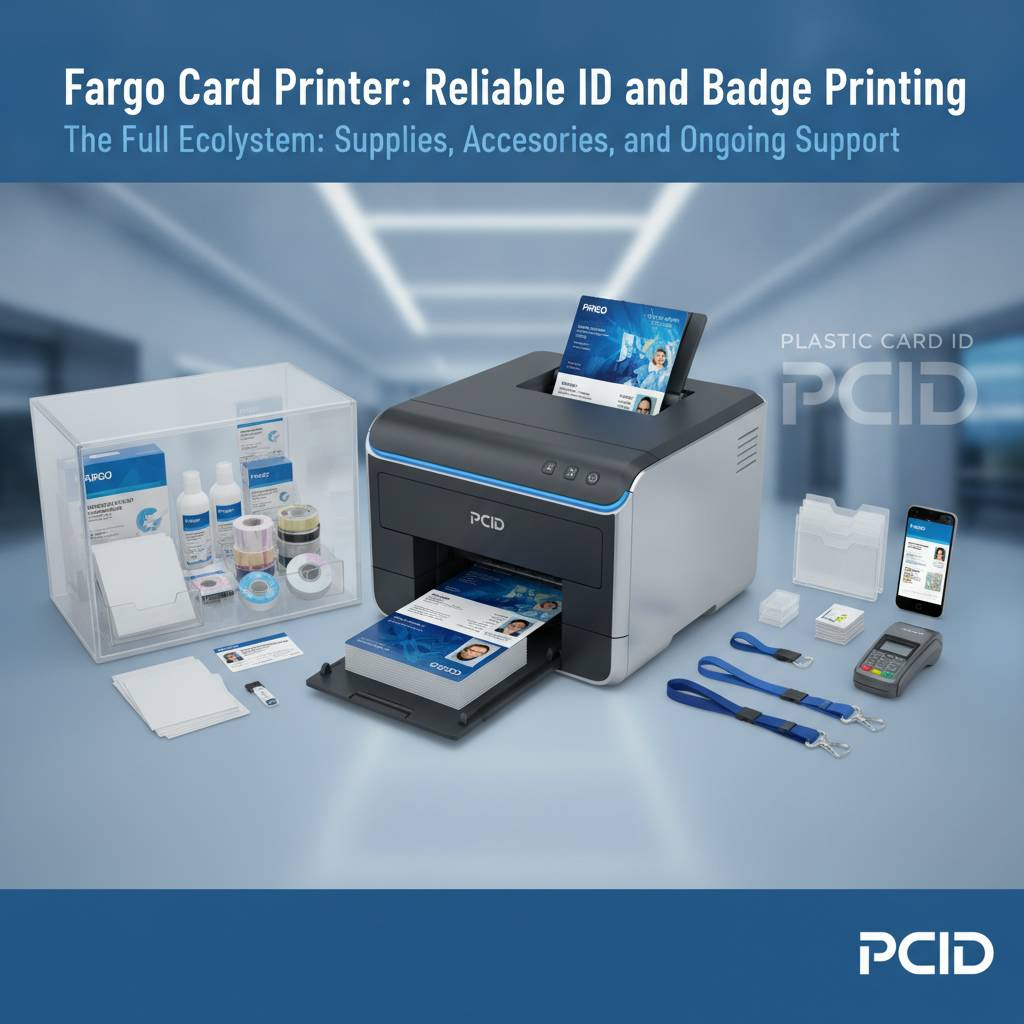
This matters practically. A printer without the right ribbon is a paperweight. A card program that experiences print quality degradation because cleaning cycles were skipped will produce substandard credentials that reflect poorly on the issuing organization. Maintaining a complete supply inventory isn't optional for serious card programs - it's operational discipline that Plastic Card ID supports directly.
Ribbon Selection for Fargo Printers
Fargo ribbons are model-specific and application-specific. YMCKO ribbons produce full-color output with a protective overlay - the standard choice for photo ID and membership cards. Monochrome ribbons (available in black, white, blue, red, and other colors) deliver faster print speeds and lower per-card costs when full color isn't required. Specialty panels add UV-reactive elements for security applications.
Selecting the correct ribbon for a Fargo printer model isn't guesswork - the printer's firmware often validates ribbon compatibility automatically. Using counterfeit or incompatible ribbons is one of the fastest ways to void a warranty and degrade print head performance. Plastic Card ID supplies genuine Fargo-compatible ribbons that meet the exact specifications these printers require.
Cleaning Kits and Preventive Maintenance
Print head contamination from card dust, ribbon residue, and ambient debris is the leading cause of degraded output quality in card printers. Fargo printers have built-in cleaning cycle prompts - they'll tell you when maintenance is due. Having cleaning cards and cleaning rollers on hand when that prompt appears is the difference between a five-minute maintenance task and a service call.
Regular cleaning also directly extends print head lifespan. A print head replacement on a mid-range Fargo printer is a meaningful expense - one that preventive maintenance can push years into the future. Organizations that stock cleaning kits and follow recommended maintenance schedules consistently report lower total cost of ownership over their printer's service life.
Encoding Upgrades and Accessories Worth Considering
Many Fargo printers ship in base configurations and accept field-installed encoding upgrades. Magnetic stripe encoders, smart card contact station modules, and RFID contactless encoders can be added after purchase on compatible models - a significant advantage for organizations whose programs evolve over time. Input hoppers increase card capacity for higher-volume workflows, reducing operator intervention between print runs.
Card carriers and sleeves protect finished credentials during transport and storage, preventing surface scratches that make credentials look unprofessional before they're even issued. Call 800.835.7919 to discuss which accessories and upgrades make sense for your specific Fargo printer model and card program requirements.
Who Actually Uses Fargo Card Printers? Real Applications Across Industries
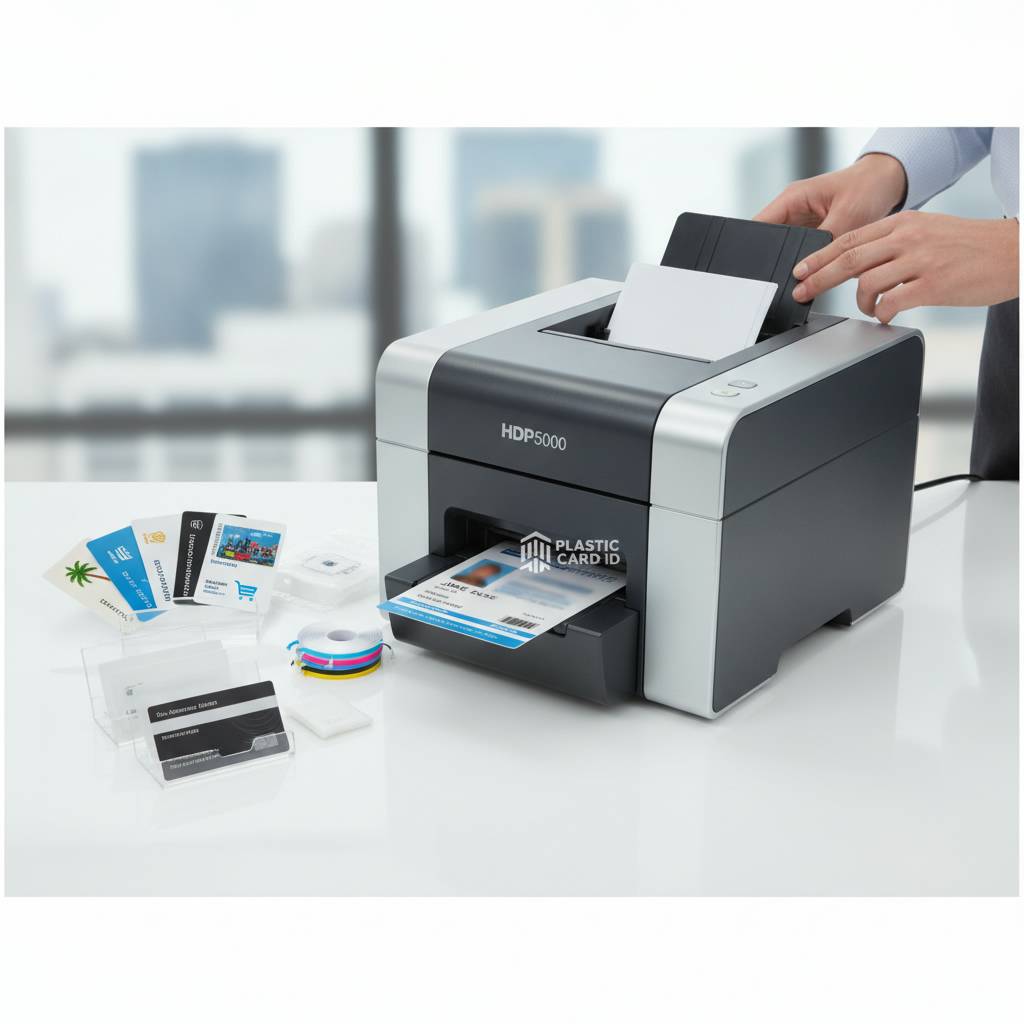 The organizations that rely on Fargo hardware span an impressive range of sectors and applications. What they share is a common need: professional-quality, secure, personalized credentials produced on demand with minimal lead time. In-house card printing eliminates vendor dependency, accelerates issuance, and gives program administrators direct control over every variable in the credential lifecycle.
The applications Plastic Card ID supports are genuinely diverse. Corporate campuses, universities, healthcare networks, hotels, event management companies, government agencies, retail loyalty programs - all of these represent active Fargo card printer use cases in the United States today. The common thread is control: control over timing, personalization, data encoding, and quality.
Corporate and Enterprise ID Programs
Large organizations with ongoing employee onboarding needs cannot afford to wait days or weeks for an outside vendor to produce ID badges. In-house Fargo printing means a new employee's photo ID and access card can be produced during orientation - the same day they start. HR departments and security teams that have made this transition consistently describe it as transformative for their onboarding workflows.
Dual-sided printing allows organizations to include additional information on card backs - emergency contacts, position codes, access tier indicators - without cluttering the front face. Encoding the card simultaneously adds access control functionality. A single card print run produces a complete, functional credential ready for immediate deployment into the access control system.
Education: Student IDs and Campus Credentials
Universities and K-12 institutions print student IDs, faculty credentials, and visitor passes in volumes that demand reliable, consistent hardware. Fargo printers handle these environments well - mid-range models process thousands of cards monthly without strain, and the cards themselves hold up to the demanding conditions of daily student use: wallets, lanyards, badge clips, and card readers.
Many educational institutions combine photo ID with magnetic stripe or smart card encoding to enable library access, cafeteria account management, and building security in a single credential. The ability to reprint replacement cards on demand - without vendor lead times or minimum order quantities - is a meaningful operational advantage that campus ID offices value highly.
Hospitality, Events, and High-Speed Credential Needs
Hotels rely on card printers for key card issuance - a workflow that demands speed and reliability every single day at the front desk. Event credentialing is a different challenge entirely: large-scale conferences, trade shows, and festivals need to print hundreds or thousands of badges quickly, often on-site, with attendee-specific personalization on every card.
For high-throughput event applications, Plastic Card ID also carries the Matica Event Printer - a specialized high-speed solution purpose-built for on-site badge production at scale. Choosing the right printer for event credentialing versus ongoing ID issuance is a distinction that significantly impacts operational success, and it's exactly the kind of guidance the CPE team provides.
How to Choose the Right Fargo Card Printer for Your Organization
 The selection process for a Fargo printer - done correctly - starts with honest answers to a few foundational questions. Volume, application, encoding requirements, and budget all feed into the decision. Skipping any of these considerations leads to either an underpowered printer that becomes a bottleneck or an over-specified machine burning budget on capabilities you'll never use.
Volume is the first filter. Organizations printing fewer than 1,000 cards per year have fundamentally different hardware needs than those issuing 3,000 cards monthly. Speed ratings, input hopper capacity, and duty cycle specifications all scale with volume requirements. Getting this number right before engaging with product specifications makes the rest of the decision considerably cleaner.
Assessing Your Volume and Duty Cycle
Printer duty cycle specifications represent the maximum workload a machine is designed to handle reliably over time. Pushing a desktop-class printer into a mid-volume workflow accelerates wear on the print head, feed rollers, and ribbon drive mechanism. The printer may technically function for a while, but longevity and print quality will suffer. Right-sizing your hardware to your actual duty cycle is the single most important factor in long-term cost of ownership.
As a practical starting point: organizations printing fewer than 1,000 cards annually suit entry-level desktop hardware. Programs running 1,000 to 6,000 cards monthly need mid-range workhorses. High-volume institutional programs printing 10,000 or more cards monthly require top-tier hardware with robust input systems. Plastic Card ID maps client requirements to the right tier of hardware every day - it's a conversation worth having before purchasing.
Encoding Requirements: What Data Needs to Live on the Card
Will your cards carry magnetic stripe data? Contactless RFID chips for proximity access control? Contact smart card chips for secure data storage? Each encoding type requires specific hardware modules, and not all Fargo models support all encoding types in every configuration. Mapping your encoding requirements before selecting a model prevents the frustration of discovering post-purchase that an upgrade module is needed.
Organizations that currently print visual-only IDs but anticipate adding access control functionality in the future should strongly consider purchasing an encoding-capable model upfront. Retrofitting encoding capability is possible on many Fargo models - but purchasing a field-upgradeable unit from the start is cleaner and typically more cost-effective than adding modules later.
Budget Considerations and Total Cost of Ownership
- Hardware purchase price is just the beginning - factor in ribbon cost per card, cleaning kit frequency, and potential encoding upgrade costs.
- YMCKO ribbon yield varies by model; higher-yield ribbons on mid-range printers reduce cost per card meaningfully over time.
- Monochrome ribbon printing costs significantly less per card than full-color YMCKO - a relevant factor if your cards don't require color photos.
- Print head lifespan is measured in cards printed; cleaning discipline directly extends this and defers what can be a significant replacement cost.
- Laminator modules add upfront cost but reduce card replacement frequency - cards last longer when properly laminated.
- Support and supply continuity from an established supplier like Plastic Card ID has real value that pure price comparisons miss entirely.
Understanding total cost of ownership over a three-to-five year horizon typically makes mid-range and security-grade Fargo hardware look considerably more attractive relative to entry-level alternatives. The per-card economics improve with higher-yield ribbons, and the reduced maintenance burden of well-built hardware adds up meaningfully over time.
Frequently Asked Questions About Fargo Card Printers
Buyers considering a Fargo card printer for the first time tend to have a consistent set of questions. The answers below reflect the real-world guidance the CPE team provides to clients navigating this decision - practical, direct, and grounded in 25-plus years of experience with exactly this product category.
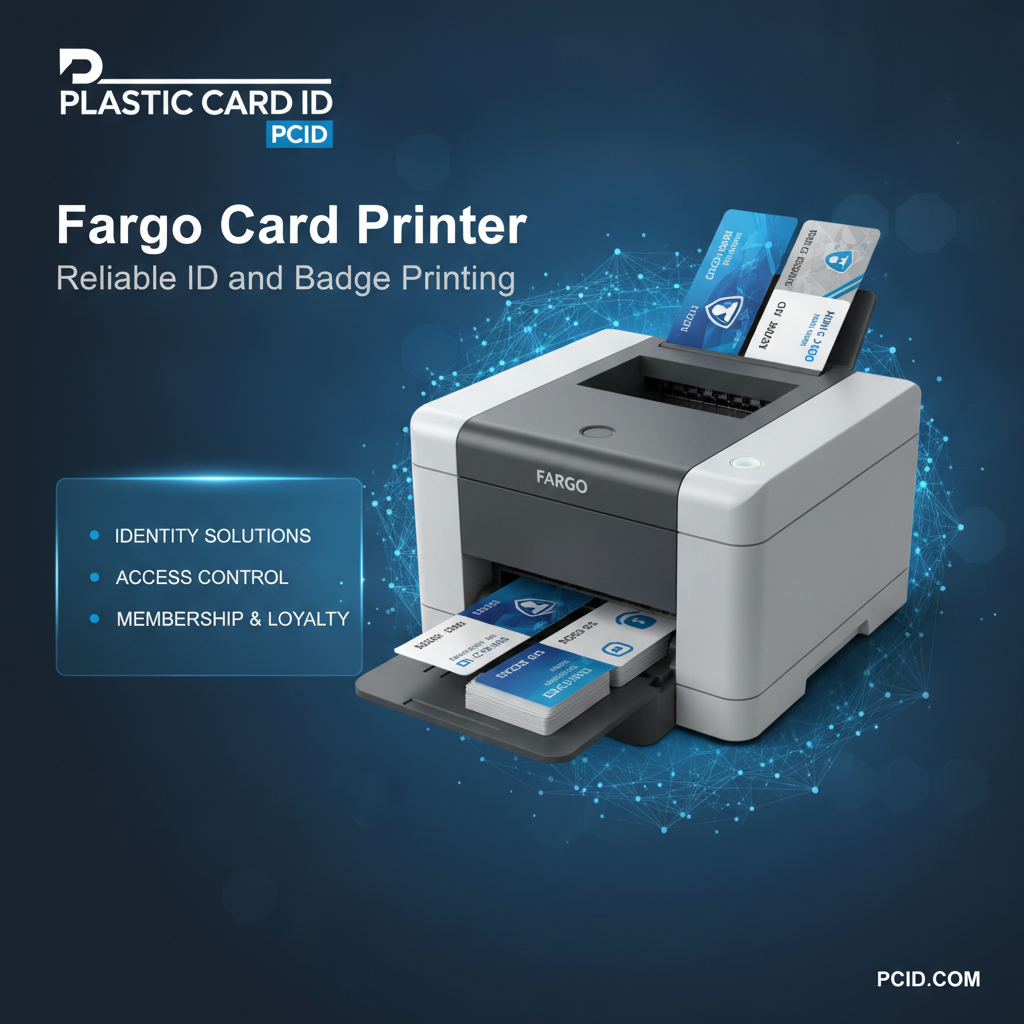
What Types of Cards Can Fargo Printers Produce?
Fargo printers work with standard CR80 PVC cards - the same dimensions as a credit card - producing employee ID badges, student credentials, membership cards, loyalty cards, access control cards, hotel key cards, visitor passes, and event credentials. The printers accept standard 30 mil and 40 mil card thicknesses depending on the model. What they do not do is produce financial credit or debit cards - that requires a completely different class of regulated equipment outside the scope of what Plastic Card ID supplies.
Cards can be printed single-sided or dual-sided depending on the model configuration. Full-color photo ID output, monochrome text and barcode printing, and specialty security elements are all achievable within the Fargo product ecosystem. If your card program requires a specific output type, the CPE team can confirm compatibility before any purchase commitment is made.
How Long Does a Fargo Printer Typically Last?
With proper maintenance - regular cleaning cycles, correct ribbon selection, and appropriate duty cycle management - a mid-range Fargo printer will reliably serve an organization for five to eight years or longer. Print head lifespan is the primary wear metric; most Fargo print heads are rated for tens of thousands of cards before replacement becomes necessary. Maintenance discipline is the single biggest variable in printer longevity, and it costs almost nothing to maintain correctly.
Organizations that abuse duty cycles, skip cleaning routines, or use incorrect ribbon types accelerate hardware wear dramatically. The operational calculus is simple: a few minutes of periodic maintenance and the cost of a cleaning kit versus hundreds of dollars in print head replacement or premature hardware failure. The math consistently favors maintenance.
Can Fargo Printers Be Upgraded After Purchase?
Many Fargo models are designed with field-upgradeable architectures. Magnetic stripe encoding modules, smart card contact stations, and laminator modules can often be added to compatible base models after initial purchase. This makes Fargo hardware a reasonable long-term investment for organizations whose programs may evolve in capability over time.
Not all models accept all upgrades - compatibility varies by product line and generation. Confirming upgrade paths before purchasing a base model is strongly recommended for any organization with foreseeable expansion plans. Call 800.835.7919 to discuss upgrade options for any specific Fargo model you're considering - the team can confirm exactly what's possible before you commit.
Ready to Print? Plastic Card ID Makes It Simple
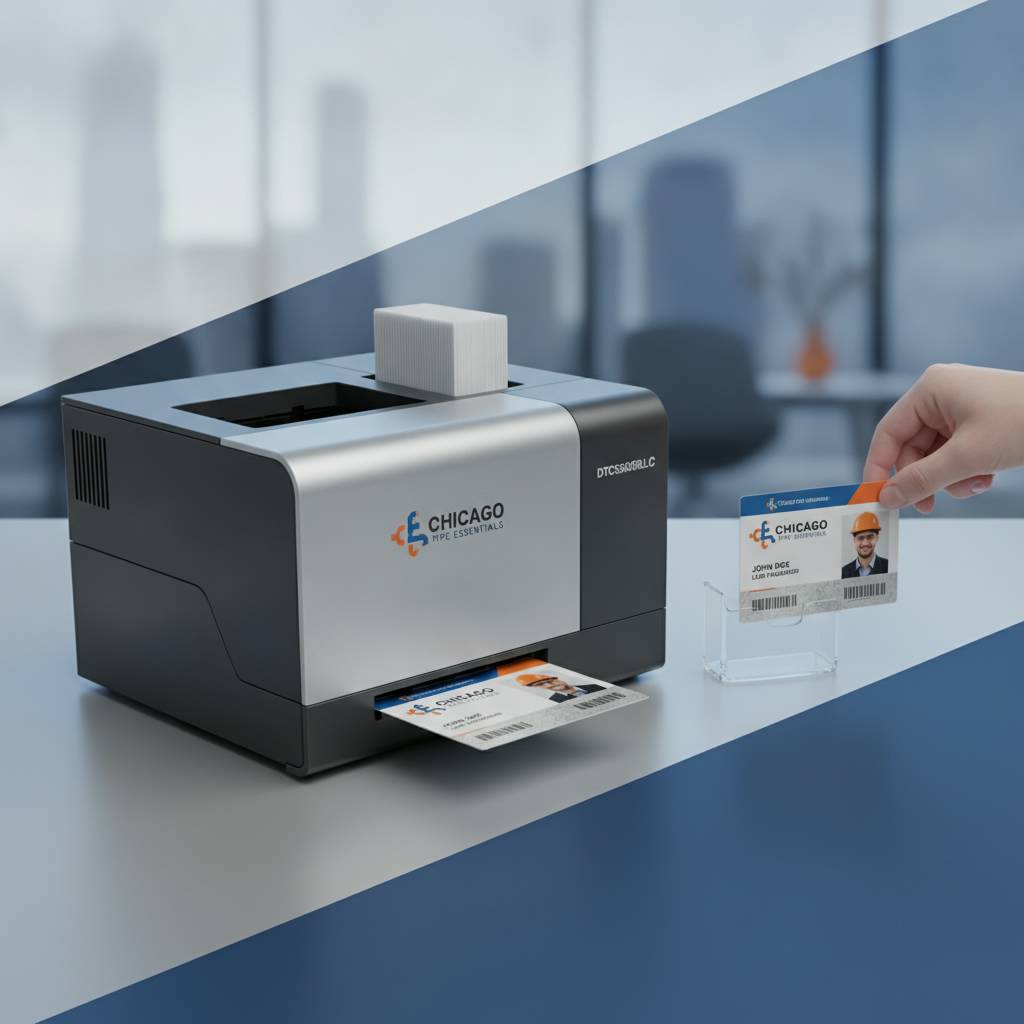 The decision to bring card printing in-house - or to upgrade existing hardware to a Fargo platform that actually meets your organization's demands - is one of those operational choices that pays dividends far beyond the initial investment. Instant card issuance, precise personalization, reliable encoding, and the elimination of vendor lead times all combine to give your program a capability and responsiveness that outsourced solutions simply cannot match.
Plastic Card ID has been the trusted resource for this transition for businesses across the United States for more than 25 years. Over 100,000 customers have relied on CPE for hardware selection, supply continuity, and the kind of product-specific guidance that comes from actually knowing these machines - not just selling them. That depth of experience is genuinely rare in this industry, and it translates directly into better outcomes for clients at every stage of their card printing program.
Your Next Step Starts With a Conversation
No two card programs are identical. Volume, encoding requirements, budget constraints, physical card design, and security needs all vary - sometimes dramatically - between organizations in the same industry. The right Fargo card printer for your organization exists, and identifying it quickly and accurately is exactly what Plastic Card ID does best.
Don't guess at specifications or settle for a generic recommendation from a supplier who isn't deeply familiar with Fargo hardware. The CPE team brings real expertise to every conversation, and they're ready to help you select, configure, and supply the right card printing solution for your specific program from day one.
Contact Plastic Card ID today at 800.835.7919 and get your Fargo card printer program running with the right hardware, the right supplies, and the right support behind every card you print.
Previous Page